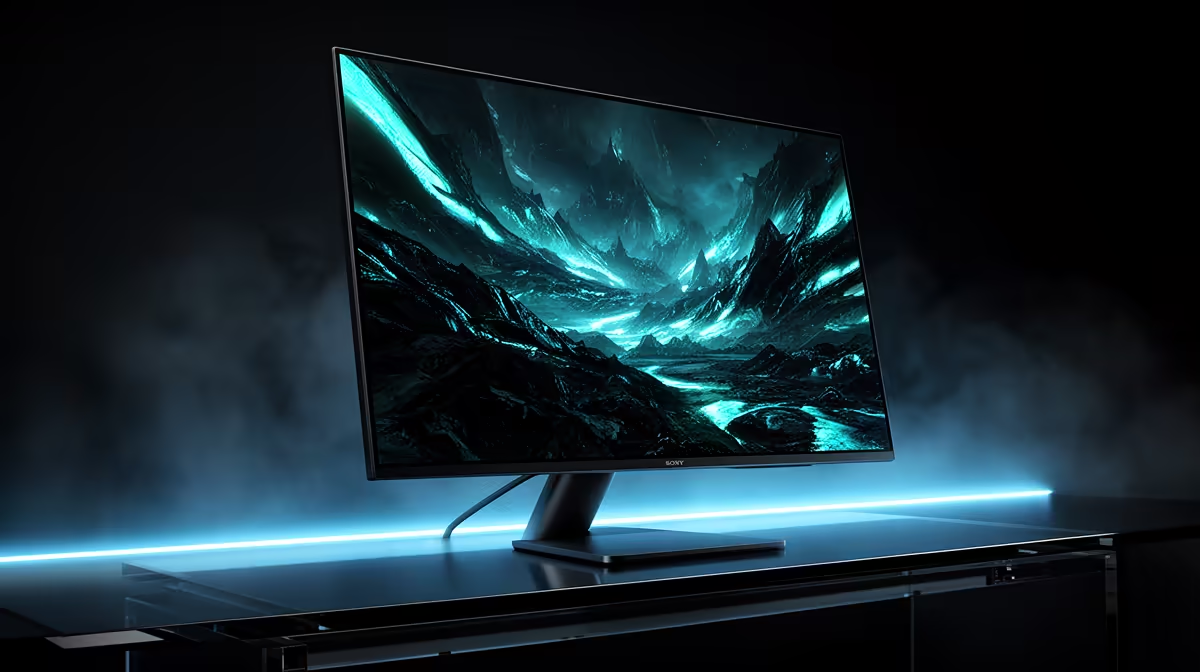
Remember the desk-dominating CRT monitor? That satisfying thump as it degaussed? That behemoth was the gateway to our first digital worlds. Fast forward to today, and we have wafer-thin OLED panels with colours that pop and refresh rates faster than a hadeda's takeoff. The evolution of gaming monitors has been nothing short of spectacular. Join us as we trace this incredible journey from bulky beige boxes to the sleek, immersive windows we game on today.
The Dawn of PC Gaming: CRT Heavyweights
Before flat screens, there was the Cathode Ray Tube. These CRT monitors were heavy, deep, and generated some serious heat, but they were the undisputed kings of the LAN party. They painted images on the screen with an electron gun, a process that, despite its age, offered surprisingly low input lag. This part of the gaming monitor evolution laid the groundwork for everything that followed, powering countless hours of Quake III Arena and Unreal Tournament across South Africa. 🚀
The LCD Revolution: Slimmer, Sharper, and Lighter
The arrival of Liquid Crystal Display (LCD) technology was a relief for our desks and our backs. Suddenly, monitors were thin, light, and energy-efficient. Early models, however, weren't perfect for gaming, with issues like ghosting and slower response times. But the technology improved rapidly, and the benefits were too good to ignore. It’s amazing to look at the vast selection of modern PC monitors and see how far we've come from those first-generation flat panels.
The Competitive Edge: High Refresh Rates and LED
The real turning point in the evolution of gaming monitors for competitive players was the mainstream adoption of LED backlighting and high refresh rates. LED offered better brightness and contrast than older CCFL backlights. But the jump from 60Hz to 120Hz, and then 144Hz and beyond, was massive. A higher refresh rate means the image updates more times per second, resulting in smoother motion and a tangible advantage in fast-paced shooters. Today, it's a non-negotiable feature across almost all gaming monitors aimed at serious players.
G-Sync vs. FreeSync Explained ⚡
Both technologies synchronise your monitor's refresh rate with your graphics card's frame rate to eliminate screen tearing. NVIDIA's G-Sync typically requires a dedicated chip in the monitor, while AMD's FreeSync is an open standard. Most modern monitors support Adaptive Sync, making them compatible with both, but it's always best to check the specs before you buy!
Today's Display Tech: Immersion, Pixels, and Portability
The modern era of gaming display evolution is all about choice and specialisation. Whatever your playstyle, there's a perfect screen for you.
Breathtaking Detail: 4K and Beyond
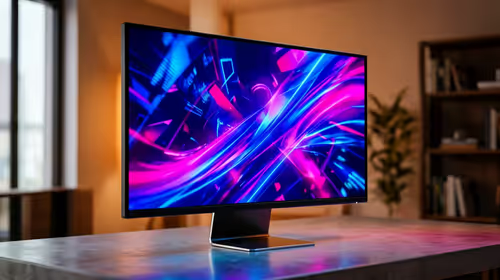
Resolution has skyrocketed. While 1080p remains a popular choice for high-frame-rate competitive play, the visual fidelity of 1440p (QHD) and 4K (UHD) is undeniable. For single-player adventures like Cyberpunk 2077 or Baldur's Gate 3, these stunning 5K and 4K monitors deliver breathtaking detail that makes virtual worlds feel real. ✨
The Curve Appeal
To deepen immersion, manufacturers started bending the screen. It might seem like a gimmick, but a gentle curve helps fill your peripheral vision, making the game world feel more encompassing. It’s easy to see why so many gamers now swear by curved monitors for everything from racing sims to epic RPGs.
OLED & Mini-LED: The Pinnacle of Picture
The latest leap in image quality comes from two technologies: OLED and Mini-LED. OLED (Organic Light Emitting Diode) panels offer per-pixel lighting, resulting in perfect black levels and infinite contrast. Mini-LED uses thousands of tiny LEDs for its backlight, offering incredible brightness and far better contrast than traditional displays. This is the peak of current monitor evolution.
Gaming on the Go
The journey of the gaming monitor has even untethered it from the desk. For those who game on a laptop or want a second screen for their console while travelling, compact and portable monitors are now a fantastic reality.
Looking Ahead: The Future of Gaming Displays
What’s next on the horizon? Technologies like MicroLED promise the best of both worlds—OLED's perfect blacks with even higher brightness—while refresh rates continue to push past 480Hz. The goal remains the same: a more responsive, immersive, and visually stunning window into our games. As this technology becomes more accessible, you can often find next-gen features in our best PC monitor deals sooner than you might think. 🔧
Ready to Upgrade Your View?
The evolution of gaming monitors has been wild, but the best screen is the one that fits your games and your budget. Whether you need a lightning-fast esports panel or an immersive 4K display, your perfect match is waiting. Explore our massive range of gaming monitors and find your next upgrade.