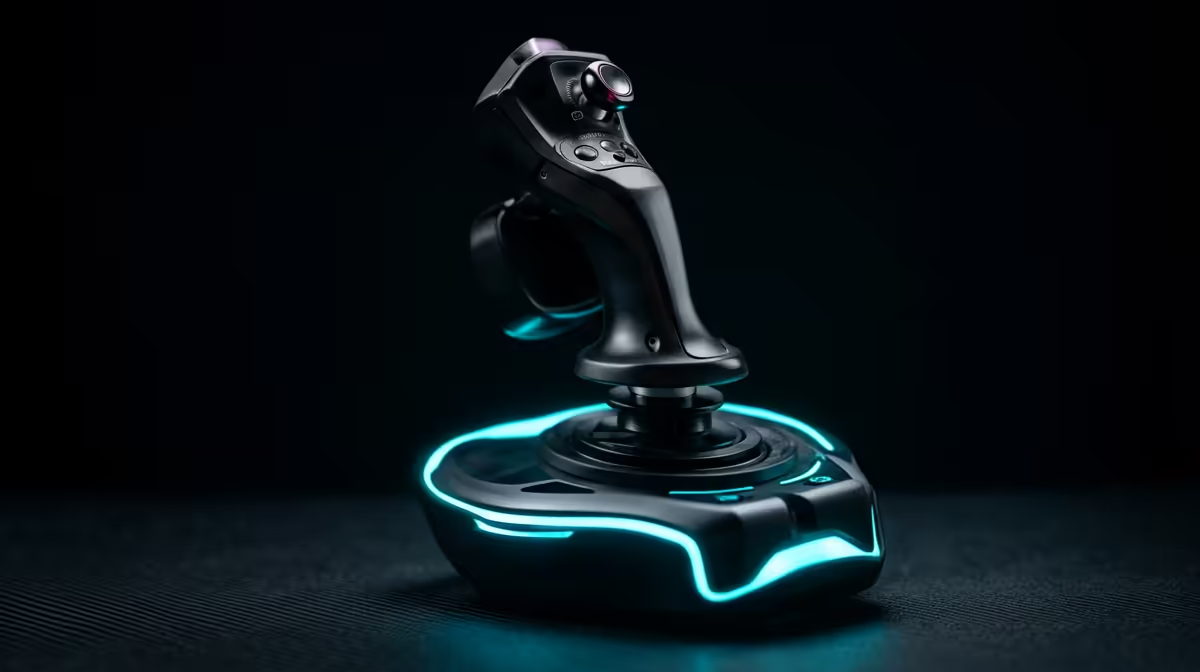
A flight stick choice hinges on throttle integration, hall-effect sensors and desk space. This path sorts the casual joystick from a full HOTAS for SA sim pilots.
Quick Answer
For MMO-style and live-service space sims, a mid-range HOTAS with hall-effect sensors and plenty of programmable buttons is the sweet spot; it maps the deep control schemes these games use without drifting over time.
Stick, throttle and sensors for MMO and live-service games
MMOs and live-service titles hammer the CPU in crowded hubs and raids. Prioritise per-core speed and 32GB of RAM so capital cities and 40-player instances hold 90fps+ without hitching. Hall-effect or TMR sensors avoid the spiking and drift that plague potentiometer sticks. A separate throttle and a generous button count let you bind the dozens of commands sims expect.
Budget tiers for SA buyers
Under R1,500 buys an entry twist-rudder joystick; R1,500-R4,000 reaches a mid HOTAS; R4,000+ lands hall-effect sticks, throttles and pedals.
Desk space, mounting and pedals
A full HOTAS plus pedals needs real desk and floor room, so measure before buying; a compact twist-rudder stick saves space if pedals are not an option. Hall-effect sensors are the durability upgrade worth paying for. Rudder pedals add precision for combat sims but are an optional later step.
FAQ
Do I need a HOTAS or just a joystick?
A single joystick is enough to start most flight and space sims. A separate throttle (HOTAS) adds precision and button count for serious play, and pedals are an optional further step.
Are hall-effect flight sticks worth it?
Yes. Hall-effect or TMR sensors avoid the drift and spiking that affect cheaper potentiometer sticks, so they stay accurate for years.
How much desk space does a flight setup need?
A standalone stick fits a normal desk; a full HOTAS needs room for both hands, and pedals need floor space. Measure your setup before committing to a full kit.
{ text: "Compare these picks at Evetech and filter by your budget and connection before you buy." }