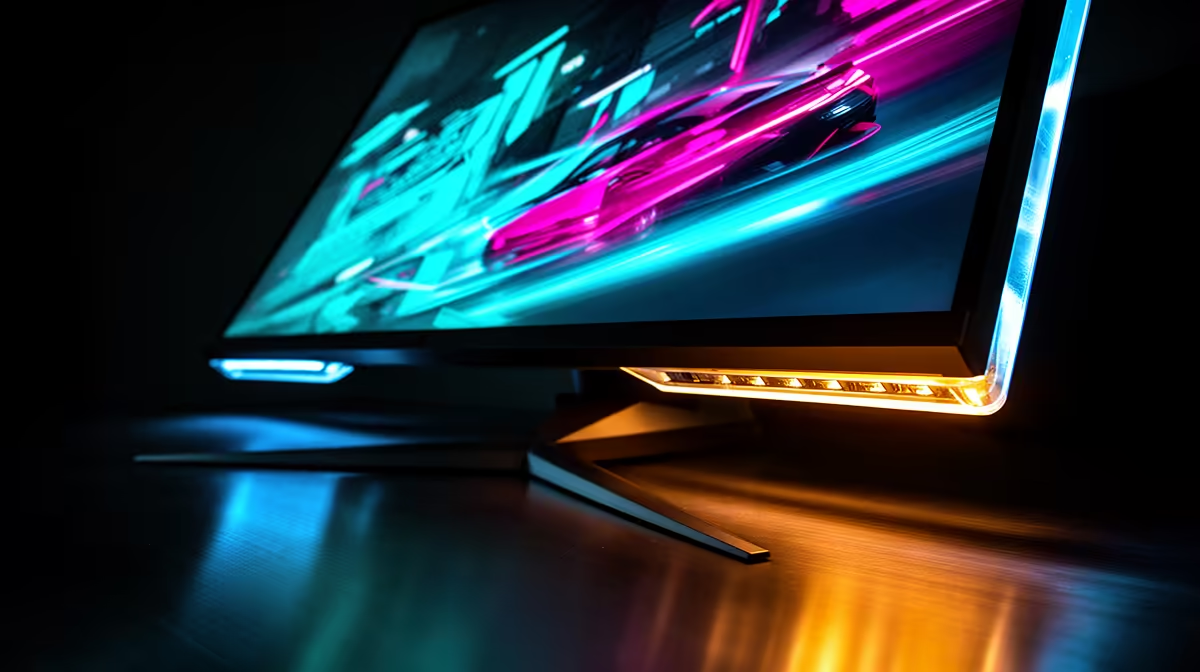
You're in the final circle in Warzone, lining up the perfect shot... and then it happens. A jagged, horizontal line rips across your screen, throwing off your aim for that crucial split-second. That, my friend, is screen tearing. It’s a frustrating immersion-breaker that plagues South African gamers. The fix? Adaptive sync technology. But this leads to the big debate: in the battle of FreeSync vs G-Sync in South Africa, which team should you join for buttery-smooth gameplay?
What is Adaptive Sync and Why Should You Care?
At its core, screen tearing is a communication problem. Your graphics card (GPU) is rendering frames at one speed, while your monitor is refreshing the image at another. When they're out of sync, you see pieces of multiple frames at once, creating that ugly tear.
Adaptive sync is the brilliant technology that acts as a translator between your GPU and monitor. It forces your monitor to refresh only when the GPU has a new frame ready. The result? No more tearing, less stutter, and a visibly smoother gaming experience. Once you've gamed on a screen with it, you'll never want to go back.
AMD FreeSync Explained: The Open Standard Champion
AMD FreeSync is the more common of the two technologies. Because it’s an open standard, monitor manufacturers don't have to pay a licensing fee to AMD to include it. This is fantastic news for South African gamers, as it means FreeSync is available on a wide variety of PC monitors at very competitive prices.
However, not all FreeSync is created equal. AMD has introduced tiers to guarantee a certain level of quality:
- FreeSync: The basic standard that eliminates tearing.
- FreeSync Premium: Adds a requirement for at least a 120Hz refresh rate at 1080p resolution and Low Framerate Compensation (LFC), which keeps things smooth even when your FPS drops.
- FreeSync Premium Pro: Includes everything from Premium, plus optimised support for HDR (High Dynamic Range) content.
The best part? Most modern NVIDIA GPUs can now use FreeSync technology, which we'll touch on in a bit.
NVIDIA G-Sync Explained: The Premium, Polished Experience
NVIDIA G-Sync is the original adaptive sync technology. Unlike FreeSync, it’s a proprietary system that requires a special hardware module—a dedicated chip—to be built into the monitor. This chip handles the communication with the NVIDIA GPU.
This approach has pros and cons:
- The Pro: NVIDIA has extremely strict testing and certification for G-Sync monitors. This ensures a consistently flawless, premium experience with a massive variable refresh rate range and no ghosting. It’s the gold standard, especially on demanding high-resolution 4K and 5K monitors.
- The Con: That dedicated hardware module adds to the cost of the monitor. A G-Sync monitor will almost always be more expensive than a comparable FreeSync model.
Like AMD, NVIDIA also has tiers:
- G-Sync Compatible: These are actually FreeSync monitors that NVIDIA has tested and certified to work well with their GPUs.
- G-Sync: The classic experience, featuring the dedicated hardware module.
- G-Sync Ultimate: The best of the best, with the hardware module and guaranteed top-tier HDR performance.
Pro Tip: Unlocking G-Sync on a FreeSync Monitor 🔓
Got an NVIDIA graphics card (10-series or newer) and a FreeSync monitor? You might be in luck! Open the NVIDIA Control Panel, navigate to 'Set up G-SYNC', check the box for 'Enable G-SYNC, G-SYNC Compatible', and select your monitor. If it works, you've just enabled smooth, tear-free gaming without paying the G-Sync premium. It's a must-try for any Team Green gamer.
FreeSync vs G-Sync: The South African Showdown
So, when the rand is on the line, how do you choose? The G-Sync vs FreeSync decision in South Africa usually boils down to three key factors.
Cost: The Deal-Maker 💰
For most gamers, this is the biggest factor. Because it’s an open standard, FreeSync offers incredible value. You can find fantastic FreeSync monitors without breaking the bank, and there are always great monitor deals to be found. G-Sync monitors command a premium for their hardware and certification, placing them in a higher price bracket.
Performance & Features: Closing the Gap
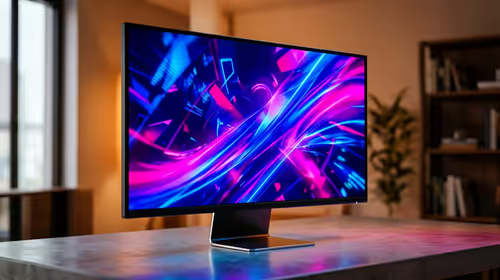
A few years ago, G-Sync was the undisputed performance king. Today, the gap has narrowed significantly. A monitor with FreeSync Premium Pro offers an experience that is virtually indistinguishable from G-Sync for most players. Where G-Sync still holds an edge is in its guaranteed consistency across the entire refresh rate range. Both technologies dramatically boost gameplay, especially on immersive curved monitors where a smooth picture is everything.
Compatibility: Your GPU Decides
- Have an AMD Radeon GPU? Your choice is simple: get a FreeSync monitor. It’s the most cost-effective way to get a phenomenal adaptive sync experience.
- Have an NVIDIA GeForce GPU? You have a choice. You can go for a premium G-Sync or G-Sync Ultimate monitor for a guaranteed perfect experience, or you can save some cash and get a "G-Sync Compatible" certified FreeSync monitor.
Making the Final Call: Which is Right for Your Rig?
The debate over FreeSync vs G-Sync is less about which is technically "better" and more about which is smarter for your specific setup and budget.
- Go with FreeSync if... you have an AMD GPU, you're on a budget, or you have an NVIDIA card and want to get the best value by choosing a G-Sync Compatible display from our complete collection of gaming monitors.
- Go with G-Sync if... you have a high-end NVIDIA GPU, budget is less of a concern, and you want the peace of mind that comes with NVIDIA's rigorous hardware certification. ✨
Your choice often comes down to your main display, but a pro setup doesn't stop there. Many gamers now use secondary screens, and even some modern portable monitors feature FreeSync for a consistent experience on the go. Once you've chosen, don't forget to perfect your battle station with the right monitor accessories—a quality VESA mount can change your entire setup.
Ready to End Screen Tearing for Good?
The FreeSync vs G-Sync debate is all about finding the perfect, smooth experience for your budget and your rig. In South Africa, value is king, and we've got a screen for every gamer. Explore our incredible range of PC monitor deals and find the perfect display to dominate the competition.