Quick Answer
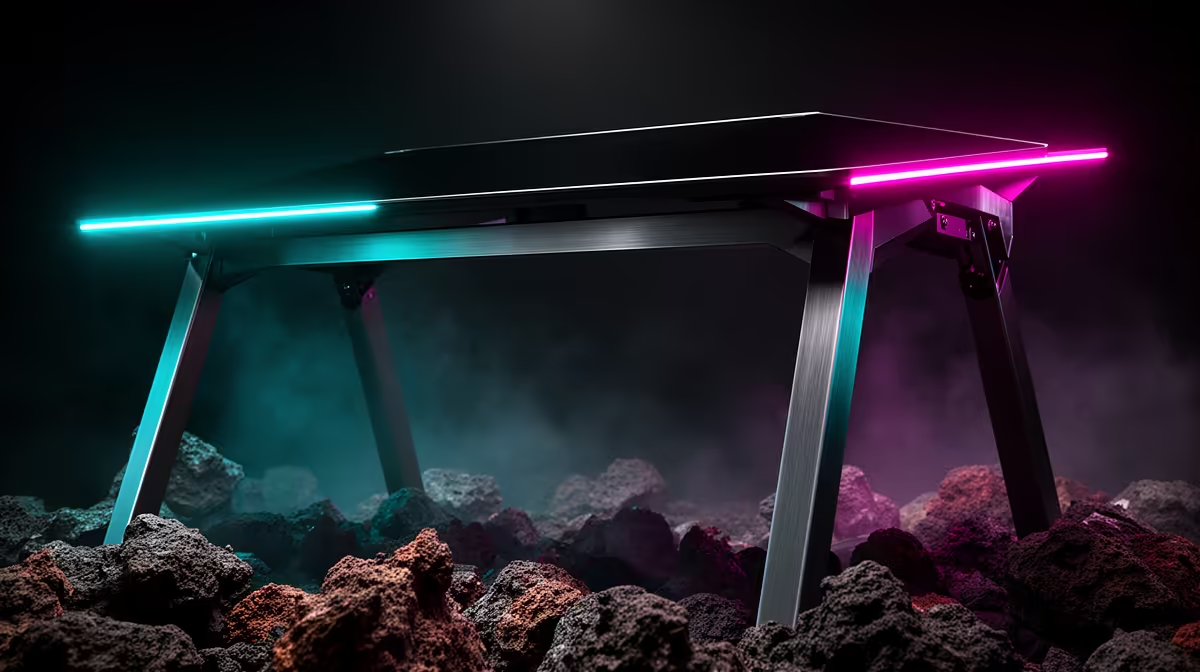
On a gaming desk checklist, do not ignore stability. A wobbly desk ruins aim and risks your gear. Look for a steel frame, cross-bracing, and adjustable feet; sturdy desks rated for 80kg+ start around R2,000 at Evetech.
Why Stability Beats Looks
A desk that shakes when you type fast or move the mouse hard is a genuine problem for gaming, not just an annoyance. Micro-wobbles throw off precise aim in shooters, and over time a flimsy desk loosens at the joints and sags under a monitor and full tower. Stability is the spec that protects both your performance and your equipment.
The signs of a stable desk are a steel or thick metal frame, lower cross-bracing or a modesty panel that resists racking, and adjustable feet to level it on uneven tile or laminate. A higher weight rating usually signals a stronger frame, even if you never load it fully.
What Undermines Stability
Thin tubular legs without bracing, particle-board tops that flex, and cheap plastic feet are the usual culprits. On an uneven SA tiled floor, a desk without adjustable feet rocks no matter how strong the frame is. Tighten all bolts on assembly and re-check them after a few weeks, since a sturdy desk that is loosely built still wobbles.
FAQ
How do I tell if a gaming desk is stable?
Look for a steel frame with cross-bracing, a solid top that does not flex, and adjustable feet. A higher weight rating is a good proxy for frame strength.
Does desk wobble really affect gaming?
Yes. A shaking surface disrupts precise mouse movement and aim in fast games, and it stresses the desk's joints over time, shortening its life.
Are adjustable feet necessary?
On tiled or uneven floors, yes. They let you level the desk so it does not rock, which is a common cause of wobble even on otherwise sturdy desks.
hard on each corner of the desk before buying; any significant flex or rock signals a frame that will worsen under a full setup.