Quick Answer
For low-latency online gaming, a gaming keyboard upgrade path runs from a R900-R1,500 wired mechanical board with fast linear switches, to a R1,800-R3,500 board with an 8,000 Hz polling rate and analogue or rapid-trigger switches. The latency gains are real but small; a wired connection and fast switches matter most, not RGB or macro count.
What Low-Latency Play Wants From a Keyboard
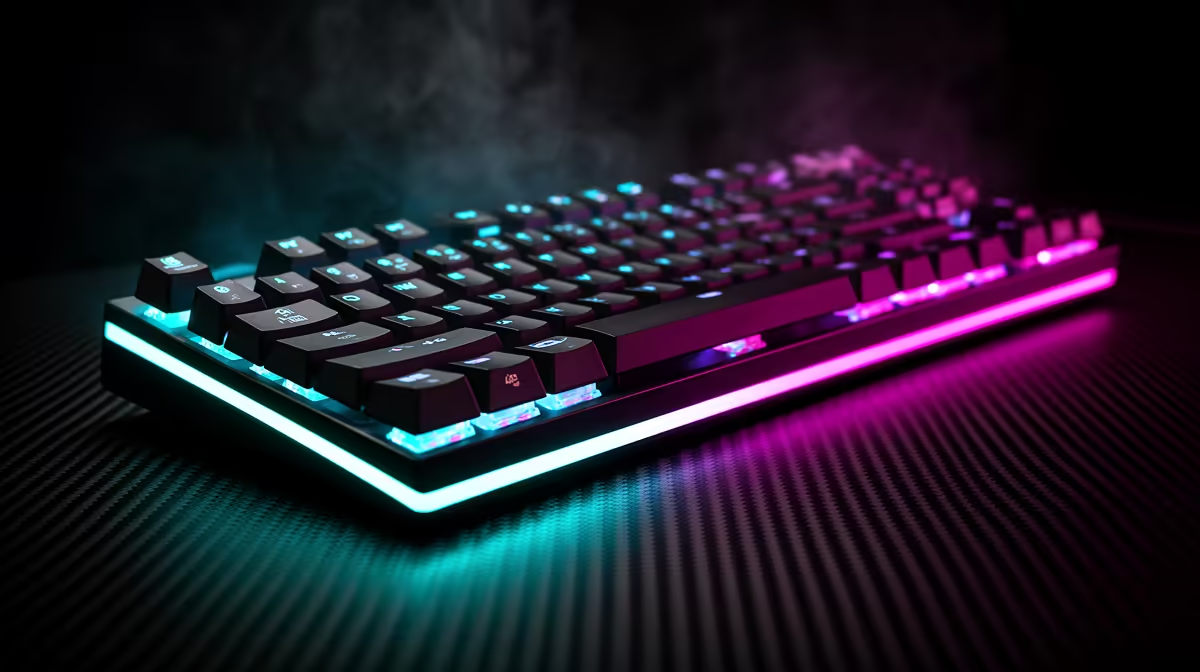
For competitive online gaming, the keyboard should minimise the delay between your keypress and the action. A wired connection is the baseline, removing any wireless variability; fast linear switches like reds register quickly with a light actuation. The starter tier, R900-R1,500, covers a solid wired mechanical board with linear switches, which serves most competitive players well. The latency difference between a good wired board and a premium one is small, so the starter tier is genuinely competitive.
Note that the keyboard does not affect your network ping; it affects only the input side, so pair it with a wired internet connection for the full low-latency picture.
Stepping Up: Polling and Rapid Trigger
The serious tier, R1,800-R3,500, adds an 8,000 Hz polling rate, which reports keypresses more frequently than the standard 1,000 Hz for a marginal latency cut, and analogue or rapid-trigger switches that let you re-actuate faster for quick counter-strafing. These shave milliseconds that matter to top-tier competitive players, though most gamers will not feel the difference over a good 1,000 Hz wired board. Choose this tier only if you compete seriously and want every edge.
SA Buying Notes
Locally stocked keyboards at Evetech list switch type, polling rate and connectivity. For low-latency play, favour a wired mechanical board with fast linear switches; an 8,000 Hz board with rapid trigger is a premium edge for serious competitors. Pair any keyboard with a wired internet connection, since the keyboard affects input latency, not network ping.
FAQ
Does a gaming keyboard reduce online latency?
Only the input-side latency between your keypress and the action, not your network ping. A wired board with fast switches minimises input delay; a wired internet connection handles the network side. Together they give the lowest end-to-end latency.
Is an 8,000 Hz polling rate worth it?
For top-tier competitive players, it shaves a marginal amount of input latency over the standard 1,000 Hz. Most gamers will not feel the difference, so it is a premium edge rather than a necessity. A good 1,000 Hz wired board is already very competitive.
What switches suit competitive gaming?
Fast linear switches like reds, which register quickly with a light actuation, suit competitive play. Premium analogue or rapid-trigger switches let you re-actuate faster for quick counter-strafing, an edge for serious players but not essential for most.
-latency play, a wired mechanical board with fast linear switches covers most competitors; pair it with a wired internet connection, since the keyboard affects input latency while your ping comes from the network.