The free security patches stopped on 14 October 2025, so gaming on Windows 10 in 2026 means running an operating system that no longer gets fixes for newly discovered holes. Your games still launch, but the platform underneath them is frozen in time. The good news for SA gamers is that moving to Windows 11 rarely means a whole new PC. Often it is a board and CPU swap that keeps your graphics card, storage and case exactly where they are.
Quick Answer
Windows 10 stopped receiving security updates on 14 October 2025, so it is a growing risk for an always-online gaming rig. Windows 11 needs TPM 2.0 plus a supported CPU, which in practice means roughly Intel 8th-generation or AMD Ryzen 2000-series and newer. If your GPU is still strong, you likely only need a motherboard and CPU upgrade, not a full rebuild, with that pair commonly landing around R6,000 to R15,000 depending on the platform.
Why Staying on Windows 10 Is a Real Risk Now
End of support does not mean your PC switches off. It means no more security patches, no feature updates, and no official technical help. Every vulnerability found from late 2025 onward stays open on Windows 10. For a gaming machine that is online constantly, talking to game launchers, voice chat, mods and stores, that is the wrong kind of exposure. Some anti-cheat systems and game launchers also gradually raise their baselines, so over time you risk titles that simply refuse to run properly on an unsupported OS.
This is not an emergency you must fix tonight, but it is a clock that only runs one way. Planning the move now, on your terms, beats being forced into it later by a game that will not launch.
What Windows 11 Actually Requires
Two requirements trip people up. First, TPM 2.0, a security module that is built into essentially every CPU from around 2015 onward but is often switched off in the BIOS by default. Second, a CPU on Microsoft's supported list, which broadly starts at Intel 8th-generation (Coffee Lake) and AMD Ryzen 2000-series (Zen+). Microsoft has been firm that the TPM 2.0 requirement is not going away in future Windows versions either, so there is no point waiting for it to be relaxed.
Check Before You Buy Anything
Before spending a cent, find out where you stand. Run the PC Health Check tool or look in your system information for your exact CPU model and whether TPM is present. Many gamers discover their CPU is supported and TPM is simply disabled in the BIOS, which is a free toggle rather than a purchase. Others find their CPU is a generation or two short, which is where the upgrade conversation starts.
The Smart Way to Move: Keep the Parts That Still Earn Their Place
Here is the part that saves money. Your graphics card is usually the most expensive component in a gaming PC, and it does not care which Windows version you run. A capable GPU from the last few years will happily push current games on Windows 11 unchanged. The same goes for your power supply, case, storage drives, and often your RAM.
When a CPU and Board Swap Is Enough
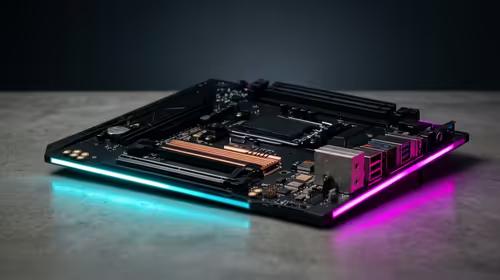
If your GPU is strong but your CPU predates the 8th-generation Intel or Ryzen 2000 line, the targeted fix is a new motherboard and CPU, reusing everything else. You get a supported platform, TPM 2.0, and usually a healthy general-performance bump, while keeping your graphics horsepower. Watch the RAM detail: jumping platforms can mean moving from DDR4 to DDR5, so budget for memory if the new board demands it.
When a Fuller Rebuild Makes More Sense
If your GPU is also showing its age, or your case and power supply are old and tired, it can be cleaner to step up to a complete current machine rather than patching one part at a time. Compact, modern options in the mini PC range at Evetech suit gamers who want a tidy, Windows 11-ready box without a tower, while the broader PC best sellers cover full-size gaming machines that arrive ready to play.
What Windows 11 Brings to Your Gaming in 2026
For a supported machine, the move is about security and longevity, not a magic frame-rate boost. But Windows 11 does carry features that matter to gamers.
DirectStorage and Faster Load Times
DirectStorage lets the GPU load game assets straight from an NVMe SSD, bypassing the CPU bottleneck that slows older systems. In supported titles, open-world streaming and level loads are dramatically faster. The benefit is real, but it needs a supporting game, a fast NVMe drive, and a capable GPU to deliver it.
Auto HDR for Older Titles
Auto HDR automatically expands the colour and brightness range of DirectX 11 and 12 games that were built before HDR became standard, adding brighter highlights and deeper contrast on an HDR-capable display. It works across hundreds of existing titles without any developer update, and tests show it adds no measurable FPS penalty.
Xbox Mode Coming in 2026
Microsoft is rolling out an Xbox-style full-screen gaming mode for Windows 11, bringing controller-first navigation, Auto Shader Delivery to remove compilation stutter, and tighter DirectStorage integration. This is exclusive to Windows 11, so gamers who stay on Windows 10 will not see it.
Getting the Migration Right
Once you have a supported platform, the safest approach is a clean Windows 11 install rather than an in-place upgrade. Back up your save files and game library locations first, since most modern launchers like Steam and the Xbox app restore your library quickly once you are signed back in. A fresh install clears years of accumulated background processes and gives Windows 11 a clean slate, which translates to better responsiveness in desktop and in-game.
Frequently Asked Questions
Is it safe to keep gaming on Windows 10 in 2026?
It works, but it is increasingly risky because security patches ended in October 2025. For an always-online gaming PC, running an unpatched OS leaves known vulnerabilities open, so plan a move to Windows 11 rather than staying indefinitely.
Do I need a whole new PC for Windows 11?
Usually not. If your GPU is still capable, you often only need a supported CPU and motherboard, reusing your graphics card, storage and case. A full rebuild only makes sense if several components are already due for replacement.
What CPUs support Windows 11?
Broadly Intel 8th-generation (Coffee Lake) and AMD Ryzen 2000-series (Zen+) and newer, all of which include TPM 2.0. Check your exact model, since some older chips that seem close are not on the supported list.
My PC says it lacks TPM 2.0, what now?
Often TPM is simply disabled in the BIOS rather than missing. Enabling it is free. If your CPU genuinely predates the supported list, then a CPU and motherboard upgrade is the real fix.
Will my games run worse on Windows 11?
On supported hardware, performance is broadly similar to Windows 10. The point of moving is security and continued support, not a performance jump, so do not expect a frame-rate windfall.
Time to get your rig onto a supported platform? Browse Windows 11-ready machines at Evetech, or talk to the team about a CPU and motherboard upgrade that keeps your graphics card and gets you off Windows 10 safely.