We get it. If a UPS is required, size it for a controlled shutdown against the measured load of the complete gaming PC. In South Africa, the electricity your rig pulls is a real concern. So, let's settle the score: when it comes to gaming PC vs console power consumption in ZA, which platform is kinder to your wallet and the planet? The answer might surprise you.
Console Power Consumption: The Plug-and-Play Benchmark
Consoles like the PlayStation 5 and Xbox Series X are highly optimised machines. Because every unit has the exact same hardware, developers can squeeze out incredible performance from a relatively modest power budget. During an intense session, you can typically expect these consoles to draw between 160W and 220W.
Their strength lies in consistency. Whether you're playing a team-based shooter or a sprawling open-world epic, the power draw remains predictable. This makes them a straightforward, energy-efficient choice for plug-and-play gaming. However, this efficiency comes at the cost of flexibility... a limitation you don't face when building a custom rig for titles like Overwatch 2.
The Gaming PC: A Spectrum of Power Usage ⚡
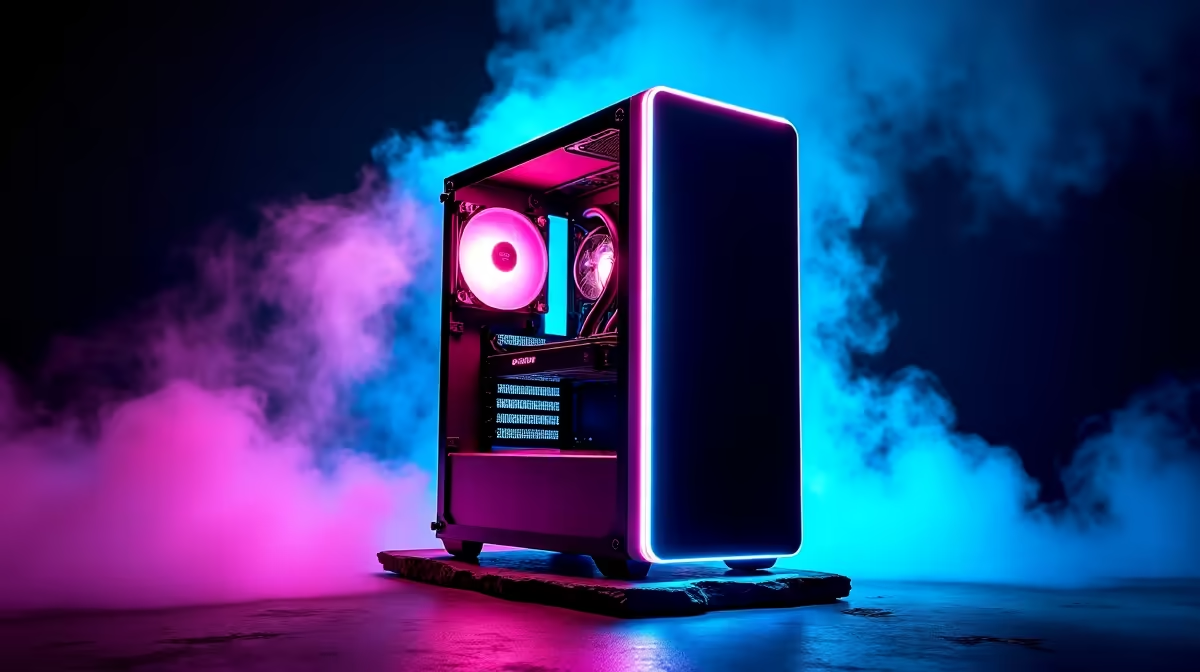
Asking about a gaming PC's power consumption is like asking how long a piece of string is. The answer depends entirely on the components inside. A modest PC built to run Minecraft at a smooth framerate might only pull 200W from the wall, putting it right in console territory.
On the other hand, a high-end beast designed to render the neon-drenched streets in Cyberpunk 2077 with ray tracing maxed out can easily draw over 600W. The graphics card (GPU) is the biggest culprit, followed by the processor (CPU). A simple build for competitive games like Fortnite will always be more efficient than a top-tier machine. This is where the power of choice comes in.
PSU Pro Tip 💡
Always choose a high-quality Power Supply Unit (PSU) with an 80 Plus rating (Bronze, Gold, Platinum). This rating guarantees efficiency, meaning less electricity is wasted as heat. An 80 Plus Gold PSU is 90% efficient at 50% load, saving you money on your electricity bill and ensuring stable power for your components.
The Rand and Cents: Calculating Your Gaming Bill 🇿🇦
Let's do some quick maths. Assuming an electricity rate of R3.50 per kilowatt-hour (kWh), a common figure in many South African metros, what does a three-hour gaming session cost?
- Console (~200W): 0.2 kW * 3 hours * R3.50/kWh = R2.10
- Mid-Range PC (~350W): 0.35 kW * 3 hours * R3.50/kWh = R3.68
- High-End PC (~600W): 0.6 kW * 3 hours * R3.50/kWh = R6.30
Over a month, that difference adds up. If you're dropping into Verdansk for hours on end, a purpose-built Call of Duty: Warzone 2.0 PC can be optimised for performance-per-watt. The same logic applies whether you're chasing a chicken dinner on a PUBG gaming rig or exploring the vast world of a custom GTA V PC.
Beyond the Plug: Which is Truly 'Greener'?
Power consumption is only half the story. The "greener" debate also involves e-waste. A console has a fixed lifecycle; when it's outdated, the entire unit is often replaced.
A gaming PC, however, is modular. You can upgrade the graphics card, add more RAM, or swap out the CPU without throwing away the whole system. This upgradability means a well-planned PC can last for many years, evolving with technology and reducing waste. A powerful, upgradable rig you build today for a demanding title like Microsoft Flight Simulator can be easily updated for the next generation of games.
The Verdict: Efficiency vs. Flexibility
When comparing gaming PC vs console power consumption in ZA, there's no single winner.
- Consoles are the champions of out-of-the-box energy efficiency, offering a predictable and lower electricity bill for a fantastic gaming experience.
- Gaming PCs offer unparalleled choice. You can build an ultra-efficient 1080p machine that sips power or a 4K monster that demands it. Their true green credential is their longevity and reduced e-waste through upgrades.
The best choice depends on your priorities: predictable cost and simplicity, or ultimate performance and long-term sustainability.
Ready to Build an Efficient Powerhouse?
The PC vs console power debate in South Africa ultimately comes down to control. A custom gaming PC lets you decide the perfect balance of performance and power consumption for your needs and budget. Explore our wide range of customisable gaming PCs and build a machine that's perfect for you.