The same humble PVA stick that rescues a PLA print can also be the thing that saves your build plate from a PETG print, and it does the opposite job in each case. That sounds contradictory until you understand what is actually happening at the surface. A glue stick on the bed is sometimes an adhesive and sometimes a release agent, and which role it plays depends entirely on the plate you are printing on and the filament you are running.
Quick Answer
On a cool glass or older textured plate, PVA glue stick gives PLA the extra first-layer grip it needs. On a smooth PEI sheet, PVA does the reverse for PETG: it acts as a thin release barrier so the print lifts off cleanly instead of tearing chunks out of the PEI coating. Same product, two opposite outcomes, decided by the surface.
Why PVA Behaves Differently on Different Surfaces
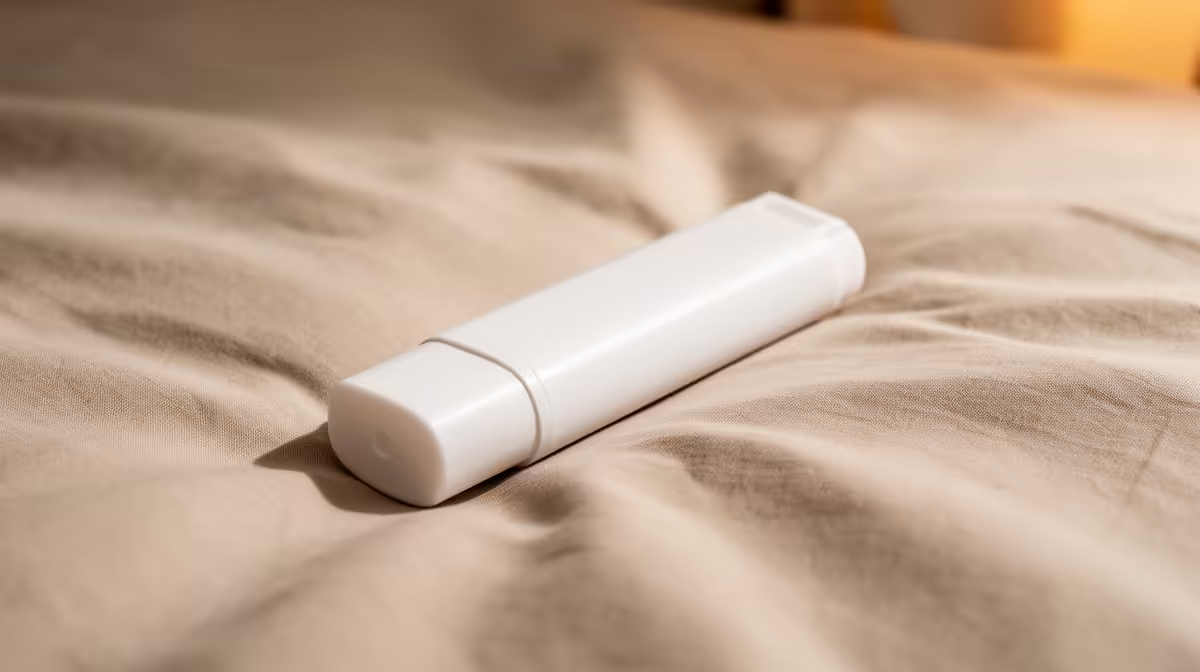
PVA (polyvinyl acetate) is the binder in white school glue and most washable glue sticks. When you wipe a thin layer onto a build plate and let it dry for about 30 seconds, it leaves a slightly tacky film. How that film behaves depends on what it is sitting on and what is pressing into it.
On glass, the surface is chemically smooth and offers very little for molten plastic to key into once it cools. PLA in particular can lift at the corners on bare glass. The PVA film gives the first layer something to bond to while the plate is warm, then releases its grip as the bed cools, which is why prints often pop off a cooled glass plate on their own.
On a modern smooth PEI spring steel sheet, the situation flips. PEI already grips most filaments extremely well on its own. That is great for PLA, which needs no help at all on PEI at a bed temperature around 60C. The problem arrives with stickier materials.
PLA: When the Glue Stick Adds Grip
PLA is the easy one. On a clean PEI sheet it needs no adhesive whatsoever, and adding glue can actually reduce the quality of that crisp first layer. The single biggest cause of PLA lifting on PEI is not lack of glue, it is contamination. Finger oils are invisible adhesion killers, and one fingerprint in the centre of the plate will cause a print to lift in exactly that spot. Wipe the sheet with high-percentage isopropyl alcohol between sessions before you reach for anything else.
Where PVA genuinely helps PLA is on glass, on damaged or aging textured plates, or on tall narrow prints with a small footprint that want to peel at the edges. A thin, even layer raises grip without leaving a thick, gloopy mess. The browse-worthy spread of FDM machines and consumables in the 3D printers section at Evetech is a good place to match a plate type to the filament you actually print most.
Large flat PLA prints
Even on good PEI, wide flat objects like cable trays, wall mounts or base plates have a lot of surface area contracting as the part cools. If a large print tends to curl up at corners despite a clean plate, a PVA film gives a small extra margin of grip that is often enough to hold those edges flat through the full cool-down.
PETG: When the Glue Stick Becomes a Release Agent
PETG is the headline reason this topic exists. It bonds to bare PEI so aggressively that on removal it can rip the PEI coating clean off the steel, permanently scarring an expensive sheet. The fix is counter-intuitive: you deliberately apply a thin barrier so the PETG does not weld itself to the PEI.
A light coat of PVA glue stick is the cheapest, most common barrier. It sits between the PETG and the PEI, giving you a print that holds during the job and lifts away cleanly afterwards without taking the coating with it. Some people use a glass cleaner wiped onto the plate for the same separating effect, but a dry glue-stick film is the most controllable for beginners.
The other half of the PETG equation is Z-offset. If your nozzle is squashing the first layer too hard into the plate, even a release layer struggles. Set the offset so the first layer is laid down rather than crushed in, and the glue-stick barrier does the rest.
Textured PEI and PETG
On a textured (powder-coated) PEI plate, PETG behaves better than on smooth PEI because the reduced contact area at each peak of the texture lowers overall adhesion. Many users print PETG on textured PEI without any barrier at all and find the print pops off cleanly at room temperature. If you have a choice of plate and you print PETG regularly, a powder-coated textured surface is the lower-maintenance option.
Practical Bed Prep Routine
Keep it simple. For PLA on PEI, clean with isopropyl alcohol and print bare. For PLA on glass or a tired plate, add a thin PVA layer for grip. For PETG on smooth PEI, add a thin PVA layer as a release barrier and dial in a slightly higher Z-offset. Reapply glue every few prints rather than building up thick layers, and wash the plate with warm water when the film gets uneven, since PVA is water soluble.
Stocking the right consumables alongside the printer saves repeat failed first layers, and the fast-moving accessories best sellers at Evetech are worth scanning when you top up filament, adhesion aids, and spare nozzles in one go.
Frequently Asked Questions
Does PLA need glue stick on a PEI bed?
No. Clean PEI grips PLA perfectly at around 60C bed temperature with no adhesive. If PLA is lifting on PEI, the usual culprit is finger oil or dust on the plate, so wipe it with isopropyl alcohol first before adding any glue.
Why does PETG damage PEI sheets without glue?
PETG forms an extremely strong chemical bond with bare PEI. When you peel the print off, that bond can tear the PEI coating off the steel sheet. A thin glue-stick layer acts as a sacrificial release barrier so the print separates without ripping the surface.
How thick should the glue layer be?
Thin and even. One light pass with the stick, then let it dry for roughly 30 seconds before printing. Thick, gloopy layers cause an uneven first layer and can leave ridges in the print base.
Can I use the same glue stick for PLA grip and PETG release?
Yes. A standard washable PVA glue stick does both jobs. The difference is the situation it is used in, not the product: grip on cool or smooth-glass surfaces, release on smooth PEI under PETG.
How do I clean glue stick off the plate?
PVA is water soluble. Lift the spring steel sheet, rinse it under warm water, and wipe it down. Finish with isopropyl alcohol once it is dry to remove any remaining film before the next print.
Matching your filament to the right build surface is the real fix for first-layer failures. Browse the current range of FDM machines, plates, and consumables in the 3D printers section at Evetech and set your next print up to succeed the first time.