The power just clicked off... again. Your desktop is dark, but the urge to dive into Helldivers 2 is real. So, what’s your move? This is where the modern gamer's dilemma kicks in: the handheld gaming PC vs laptop showdown. Ten years ago, this wasn't even a conversation. Today, with devices that can run AAA titles in the palm of your hand, choosing your portable gaming rig has become a serious strategic decision for South African gamers. 🇿🇦
Why a Handheld Gaming PC Might Be Your Perfect Match
The biggest draw for a handheld gaming PC is pure, unadulterated freedom. Imagine sinking into the couch for a session of Cyberpunk 2077 without being tethered to a desk, or continuing your Baldur's Gate 3 campaign during a long commute. This is the promise of the handheld revolution.
These devices are purpose-built for play. With integrated controllers, ergonomic grips, and a lightweight design, they offer a level of pick-up-and-play convenience a laptop just can's match. For many, they are the ultimate secondary gaming device, perfect for indie titles and complementing a powerful desktop rig. The market is exploding with incredible options, and you can browse a fantastic selection of powerful handheld gaming consoles to see what fits your style.
Models like the ASUS ROG Ally have proven that you don't need a massive chassis to get a stunning 1080p gaming experience, making the choice between a handheld gaming PC or laptop tougher than ever.
When a Gaming Laptop Still Reigns Supreme 💻
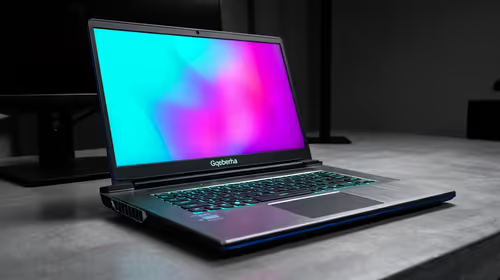
While handhelds are fantastic, let's be clear: for raw power and sheer versatility, the gaming laptop is still the undisputed champion. A larger chassis means more room for beefier GPUs, more robust cooling systems, and bigger batteries. This translates directly to higher frame rates, maxed-out graphics settings, and longer sessions on demanding titles.
But the real victory for the laptop is its "do-it-all" nature. It’s not just a gaming machine; it’s your workstation, your Netflix screen, and your varsity assignment powerhouse. From editing videos to coding and competitive FPS gaming where a full-size keyboard and mouse are non-negotiable, a laptop offers a complete ecosystem. A handheld is a gaming specialist; a laptop is a portable command centre.
It's no surprise that the powerhouse brands known for legendary gaming laptops are now innovating in the handheld space too. The unique Lenovo Legion Go with its detachable controllers and the powerful new MSI Claw bring that high-performance DNA to a smaller form factor, showing how the lines are blurring.
Battery Life Pro Tip ⚡
Use your device's built-in software (like Armoury Crate on ASUS or Legion Space on Lenovo) to set a custom TDP (Thermal Design Power) limit. For less demanding indie games, dropping the wattage from 25W to 15W can dramatically extend your playtime. It's the easiest way to squeeze more gaming out of every charge, whether you're on a handheld or a laptop.
Handheld Gaming PC vs Laptop: A Direct Showdown
So, how do they stack up head-to-head? The best portable gaming rig for you depends entirely on your priorities.
### Performance: The Power Gap
A top-tier gaming laptop with an RTX 4070 or higher will always outperform any current handheld PC, delivering superior frame rates and graphical fidelity on its larger, higher-resolution screen. However, handhelds are brilliantly optimised for their 7 to 8-inch 1080p/1200p screens, providing a surprisingly smooth experience that punches well above its weight.
### Portability: The Freedom Factor 🚀
This isn't even a contest. A device weighing under 1kg that fits in a small bag (or a big pocket) is infinitely more portable than a 2-3kg laptop that requires a backpack and a flat surface to use properly. For true grab-and-go gaming, the handheld is king.
- Winner: Handheld Gaming PC
### Versatility: The "One Rig to Rule Them All" Test
Can you comfortably type up a 2,000-word report on a handheld? Or use it for a full day of remote work? Not really. A laptop's built-in keyboard, larger screen, and trackpad make it the superior choice for anyone who needs their gaming machine to double as a productivity tool.
### Price: Your Wallet's Vote
Handhelds generally offer a lower cost of entry into the world of PC gaming, with prices that are very competitive. While high-end handhelds can approach the price of an entry-level gaming laptop, you typically get more performance-per-Rand from a laptop, especially when you factor in its broader utility.
The final decision in the handheld gaming PC vs laptop debate is personal. It's a choice between specialised convenience and all-in-one power.
Ready to Choose Your Portable Powerhouse?
The debate over a handheld gaming PC vs laptop comes down to your life and your library. Do you need a do-it-all beast or the ultimate grab-and-go rig? Whatever you choose, power is the name of the game. Explore our massive range of gaming laptop specials and find the perfect machine to conquer your world, wherever you are.