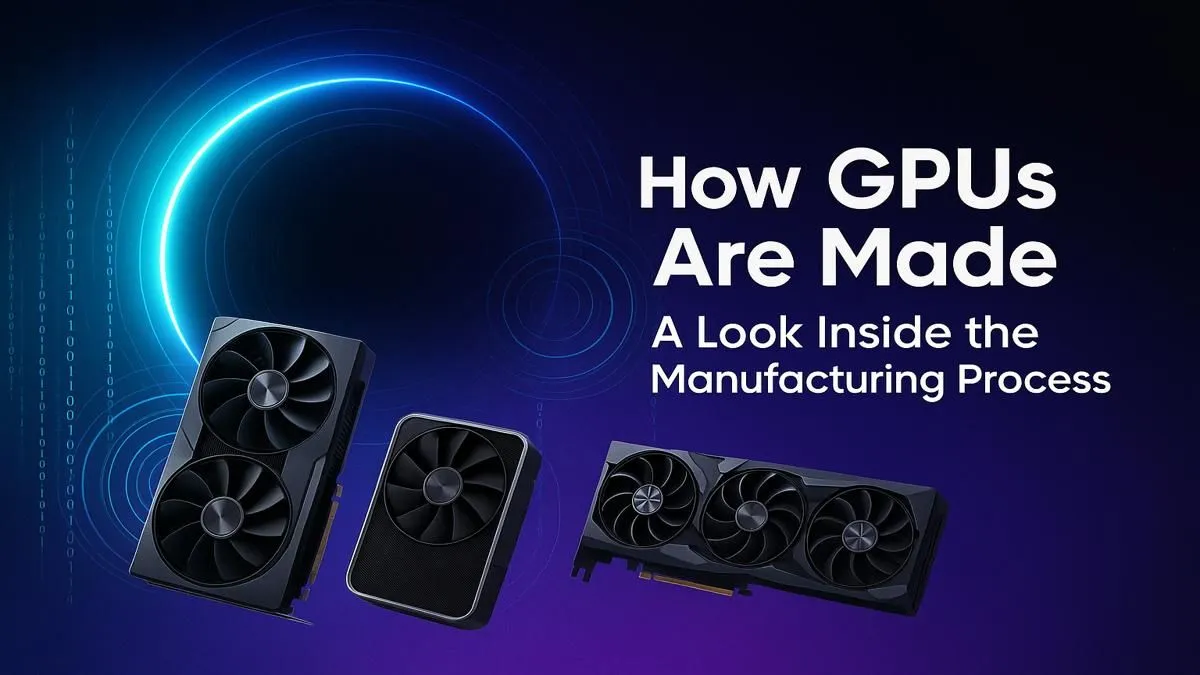
Ever dropped into a game like Warzone or marvelled at the ray-traced reflections in Cyberpunk 2077 and just... paused? The magic on your screen is powered by a slab of silicon and metal inside your PC. But have you ever wondered how that graphics card, that gaming superpower, is born? The journey from a grain of sand to the beastly GPU rendering your world is one of the most incredible feats of modern engineering.
The Journey Begins: From Sand to Silicon Wafer
Believe it or not, the story of your graphics card starts at the beach. Well, sort of. The primary ingredient is silicon, which is extracted from quartz sand and purified to an incredible 99.9999% purity. This ultra-pure silicon is then melted down in a crucible.
A tiny seed crystal is dipped into the molten silicon and slowly pulled upwards while rotating. As it cools, it forms a massive, single-crystal cylinder called an ingot. This perfect, flawless structure is essential for the billions of transistors that will soon live on it. The ingot is then sliced into ultra-thin, perfectly polished discs called wafers. Each wafer is a blank canvas, ready to become hundreds of powerful GPU cores.
Photolithography: Printing the Blueprint 🔬
This is where the real magic of the GPU manufacturing process happens. Photolithography is an advanced printing technique that uses light to etch impossibly small circuit patterns onto the silicon wafer.
The wafer is coated with a light-sensitive material called a photoresist. It's then exposed to ultraviolet light through a mask, which acts like a stencil for the GPU's architecture. The light hardens parts of the photoresist, and the unexposed parts are washed away, revealing the silicon beneath. This process is repeated dozens of times, layering different materials like copper and insulators to build the complex, multi-layered network of transistors that form the GPU's brain.
Every design, from the intricate RDNA architecture in the latest AMD Radeon graphics cards to competing layouts, is painstakingly etched layer by layer.
From Wafer to Individual Dies
Once all the layers are complete, the wafer holds hundreds of individual potential GPUs, now called "dies". But not all of them are created equal. Automated probes test every single die on the wafer to check for defects and measure its performance.
This is where "binning" comes in. Dies that perform perfectly, with high clock speeds and no faulty cores, are reserved for the top-tier cards. Those with minor imperfections might have a few cores disabled and become a lower-tier model. This crucial sorting process is how a single wafer design can create a full product stack, from mid-range heroes to the powerhouse NVIDIA GeForce graphics cards that top the performance charts.
After testing, a diamond saw dices the wafer, separating the hundreds of dies from each other.
Assembly and Packaging: Building the Final Graphics Card 🤖
The tiny, fragile silicon die is now ready to be packaged. It’s mounted onto a substrate—a small circuit board that acts as an interface—and then attached to the main Printed Circuit Board (PCB).
This is the large green board you recognise as the graphics card. Here, the GPU die is joined by other critical components:
- VRAM chips for storing textures and frame data.
- VRMs (Voltage Regulator Modules) to deliver clean, stable power.
- I/O ports like HDMI and DisplayPort.
It's a complex assembly line, where precision robotics and skilled technicians come together to build the final product. It’s a process that new players are also mastering, with exciting options like Intel Arc graphics cards bringing fresh competition to the market.
PC Builder's Pro Tip 🔧
Before you buy that beastly new GPU, double-check its dimensions (length, height, and width) against your PC case's specifications. High-end cards can be massive, and there’s nothing worse than discovering your new card won’t physically fit. Measure twice, buy once!
The Cooling Solution and Final Touches
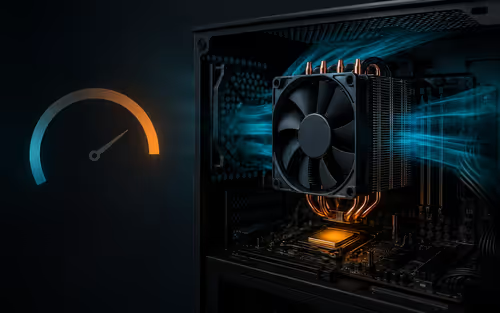
A modern GPU generates an immense amount of heat. Without a robust cooling solution, it would overheat in seconds. The final major assembly step is attaching the cooler. This typically consists of a large heatsink with copper heat pipes that draw heat away from the GPU die, and fans that dissipate that heat into the air.
The design of these coolers is a science in itself, balancing performance, noise, and aesthetics. The cooling and power requirements for a gaming GPU differ significantly from those on specialised workstation graphics cards, which are often optimised for long-term stability and precision over raw frame rates.
After a final round of rigorous testing, the card gets its firmware, is boxed up with manuals and accessories, and begins its journey to a retailer like Evetech.
So the next time you boot up a game, take a moment to appreciate the incredible journey that took place to create your GPU. From a humble grain of sand to a gaming superpower 🚀, it’s a testament to human ingenuity. Now that you know how GPUs are made, the next step is choosing the right one from the vast world of graphics cards available today.
Ready to Unleash a New Gaming Superpower?
Understanding the incredible process of how GPUs are made helps you appreciate the power you're harnessing. Whether you're Team Green, Red, or Blue, the perfect card for your rig and budget is waiting. Explore our massive range of graphics cards and find the perfect engine for your gaming adventures.