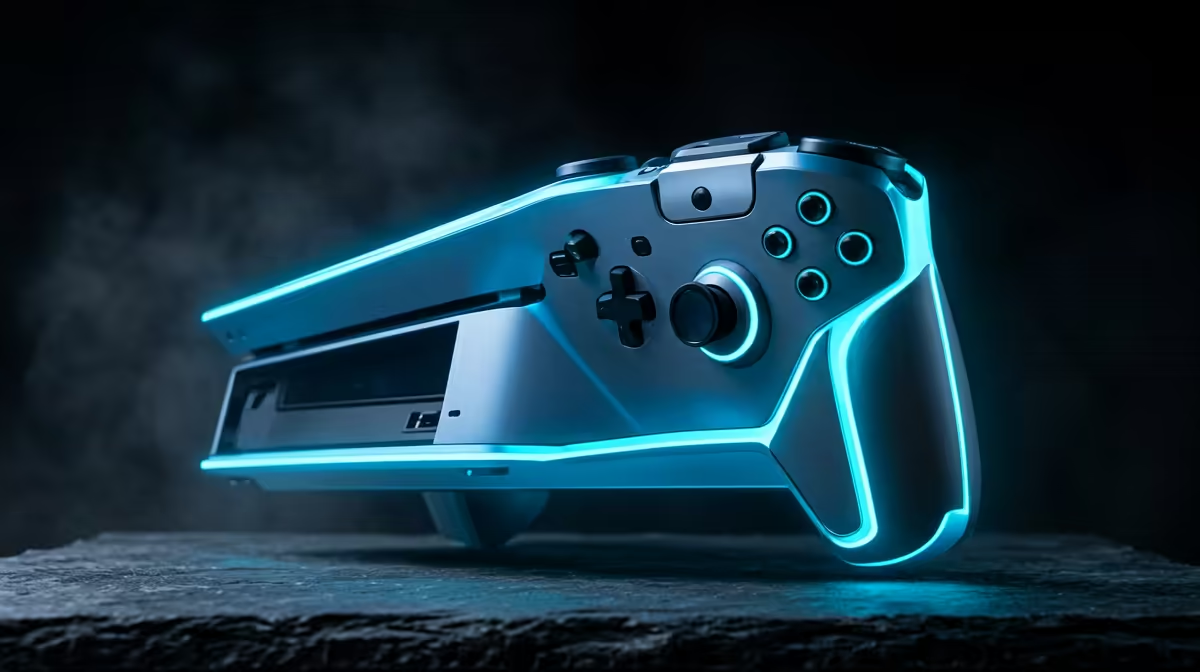
Ever held a Steam Deck or ROG Ally and wondered how they squeezed a full-blown gaming PC into something you can throw in your backpack? It’s not magic... it’s a marvel of modern engineering. Here in South Africa, the buzz around these portable powerhouses is real. We're pulling back the curtain to show you exactly how handheld gaming PCs are made, from the first silicon chip to the final satisfying click of a button. 🚀
The Heart of the Handheld: Crafting the Custom APU
The journey of how a handheld gaming PC is made begins with its heart: a custom-designed Accelerated Processing Unit (APU). Unlike a desktop with a separate CPU and GPU, an APU combines both onto a single, power-efficient chip. This is the secret sauce.
Manufacturers like Valve and ASUS collaborate closely with chipmakers like AMD to create a bespoke piece of silicon. The goal is a delicate balancing act. The APU needs enough graphical grunt to run AAA titles smoothly but must sip power to avoid melting the chassis or draining the battery in an hour. They focus on optimising the Thermal Design Power (TDP)—the maximum heat a chip can produce—to ensure you get playable frame rates without needing a fire extinguisher.
From Blueprint to Your Hands: The Chassis and Controls
Once the chip is finalised, the physical shell, or chassis, is designed around it. This isn't just a plastic box; it's an ergonomic puzzle. Engineers spend months, sometimes years, prototyping different shapes and button layouts using 3D printing and extensive user feedback.
How does it feel after three hours of Elden Ring? Are the thumbsticks responsive? Is the weight balanced? These questions drive the entire manufacturing process. The final design must be comfortable, durable, and packed with high-quality controls. While the built-in controls are fantastic, many gamers love to personalise their setup with custom grips and other gaming accessories deals to perfect the feel.
More Than a Chip: Power, Storage, and Cooling Systems
A powerful APU is useless without the right support systems. The internal architecture of a handheld PC is a masterclass in space management.
Lightning-Fast Storage ⚡
To keep load times snappy, these devices rely on compact M.2 NVMe SSDs. These are tiny, blisteringly fast storage drives that allow games to load in seconds. It’s this technology that makes the experience feel so seamless. If you're looking to upgrade your desktop or laptop with similar speed, checking out the latest best SSD deals is a great place to start.
Custom Cooling and Battery Solutions
Cooling is a massive challenge. Engineers use miniature fans, custom heat pipes, and sometimes even vapour chambers to channel heat away from the APU and out of the vents. It's a tiny, intricate HVAC system. The battery is equally custom, shaped to fit every spare millimetre inside the chassis to maximise capacity. To keep gaming on the go during an unexpected outage, many South African gamers pair their handhelds with a high-capacity power bank from our range of tech essentials.
Battery Life Pro Tip 🔋
Most handheld PCs let you adjust the TDP (Thermal Design Power) in the settings. For less demanding indie games, lowering the TDP from 15W to around 9-10W can dramatically extend your battery life without a noticeable performance drop. It's the easiest way to squeeze an extra hour of gaming out of your device!
Bringing Games to Life: The Screen and Sound ✨
The final pieces of the puzzle are the display and audio, your windows into the game world. The manufacturing process for handheld gaming PCs involves sourcing high-refresh-rate screens, often 7-inch LCD or OLED panels, that offer vibrant colours and smooth motion.
While the built-in speakers have improved massively, they can only do so much. To truly appreciate the cinematic soundscapes of modern games and pinpoint enemy footsteps in a competitive shooter, nothing beats a proper headset. A quality pair from our best gaming headset deals will unlock a whole new level of immersion that built-in speakers simply can't match.
From a microscopic APU to a perfectly balanced chassis, the process of making a handheld gaming PC is a testament to incredible innovation. It’s about shrinking the power of a desktop rig into a device you can enjoy anywhere.
Inspired by the Engineering? Build Your Own Beast.
The process of making a handheld gaming PC shows what's possible with modern components. If you're ready to harness that power for yourself, whether in a portable device or a desktop rig, we've got the parts. Explore our massive range of PC gaming hardware and build the machine that will conquer your world.