Quick Answer
Choose a OLED monitor for oled monitor for 3d modelling and rendering only if its main strength fits the task. For SA buyers, shortlist models by size, resolution, ports, warranty notes, and a realistic local band around R12,000-R35,000, then confirm current stock.
Match The Panel To The Job
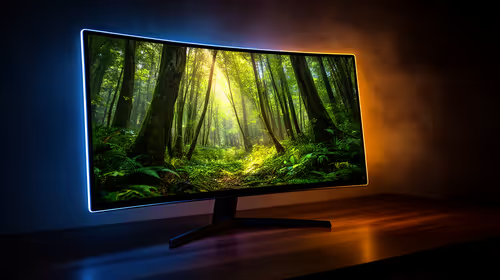
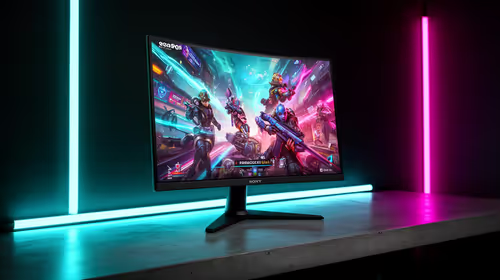
For oled monitor for 3d modelling and rendering, start with size and resolution. A 24- or 25-inch 1080p 240Hz screen suits fast play and small desks, while a 27-inch 1440p OLED suits rich visuals, editing timelines, and immersive games. If the setup involves a couch or TV, check cable length, HDMI support, and text scaling before buying.
Model families to compare include LG UltraGear 27GR95QE, Samsung Odyssey OLED G6, or ASUS ROG Swift OLED PG27AQDM. Use them as class examples, then check the exact Evetech listing for panel type, ports, and warranty terms.
Specs That Matter
Focus on contrast, HDR, response time, and panel care, not only the headline number. A 240Hz screen needs a PC that can push 180-240 fps in the games you play. OLED looks excellent, but office users should think about static taskbars, spreadsheets, and long browser sessions.
Also check VESA mounting, stand adjustment, included cables, and whether the stand leaves enough space for a full keyboard. Those details decide daily comfort.
Buying Checks
Set the target first: 1080p 240Hz for esports, 1440p high refresh for balanced gaming, or OLED for contrast-heavy work and cinematic play. Keep budget flexible because prices move, but include any monitor arm, DisplayPort cable, or GPU upgrade needed to use the screen properly.
FAQ
Is a OLED monitor worth it for oled monitor for 3d modelling and rendering?
Yes, when the workload uses the panel strength. It is less worthwhile if the PC, room layout, or daily tasks cannot benefit from it.
What size should SA buyers choose?
Most desks suit 24-25 inches for 1080p esports or 27 inches for 1440p gaming and productivity. Couch setups need larger text scaling.
What should I check in the listing?
Check resolution, refresh rate, ports, adaptive sync, warranty notes, stand adjustment, and VESA support. Those decide whether it fits the real setup.
Display Check
the monitor to the GPU first: aim for 180 fps or more before prioritising 240Hz, and check OLED warranty notes for static desktop work.