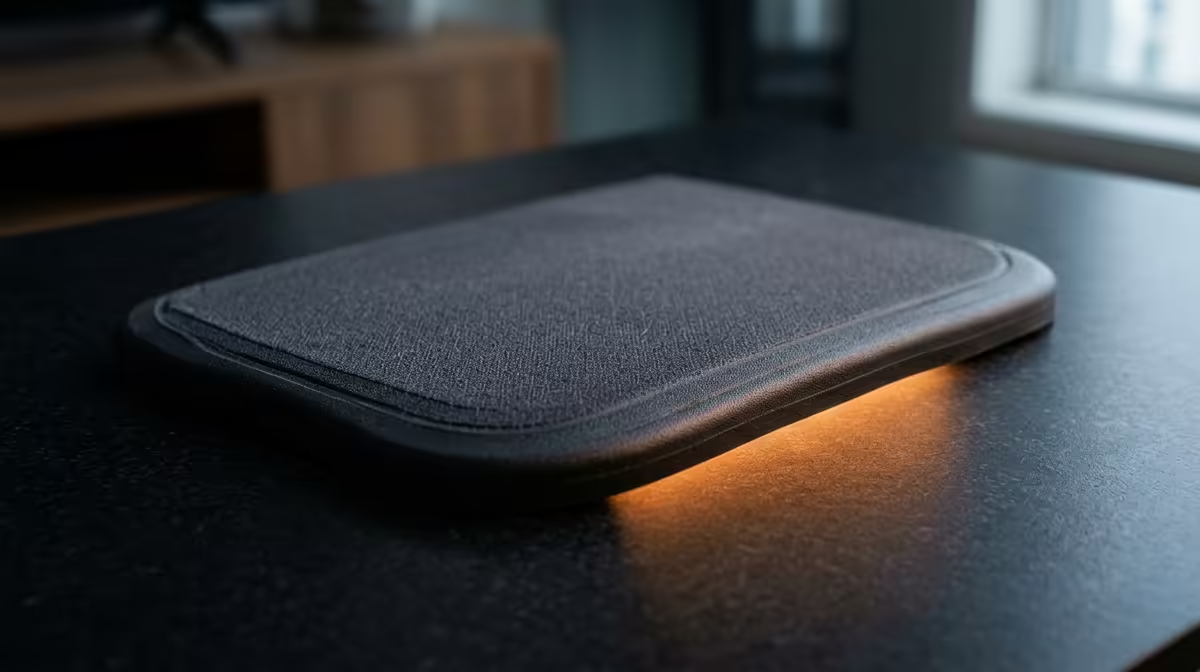
A standing desk solves one problem and quietly creates another. Stand all day on a hard floor and your feet, knees and lower back protest within a week. Choosing an anti-fatigue mat for a standing desk is what closes that gap, and sit-stand research has flagged cushioned standing as a necessary part of the setup rather than a nice-to-have. The right mat is not just padding underfoot, it actively keeps your legs moving in tiny ways that prevent the stiffness prolonged standing brings.
Quick Answer
Look for a mat with at least 20mm of high-density foam, bevelled edges to avoid tripping, and a non-slip base. That combination gives enough give to stay comfortable for hours without the spongy sink that overworks your foot muscles. Budget for a mat that matches how long you actually stand, not the cheapest option on the shelf.
Why a Mat Is Not Optional With a Standing Desk
The whole point of a standing desk is to break up the sedentary hours that come with a chair. The catch is that standing still on a rigid surface is its own kind of strain. Your weight bears down through the same points continuously, blood pools in the lower legs, and the small stabilising muscles in your feet lock up.
An anti-fatigue mat works through what ergonomists call dynamic ergonomics. The slight give in a good mat encourages your legs to make constant micro-adjustments, small shifts you barely notice. Those movements keep muscles gently engaged and blood circulating, which is exactly what cuts the fatigue that flat flooring causes. Stand on concrete or tile for a full workday and you feel the difference within hours.
Foam Depth: The Number That Matters Most
Thickness is the spec that makes or breaks a mat, but more is not automatically better. The sweet spot for standing desk use sits between roughly 15mm and 20mm of high-density foam.
Too thin and it does nothing
A thin mat under 15mm bottoms out under your weight, so you are effectively standing on the hard floor again with a token layer on top. It looks like an anti-fatigue mat without behaving like one.
Too soft and it backfires
Counterintuitively, a mat that is too plush causes its own fatigue. When the foam is too spongy, your foot and toe muscles work overtime just to keep you stable, and they tire faster than they would on a firmer surface. This is why high-density foam beats cheap, airy foam every time. You want a surface with a little give that still pushes back and keeps you steady.
Edges, Base and Surface
Beyond the foam, three details separate a mat you keep using from one that ends up in a cupboard.
Bevelled edges are a genuine safety feature. A mat with squared-off edges becomes a trip hazard every time you step on or off it, and you will be doing that all day. Tapered, bevelled edges let you move on and off without catching a foot.
A non-slip base keeps the mat anchored. On hard SA flooring like tiles or laminate, a mat that slides as you shift your weight is both annoying and unsafe. Look for a textured or rubberised underside.
The top surface should offer grip too. A slightly textured top helps your footing, especially in socks, and adds to overall stability through the day.
Size and Material for SA Home Offices
Match the mat footprint to your stance. A mat around 50cm by 80cm gives most people room to shift their feet and change position, which is the whole idea, rather than locking you into one spot. For materials, polyurethane and high-density foam are the common, reliable choices, with some mats adding a gel core for extra cushioning.
If you are kitting out a home office, the mat is one piece of the comfort puzzle. A proper standing desk for your active periods matters just as much, and you can compare options in the gaming and standing desk range at Evetech to cover both halves of a true sit-stand routine.
Foam, Gel and Rubber: Choosing the Right Material
High-density polyurethane foam is the most common fill and the safest default for all-day standing. It absorbs shock steadily, compresses just enough to activate the micro-movement response, and holds its shape over months of use. Cheaper, lower-density foams eventually flatten and stop providing the cushioning effect, so density matters more than thickness alone when comparing options.
Gel-core mats place a layer of gel beneath a foam or rubber surface. The gel reacts quickly to foot movement, which feels satisfying in short bursts, but after several hours on a gel surface some users find the responsive bounce becomes its own source of fatigue. Gel mats also retain heat, which can be uncomfortable in warmer SA climates during summer. They suit stations where you alternate frequently between sitting and short standing periods rather than extended standing blocks.
Rubber and polyurethane hybrid mats offer very firm support and durability that outlasts pure foam in demanding environments. On SA tile and laminate floors, a rubber base also grips better than most foam options, which is relevant if your home office has smooth, polished flooring that regular mats tend to skate across.
For a home office in South Africa where the mat will sit on tiled flooring and handle daily use year-round, high-density foam with a rubberised base hits the best balance of comfort, grip and longevity.
Matching the Mat to How You Work
Be honest about your standing time. If you stand for an hour here and there, a mid-range mat is plenty. If you have committed to standing for several hours a day, invest in a thicker, denser mat with all the edge and base features, because that is where the comfort difference compounds over months. Some people also like contoured or active mats with raised areas to rest a foot on, which encourage even more movement, though a flat high-density mat suits most desks fine. For the rest of your workspace upgrades, the best-selling desk accessories at Evetech are worth a look alongside your mat decision.
Frequently Asked Questions
Do I really need an anti-fatigue mat with a standing desk?
Yes. Sit-stand research treats cushioned standing as a necessary part of the setup, not an optional extra. Standing still on a hard floor for hours causes its own strain, and a mat keeps your legs moving subtly to offset it.
What foam thickness should I look for?
Aim for roughly 15mm to 20mm of high-density foam. Thinner than that bottoms out under your weight, and overly soft foam forces your foot muscles to work harder, which tires you faster.
Why do bevelled edges matter?
You step on and off the mat constantly through the day. Squared edges become a trip hazard, while tapered, bevelled edges let you move on and off smoothly and safely.
Is a softer mat more comfortable?
Not necessarily. A mat that is too spongy makes your stabilising foot muscles overwork to keep you balanced, leading to more fatigue. High-density foam with a controlled amount of give is more comfortable over a full day.
How big should a standing desk mat be?
Around 50cm by 80cm suits most people, giving enough room to shift your stance and change position. That freedom to move is part of how the mat reduces fatigue in the first place.
Comfort at a standing desk comes from getting both the surface and the mat right. Pair your anti-fatigue mat with the right standing desk from the gaming and standing desk range at Evetech and build a workspace your body can handle all day.