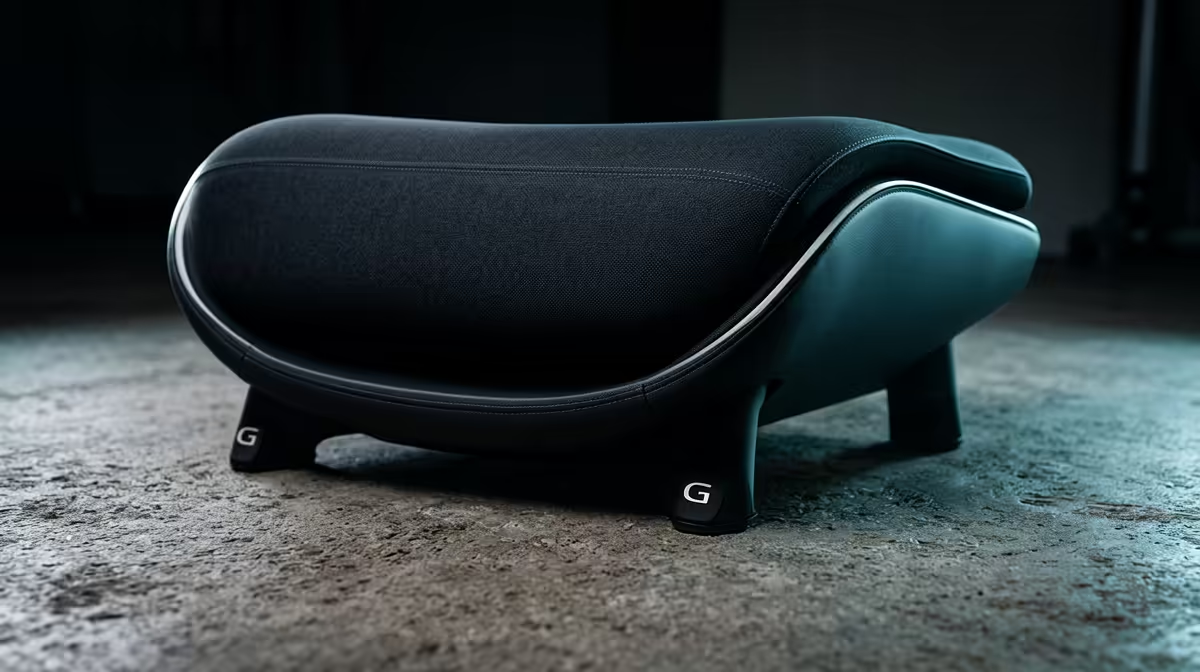
Raise your chair to the correct typing height and a shorter person's feet leave the floor. That dangling gap is not a minor annoyance: unsupported feet tilt the pelvis, drag the lower spine out of alignment, and load the lower back through every working hour. An under-desk footrest is the cheap, deliberate fix, restoring thigh-to-floor support so the rest of your ergonomic setup can actually work as intended.
Quick Answer
A good footrest gives a tilted surface of roughly 30 to 45 degrees, sits about 100 to 150mm high at the back, and adjusts to your leg length so your thighs stay level and your knees sit near 90 degrees. A useful sizing rule of thumb is a platform height around 10 percent of your total height. Tilt and grip matter more than the price.
Why the dangling-feet problem hurts
The chair height that puts your forearms level with the desk is set for your upper body, not your legs. If you are on the shorter side, that same height lifts your feet off the floor. The body compensates in unhelpful ways: it tucks the legs back under the chair, slides the hips forward, or perches on the seat edge. Each of those shifts rotates the pelvis and strains the lower back over a full day.
A footrest closes the gap. It gives the feet a stable surface at the right height, so the pelvis sits neutral, the thighs stay roughly level, and the lower back stops doing work it was never meant to do. Pair it with a chair that supports the same posture, like those in the gaming and office chair range, and the whole chain from feet to spine lines up.
Tilt and angle
A flat platform locks your ankles in one position, which leads to the same numbness and stiffness as keeping feet flat on a hard floor all day.
Choose a tilting surface
A footrest with an adjustable tilt of about 30 to 45 degrees lets you rock between angles. That movement keeps blood circulating in the lower legs and lets you change posture without leaving the desk. Static posture is the enemy: shifting position regularly is healthier than holding any single one, even a "correct" one.
Rocking versus fixed
Rocking footrests encourage active sitting and gentle calf movement through the day. Fixed-angle models are cheaper and fine if you mostly want height correction rather than movement. Decide based on how long you sit in one stretch.
Height and surface grip
Height is the make-or-break spec. Set your chair first so your arms reach the desk correctly, then measure the gap from your feet to the floor. The footrest should fill exactly that gap so your thighs end up level and your knees near 90 degrees. A platform around 100 to 150mm at the back, tapering lower at the front, suits most desks, and the 10-percent-of-height rule is a quick sanity check.
Grip is the spec people forget. A slick surface lets your feet slide, which defeats the point. Look for a textured or rubberised top and a base that grips the floor so the unit does not skate when you push against it. If you are still tuning the rest of your station, the best-selling chairs are a good reference for what SA buyers are pairing footrests with.
Tilt range and rocking motion
The tilt spec is where budget footrests cut corners most visibly. A genuinely useful tilt range runs from flat to about 25 to 30 degrees. Below that and you cannot find a comfortable resting angle; above it and the surface becomes too steep to sit on without your feet sliding off.
Rocking footrests go further by letting the platform pivot through that range continuously. Each small push of the heel or ball of the foot rocks the platform, which keeps the calf muscles gently active and prevents the blood-pooling and numbness that comes from a locked ankle through a long afternoon. The best rocking models have enough damping resistance that your feet control the movement rather than the platform swinging freely, which is both distracting and unstable. If you sit for stretches of more than two hours at a time, the movement benefit of a rocking model is worth the small price premium over a fixed-angle version.
Surface texture and upkeep
Surface texture is an easy spec to overlook until you spend a day on a slick platform in socks. A matte-textured or softly rubberised top surface keeps your feet in position without feeling rough or irritating bare skin. Aggressive massage-bump surfaces feel stimulating for the first hour but become an annoyance across a full working day, so a moderate texture beats a pronounced one for all-day use.
For cleaning, a simple wipe-down with a damp cloth and mild soap once a week keeps the surface free of dust and oils. SA homes with tiles and laminate floors tend to accumulate fine grit that gets tracked onto a footrest platform, and a quick clean prevents the surface from becoming abrasive over time.
A footrest is part of a system, not a fix for a bad chair
The single biggest mistake is buying a footrest to paper over a poorly adjusted chair. The order is fixed: adjust the chair so your arms are at correct typing height, and only then add a footrest to support whatever leg gap remains. A footrest cannot rescue a chair set wrong, and stacking one on top of a bad setup just moves the strain somewhere else. Treat it as the final piece that completes a correctly built workstation.
For taller users whose feet already reach the floor, a footrest is optional and mostly a comfort or movement aid. For shorter users at a standard-height desk, it is closer to essential.
Frequently Asked Questions
Do I really need a footrest?
If your feet do not rest flat on the floor once the chair is at correct typing height, yes. Unsupported feet tilt the pelvis and load the lower back. Taller users whose feet already reach the floor can treat it as optional.
What angle should a footrest be?
An adjustable tilt of roughly 30 to 45 degrees works for most people. The ability to rock between angles keeps the ankles moving and prevents the stiffness a flat surface causes.
How high should a footrest be?
High enough to fill the gap between your feet and the floor after the chair is set correctly, so your thighs stay level and knees sit near 90 degrees. A platform around 100 to 150mm at the back suits most setups.
Can a footrest replace a proper chair adjustment?
No. Adjust the chair first for correct arm height, then add a footrest for the remaining leg gap. A footrest cannot compensate for a badly set chair.
Are tilting or rocking footrests better than flat ones?
For long sitting stretches, yes. A tilting or rocking surface keeps blood moving and lets you shift posture without leaving the desk, which a flat platform does not allow.
Sorting out your desk posture from the ground up? Start with a chair that supports it: browse the gaming chairs range at Evetech and build the rest of your station around it.