A 650W PSU for an RTX 5070 is enough when the unit is well built and the rest of the PC stays within a sensible power envelope. The number on the label is only the start. Age, connector layout, voltage stability and the processor beside the card decide whether that 650W supply deserves your trust.
Quick Answer
Yes, 650W is enough for most RTX 5070 systems and matches NVIDIA's baseline guidance. A high-draw processor, heavy overclocking or an ageing PSU can make 750W the better choice. Evetech's power-supply category had a median listed price of R2,099 as of July 2026, so budget for quality before chasing a larger wattage badge.
⚡ Add the complete system, not two labels
The graphics card and CPU draw most of the power, but the motherboard, pumps, storage and fans still count. Start with the exact RTX 5070 partner card's guidance, then add the processor's real loaded behaviour. A mainstream gaming CPU leaves more room than a top desktop chip running without limits.
Average gaming draw does not describe every moment. A GPU can change load quickly, and the PSU has to handle those brief demands without unstable voltage or a protection shutdown. A modern, reputable 650W unit designed for current hardware can manage that job better than an old generic model carrying a larger number.
Check Evetech's Corsair power-supply range for one view of established PSU lines. The wider PSU best-seller page helps you compare capacity, efficiency and cable format across more choices.
🔌 Check connectors before capacity
Read the graphics card manual and the PSU cable labels. Use the connector and cable arrangement specified by the card and supply makers. A 650W unit can have enough total capacity yet lack the clean cabling needed for the exact board.
Modular cables are not interchangeable between PSU models. A plug may fit at the unit while the pinout differs, which can damage hardware. Use only the cable set supplied for that exact PSU unless the manufacturer confirms compatibility.
Inspect the cable path after fitting the card. The connector should seat fully, and the cable needs room to bend without the side panel forcing it sideways. Check the latch with a torch before closing the case.
🧪 Know when 750W buys useful margin
A 750W supply earns its place when you pair the RTX 5070 with a power-hungry processor, run sustained CPU and GPU work together, or plan a future card upgrade. It may also run with a lighter percentage load, though fan behaviour depends on the model.
Overclocking reduces the margin of a 650W build. If your aim is efficient stock gaming, the baseline is easier to defend. If you plan to raise power limits on both major components, size the supply for that chosen behaviour.
Extra drives and case fans add relatively modest demand, but pumps, USB-powered devices and add-in cards should still appear on the build list. Do the calculation once with the finished specification. Avoid adding a huge mystery allowance that pushes you towards an expensive unit with no practical benefit.
🛡️ Quality shows up under stress
Look for the protections, platform reviews and warranty terms of the exact PSU. Efficiency certification describes energy conversion at tested loads; it does not grade every part of build quality. A well-reviewed Bronze or Gold model can be a sound choice when the internal platform and protection behaviour are proven.
Age changes the answer. A quality unit that has served one light system for a few years may remain suitable, while a supply with fan noise, shutdowns or a hard life should not follow an expensive GPU into the next build. Check whether its warranty is still active and inspect it for dust or damaged cables.
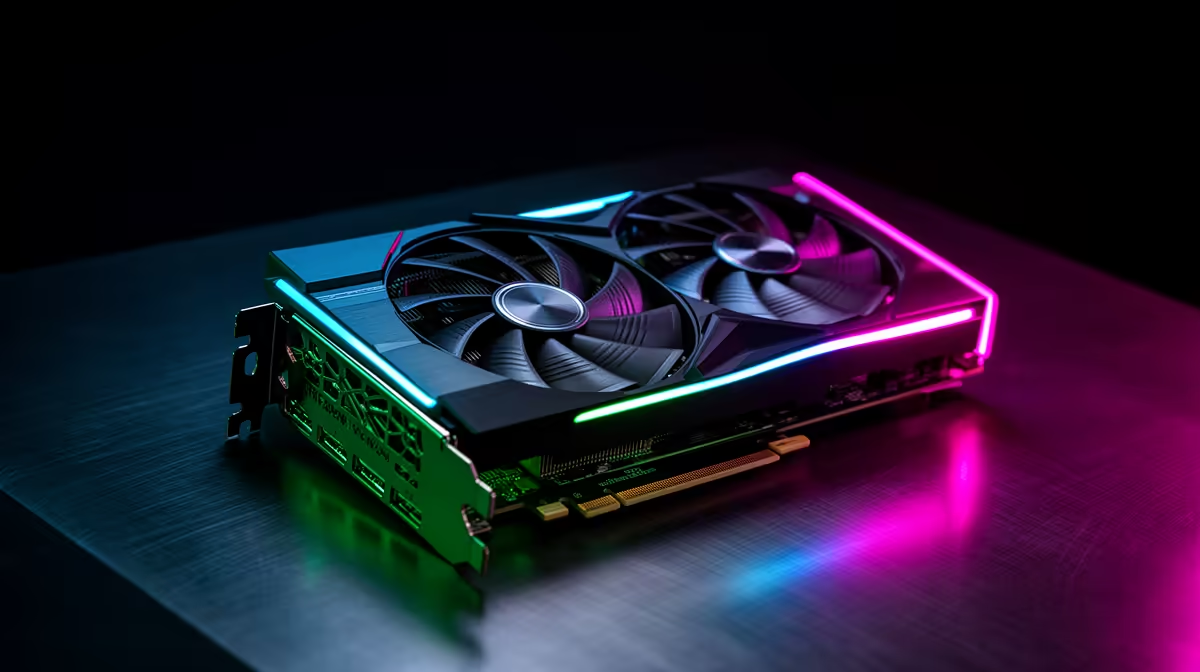
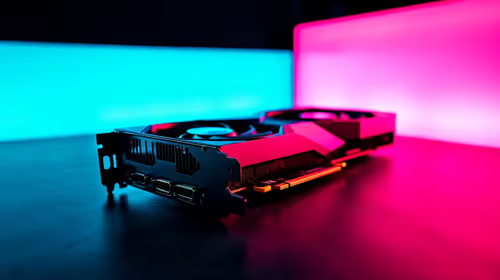
The RTX 5070 category lets you confirm the board partner's guidance alongside physical card details. Base the final decision on that exact card, not a generic GPU calculator.
Before the first gaming session, run a combined load while monitoring for sudden shutdowns, driver resets and unusual noise. A shutdown under load needs investigation; do not keep repeating it. Return settings to stock, check connections and test with known-good hardware if available.
PSU fan behaviour is worth checking in the finished case. Some units stop the fan at light load, then start it once gaming raises internal temperature. A blocked bottom intake or thick carpet can make that transition louder and warmer. Place the case on a hard surface and clean the filter before blaming the supply.
Keep the box, spare cables and purchase record together. Label unused modular cables with the PSU model so they cannot be mixed with a future unit. If you later add a graphics card with different connector guidance, return to the manual and rebuild the cable plan from scratch.
A wall-power meter can show how the complete system behaves, but it measures input at the socket rather than the PSU's output to components. Use it as a comparison tool between workloads. It cannot certify internal voltage quality or replace a technical PSU review.
Write the final cable route into the build notes before closing the panel. That record saves time when the card comes out for cleaning.
Frequently Asked Questions
Does NVIDIA recommend 650W for the RTX 5070?
Yes, 650W is the baseline recommendation for a typical system. Exact partner-card guidance and the rest of your components still apply.
Can a high-end CPU push past 650W?
It can reduce the available margin, especially during combined CPU and GPU work. Check the processor's real power behaviour and any unlocked limits.
Do transient power spikes matter more than average draw?
They matter because a supply must handle rapid load changes without unstable output or unwanted shutdowns. PSU design and condition shape that response.
Should I choose 750W instead to be safe?
Choose 750W for a high-draw CPU, overclocking or a planned upgrade. A balanced stock build can stay with a strong 650W model.
Does PSU quality matter as much as wattage here?
Yes. Protection design, voltage behaviour, cables, platform quality and age all matter beside total capacity.
Is 650W enough if I add extra storage or fans?
Usually, since those parts draw far less than the GPU and CPU. Include every component in the final system calculation.
Ready to power an RTX 5070 build properly?
Compare 650W supplies in Evetech's PSU range and verify the exact card connector, CPU load and cable layout before ordering.