A spool of filament costs less than a takeaway dinner, yet a single bought-in 3D print of the same part can run you R150 or more. That gap is where a 3D printer worth it decision actually lives. The Bambu A1 Mini lands at R5,499, which sounds steep until you count how many parts it churns out before the maths flips in your favour. The honest answer depends entirely on how often you print, not on how clever the machine looks on your desk.
Quick Answer
A 3D printer pays for itself if you print regularly. The Bambu A1 Mini costs R5,499, spools run R200 to R350 each, and one 1kg spool yields dozens of small parts. Print steadily for a few months and your per-part cost drops to a few Rand. Print twice a year, and a local print service is cheaper.
The Break-Even Maths, In Plain Rand
Start with the fixed cost: R5,499 for the A1 Mini. Then the running cost: a 1kg PLA spool at roughly R250 prints a surprising volume of small items, because most useful parts (brackets, phone stands, cable clips, replacement knobs) weigh 10g to 40g each. That means a single spool can produce 25 to 100 parts depending on size and infill.
Buying those same prints from a service in South Africa typically costs R80 to R200 per part once you factor setup, material, and the operator's time. Take a conservative R120 average. The printer plus its first spool costs about R5,750. Divide by R120 and you break even at roughly 48 prints. Print a part a week and you cross that line inside a year. Print a few parts a week and you are saving money within a couple of months.
If your idea of "3D printing" is two figurines a year, the picture inverts completely. You will spend R5,499 to avoid R240 of outsourced printing. That is not a saving, that is a hobby purchase, which is fine as long as you call it one.
Why the A1 Mini Specifically
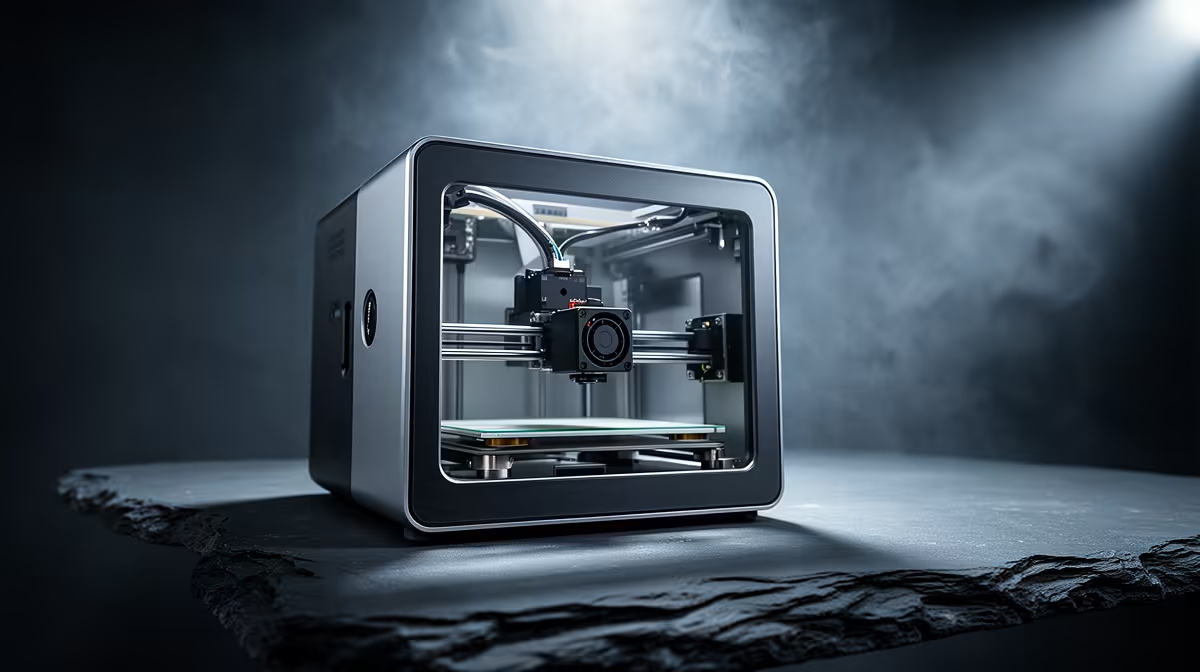
The A1 Mini earns its spot in this conversation because it removes the two things that historically wrecked the home-printing value case: fiddly setup and constant failed prints. It ships largely pre-assembled, runs automatic bed levelling, and has fast first-layer calibration. A failed print is wasted filament and wasted electricity, so reliability is not a luxury, it is the difference between the maths working and not working.
Its build volume of 180mm in each axis covers the overwhelming majority of practical household and hobby parts. You will not print a full helmet in one piece, but brackets, organisers, tool holders, board-game inserts, and replacement clips all fit comfortably. You can browse the current Bambu and entry-level machines through the 3D printer range stocked at Evetech to confirm pricing and availability before committing.
Running Costs People Forget
Two costs hide behind the headline filament price. The first is electricity, which is modest: a small FDM printer draws roughly the power of a games console, so even long prints add cents, not Rand, to your bill. The second is consumables that wear out, like nozzles and build-plate adhesion sheets. Budget a small annual allowance, perhaps R300 to R500, for these on a machine you use heavily. They do not change the break-even story meaningfully, but pretending they are zero is dishonest.
Who Should Buy, Who Should Outsource
Buy a printer if you have a recurring reason to print: a hobby that eats brackets and jigs, a home full of things that break and need replacement parts, a side project producing physical items, or simply genuine enjoyment of the process. The value compounds the more you use it.
Outsource if your needs are occasional, one-off, or require a material or finish the A1 Mini cannot do well, such as resin-detail miniatures or engineering-grade nylon. Paying a service R150 a few times a year beats owning a machine that gathers dust between uses.
The SA-Specific Wrinkle
Filament availability matters more here than overseas, where next-day delivery of any colour is assumed. Stick to common PLA and PETG that you can reliably restock locally, and keep a spare spool so a mid-project run-out does not stall you for a week. Pairing the printer with a few useful add-ons from the accessories that sell fastest at Evetech keeps the rest of your desk setup sorted while you wait on a print.
The Time Cost Nobody Prices In
Filament and electricity are easy to count. The harder cost is your time, and it is the one that quietly decides whether owning a printer feels worth it. A print is not instant: a small part might take 30 minutes, a larger one several hours. You also spend time modelling or sourcing a design, slicing it, and occasionally peeling away a failed first attempt.
The honest framing is that home printing trades money for involvement. If you enjoy the process, that involvement is a feature, not a cost, and the maths strongly favours owning. If you just want a finished object with no fuss, a print service hands you the result and absorbs the learning curve for the price of the print. Neither is wrong; they suit different temperaments.
There is a middle ground worth naming. You do not need to design anything to get value from a printer. Vast free libraries of ready-made models exist online, so for most household parts you download a file, slice it, and print, no design skill required. That lowers the time barrier considerably and shifts the break-even back in the printer's favour for ordinary users.
Maintenance That Keeps the Maths Honest
A printer that prints reliably saves money; one that fails constantly burns it. Modern machines like the A1 Mini need little upkeep, but a little goes a long way. Keep the build plate clean so parts stick, store filament away from humidity so it does not absorb moisture and print poorly, and replace a worn nozzle when print quality drops. None of this is demanding, and skipping it is the fastest way to turn cheap prints into expensive failures.
Frequently Asked Questions
How much does the Bambu A1 Mini cost in South Africa?
The A1 Mini is priced at R5,499. Factor in a starter spool of filament at R200 to R350, so your realistic entry cost sits around R5,750 to R5,850 for a printer you can start using the same day.
How many parts does one spool of filament make?
A 1kg spool prints anywhere from 25 to 100 small parts, depending on their size and the infill density you choose. Most everyday items, like clips, brackets, and holders, weigh 10g to 40g, so a single spool stretches a long way.
Is PLA or PETG better for a beginner?
PLA is the easier starting point: it prints at lower temperatures, warps less, and is more forgiving of imperfect settings. Move to PETG when you need parts that handle heat or flex, such as items left in a hot car or outdoors.
Will a 3D printer save me money?
Yes, if you print regularly. The break-even point sits around 48 average prints, which a frequent user passes within months. Occasional users who print only a handful of times a year will spend less by using a local print service.
What can the A1 Mini not do?
It is an FDM printer, so it is not suited to ultra-fine resin miniatures or industrial-strength engineering materials like nylon. For high-detail figurines or heat-resistant structural parts, a different machine or an outsourced service is the better route.
Ready to run the numbers for your own use? Compare current machines and pricing in the 3D printer range stocked at Evetech and decide whether printing at home beats buying prints for what you actually make.