Keeping DDR4 can cost one processor. Moving to AM5 costs a platform. That is the part hidden by most AM4 versus AM5 cost comparisons: the new CPU needs an AM5 motherboard and DDR5 memory, and cooling compatibility still has to be confirmed.
Quick Answer
Stay on AM4 when the current board is healthy and a supported drop-in CPU fixes the measured limit. Move to AM5 when you need a new platform anyway, want its upgrade path or the AM4 ceiling no longer meets the job. In Evetech's July 2026 listings, a Ryzen 7 5700 was R2,999, while a Ryzen 5 9600X at R4,499 plus an MSI PRO B650M-P board at R2,499 already reached R6,998 before the required DDR5 memory, cooler check or other changes.
🧮 Cost the two routes correctly
The cheapest AM4 route is often not a new AM4 build. It is keeping the existing motherboard, case, power supply, storage and DDR4, then installing a supported processor. That makes the board's CPU support list and BIOS version the first checks.
The Ryzen 7 5700 at R2,999 in Evetech's July 2026 snapshot gives this route a concrete reference. It is not automatically compatible with every AM4 board, and some boards may need a BIOS update performed with the old processor still installed.
An AM5 move begins with at least three platform parts: processor, motherboard and DDR5. The Ryzen 5 9600X and MSI PRO B650M-P examples total R6,998 before memory. That subtotal is useful precisely because it is incomplete; it shows why comparing only CPU prices understates the migration.
Add a compatible memory kit, then check the cooler, power supply, case clearance, storage connections and Windows activation implications. Many coolers designed for AM4 can work with AM5 mounting, but support depends on the exact cooler and hardware. Confirm with the manufacturer.
🎮 Decide whether AM4 still meets the target
An AM4 CPU upgrade can produce a meaningful result when the current processor limits frame rates, simulation speed or productivity and the graphics card still has headroom. It is particularly attractive at 1440p or 4K when the GPU does more of the gaming work.
Do not upgrade from one AM4 processor to another simply because the newer model has more cores. Compare benchmarks for the games and applications used. A lightly threaded competitive title and a rendering workload can favour different chips.
Memory capacity may be the cheaper fix. If the CPU remains adequate but the system pages under heavy workloads, a compatible DDR4 upgrade can extend the machine without touching the platform. Evetech's July price pack listed KLEVV 16GB DDR4-3200 at R2,699 as one dated module reference.
The stop point arrives when several limits overlap. An underpowered CPU, inadequate board features, insufficient memory capacity and unreliable ports can turn a drop-in upgrade into repeated spending on a platform you already intend to leave.
🚀 What the AM5 premium buys
AM5 supports DDR5 and current Ryzen processors, with a platform path beyond the parts available at launch. That gives a new builder more room to change the CPU later without replacing the board immediately, subject to BIOS and board support.
Newer processors can improve per-core performance, efficiency and platform features. The gain is workload-specific, and the Ryzen 5 9600X should not be treated as a direct model-for-model equivalent of every AM4 chip simply because it is newer.
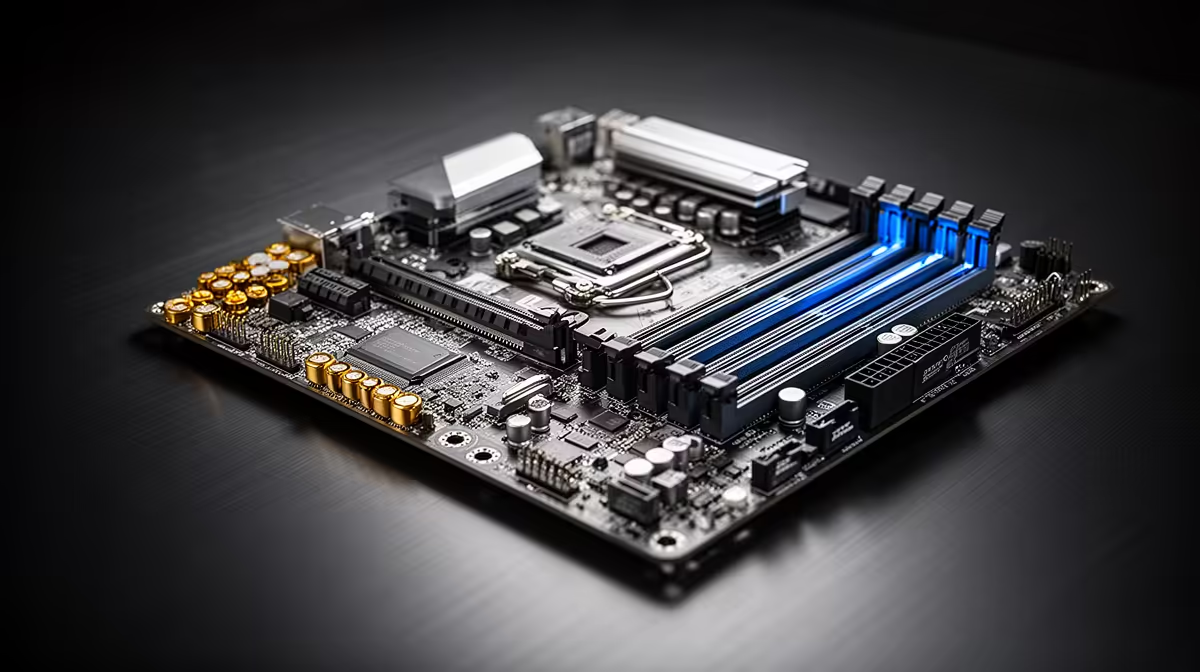
Motherboard choice shapes the migration. The MSI PRO B650M-P at R2,499 is an entry reference from July 2026. A buyer may need more M.2 slots, stronger rear connectivity, wireless networking or different expansion, which raises the board budget.
Evetech's DDR5 memory range, DDR4 memory range and memory best sellers let both routes be compared on the same date. Match capacity and module layout; a small single DDR5 module is not equivalent to a larger matched DDR4 kit.
📋 Use a Rand worksheet, then a performance threshold
Create two columns. The AM4 column includes the selected CPU, any required cooling and only the DDR4 capacity actually needed. The AM5 column includes CPU, board, DDR5, cooling hardware and any connectivity or case changes.
Subtract nothing based on hoped-for resale until the old parts are sold. If resale is part of the plan, use a conservative amount and keep the build affordable without it.
Then set a performance threshold. The AM4 route wins if it reaches the target for materially less and is likely to remain useful for the intended ownership period. AM5 wins when the extra cost buys performance required now or a future CPU path the owner is likely to use.
Run the worksheet twice if gaming and production both matter. A GPU-limited 1440p game may show little benefit from the platform move, while compilation, simulation or high-refresh play can expose a larger CPU difference. One blended verdict can hide the workload that actually pays for AM5.
Budget builders do not need to skip AM5 forever. They need to avoid paying the platform premium before it solves a problem. A healthy AM4 system and a new build starting from nothing face different maths.
Frequently Asked Questions
What does a full AM4-to-AM5 jump cost?
It requires at least a CPU, AM5 motherboard and DDR5. The July 2026 Ryzen 5 9600X and MSI B650 board examples totalled R6,998 before memory and cooling.
Is staying on DDR4 cheaper short term?
Usually, when the existing AM4 board and memory remain usable. A drop-in Ryzen 7 5700 was R2,999 in Evetech's July 2026 listing.
Does AM5 offer a real performance jump?
It can, but the size depends on the old CPU, new CPU, graphics card, resolution and workload. Compare relevant benchmarks.
Can I reuse an old cooler?
Many AM4 coolers support AM5, but not all mounting arrangements do. Verify the exact cooler model and required kit.
Is DDR5 mandatory on AM5?
Yes. AM5 motherboards use DDR5, so existing DDR4 cannot move across.
How long will AM5 remain current?
Platform support depends on AMD, motherboard BIOS support and future processors. Buy for the upgrade path you can reasonably expect to use, not an unlimited promise.
Should budget builders skip AM5?
No. A new system may justify it, while a healthy AM4 owner may get better short-term value from a targeted upgrade.
Ready to price the platform instead of only the processor?
Build both Rand columns with dated Evetech parts, confirm cooler and BIOS support, and choose the route that reaches your measured target with the fewest forced replacements.