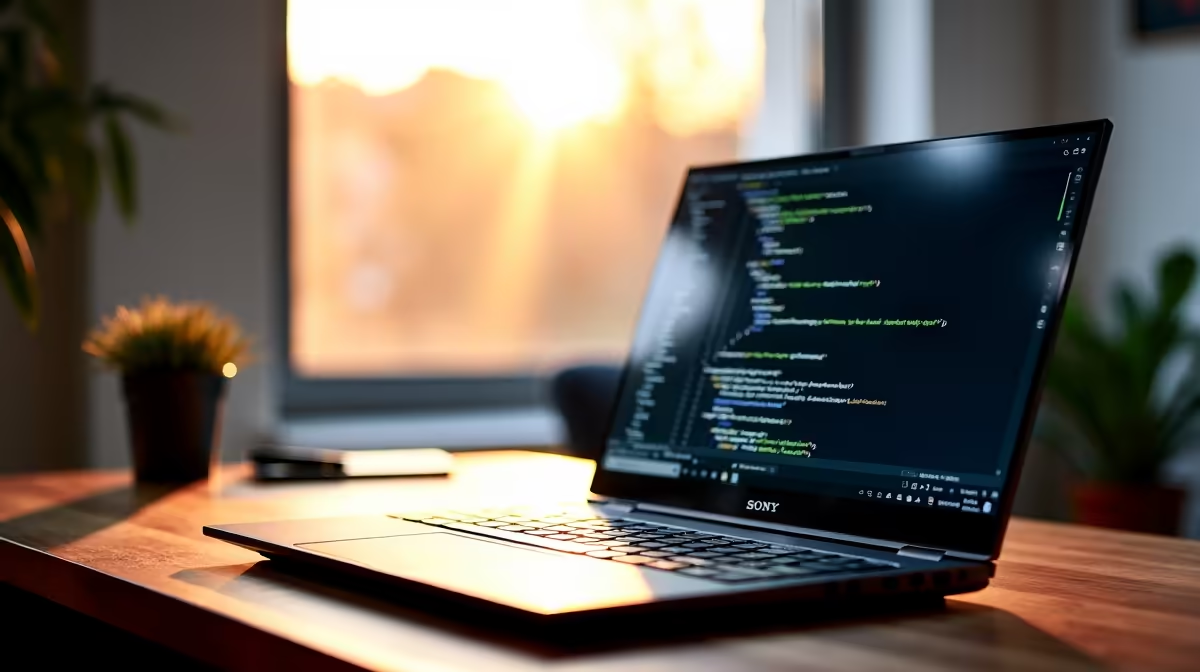
Choosing a new laptop for programming in South Africa can feel like compiling a massive project on a slow machine... frustrating. You need a workhorse that can handle Docker, multiple IDEs, and the occasional outage schedule without breaking a sweat. So, what features truly matter for a developer in 2024? Let's dive into the specs that separate a good coding laptop from a great one, ensuring your next investment boosts your productivity. 🚀
Core Features for Your Next Programming Laptop
Forget flashy marketing. When you're looking for a laptop for programming, performance, and usability are king. Your machine is your primary tool, and every component plays a role in how efficiently you can write, test, and deploy code. Let's break down the non-negotiables.
The CPU: Your Code's Engine Room
The Central Processing Unit (CPU) is the heart of your development workflow. Compiling code, running virtual machines, and multitasking across different applications all hammer the processor. A slow CPU means more time staring at loading screens and less time being productive.
For most developers, a modern Intel Core i5 or AMD Ryzen 5 offers a fantastic baseline. However, if your work involves heavy compilation, data analysis, or virtualisation, stepping up to a Core i7/i9 or Ryzen 7/9 is a wise investment. The extra cores and threads will make a noticeable difference. Check out our latest Intel laptops on special to see the performance on offer.
RAM: Don't Let Memory Bottlenecks Slow You Down
Modern development is RAM-hungry. Your operating system, a browser with a dozen tabs, your IDE (like VS Code or JetBrains), a local server, and maybe a Docker container... it all adds up.
- 16GB: This is the new minimum. It's enough for web development, mobile app development, and general-purpose coding without constant slowdowns.
- 32GB or more: If you're into game development, machine learning, or run multiple virtual machines, 32GB is the sweet spot. It gives you the headroom to work without compromise.
Storage: Speed is Everything (NVMe SSDs)
A Solid State Drive (SSD) is non-negotiable. The speed difference between an old-school hard drive and an NVMe SSD is massive. Your laptop will boot in seconds, projects will load instantly, and file searches will be lightning-fast. Aim for at least a 512GB NVMe SSD, but 1TB is ideal if you work with large datasets or projects.
The Keyboard and Display: Your Interface to the Code ✨
You'll be staring at this screen and typing on this keyboard for thousands of hours. Don't compromise. Look for a laptop with a comfortable, backlit keyboard with decent key travel. For the display, a 15-inch screen with at least a Full HD (1920x1080) resolution and an IPS panel for better colour accuracy and viewing angles is a must. More screen real estate means less scrolling and more code on screen at once.
Productivity Pro Tip 🔧
On Windows, use the PowerToys FancyZones utility to create custom snap layouts. It's a lifesaver for developers, letting you perfectly organise your code editor, terminal, and browser on a single screen. This small tweak can massively improve your workflow, especially on larger displays.
What About Gaming Laptops for Development?
It might sound counterintuitive, but a gaming laptop is often an excellent laptop for programming. Why? They are built for performance. They typically feature powerful CPUs, plenty of RAM, fast NVMe SSDs, and dedicated graphics cards (which are useful for machine learning, GPGPU tasks, or even just driving multiple high-resolution monitors). Plus, their advanced cooling systems ensure sustained performance during long compiling sessions. Many of today's best gaming laptop deals offer incredible value for developers.
Essential Considerations for South African Devs
Choosing the right machine here in SA comes with a few unique challenges.
Battery Life vs.
With an unexpected outage a reality, a laptop with solid battery life is a lifesaver. Look for models that advertise 8+ hours of usage. This gives you a buffer to save your work and continue for a while when the power inevitably drops. Many of these powerful AMD laptops are known for their excellent power efficiency, giving you more unplugged coding time.
Ports and Future-Proofing
Ensure the laptop has the ports you need. A mix of USB-A, USB-C (preferably with Thunderbolt support for high-speed data transfer and docking), and an HDMI port provides maximum flexibility. Good connectivity is key to a versatile programming laptop.
Ready to Build Your Next Big Thing?
Finding the right tool for the job is half the battle. For maximum power, choice, and value in South Africa, the perfect developer laptop is waiting for you. Explore our massive range of laptop specials and find the machine to conquer your code.