

Humidity Damage to PC Components: Recovery Guide
Humidity Damage to PC Components: Recovery Guide. Everything you need to know with SA pricing, step-by-step instructions & expert recommendations.
Read moreUnderstanding keyboard actuation force is key to unlocking your best typing and gaming performance. This guide breaks down what switch resistance means, from light linear switches to heavy tactile ones, helping you measure and compare forces to find the perfect feel for your setup. Ready to master your keystrokes? ⌨️ Let's dive in and find the switch that's right for you! 💪
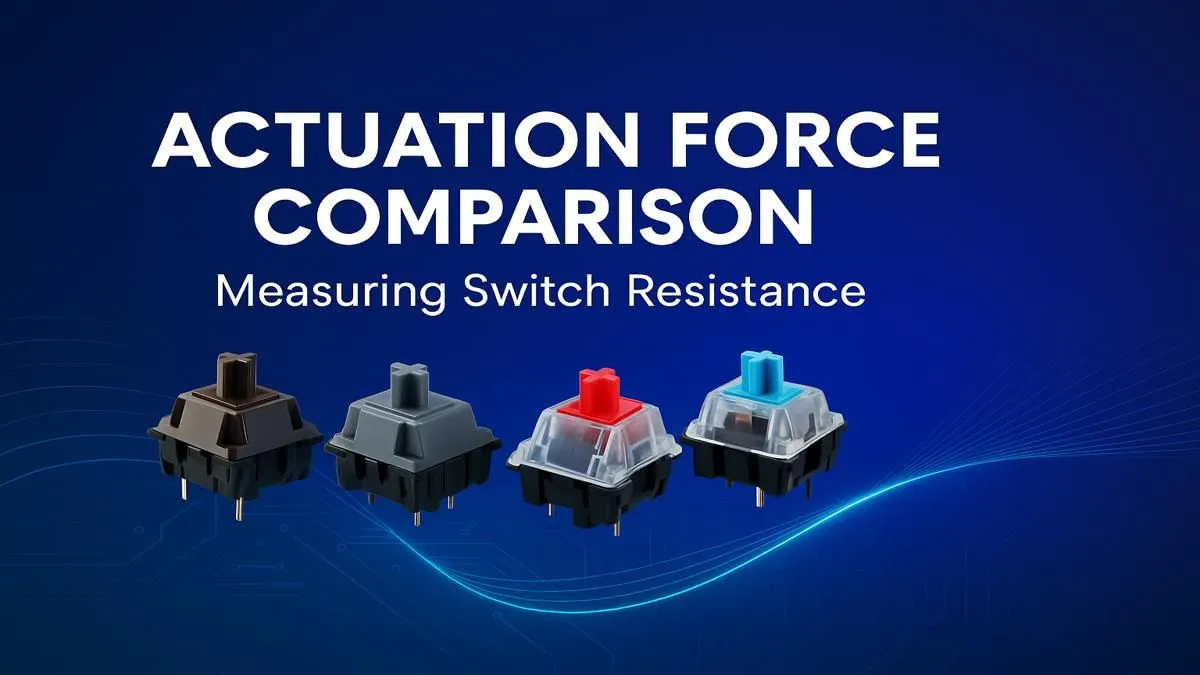
Ever whiffed a crucial shot because your finger slipped? Or sent a typo-filled message in the heat of battle? That tiny moment often boils down to one critical, yet overlooked, spec: keyboard actuation force. It’s the secret ingredient that dictates the feel and responsiveness of every single keypress. Understanding this concept is your first step to finding the perfect switch for your playstyle, transforming your setup from just okay to absolutely unbeatable.
Simply put, keyboard actuation force is the amount of pressure you need to apply to a key for it to register a keystroke. Think of it like the trigger on a controller... some are hair-triggers, while others require a firm, deliberate pull.
This force is measured in grams (g). Most mechanical keyboard switches fall somewhere between 35g (very light) and 80g (very heavy). It might not sound like a huge difference, but over thousands of keystrokes during a marathon gaming session or a long day of work, those grams add up and completely change your experience.
The right actuation force isn't just about comfort; it's about optimising your actions per minute (APM) and reducing errors. Your choice between a light or heavy switch will have a direct impact on how you play and type.
Switches with a low actuation force (typically 35g-50g), like the popular Cherry MX Reds, are built for speed.
For gamers looking for that competitive edge, browsing the best gaming keyboard deals for boards with light, linear switches is a great place to start.
On the other end of the spectrum, heavy switches (typically 60g and up) demand a more intentional keypress.
Many find that a complete setup with a deliberate keyboard and a responsive mouse creates a perfect command centre. You can often find great value in keyboard and mouse combos that balance these features.
So, how do you choose? The "perfect" keyboard actuation force is deeply personal and depends entirely on your needs.
A good starting point is to consider the switch type as well as its force.
Exploring the wide world of individual keyboard switches is the best way to see the variety available. If you're building a custom board or just looking to upgrade, this is where the magic happens.
Can't decide? The best way to understand actuation force is to feel it. Consider buying a cheap switch tester online. It’s a small board with several different switch types mounted on it, letting you physically compare how a Red, Brown, Blue, and Black switch feels before committing to a full keyboard.
Even if you're working with a tight budget, you can still find a keyboard with the right feel. There are many affordable gaming keyboards in South Africa that offer a choice of mechanical-feel or true mechanical switches.
Remember, the switch is just the beginning. The overall experience of your keyboard is a sum of its parts. You can further customise and optimise your setup for maximum performance and comfort.
Changing your keycaps can alter the sound profile and texture of your board. A new set of high-quality PBT custom keycaps can make a budget board feel premium. For long-term comfort, especially during those epic gaming nights, pairing your keyboard with one of our ergonomic wrist rests can make a world of difference, preventing strain and keeping you in the game longer.
Ready to Find Your Perfect Match? Understanding keyboard actuation force is the key to unlocking speed, comfort, and precision. Whether you need a feather-light touch for competitive FPS or a deliberate press for coding, the right switch makes all the difference. Explore our massive range of gaming keyboards and find the perfect board to conquer your world.
A good actuation force depends on your preference. Gamers often prefer a light force (45g-50g) for quick presses, while typists may like a heavier force (60g+) for feedback.
Often, yes. A lower actuation force requires less pressure to register a keypress, allowing for faster reactions and less finger fatigue during long gaming sessions.
Actuation force is the pressure needed to register a keypress. Bottom-out force is the greater pressure required to press the key all the way down to its base.
It's measured in grams (g) or centiNewtons (cN). While specialized tools exist, you can compare switches by stacking coins on a key until it actuates.
Cherry MX Reds have a low actuation force and a linear feel, making them fast but potentially prone to typos for some typists who prefer more tactile feedback.
Not always. Tactile switches are defined by their 'bump' feel, not their force. They come in a wide range of actuation forces, from light to heavy, to suit different tastes.
A 45g actuation force is considered very light. It feels responsive and requires minimal effort to press, common in linear switches like Cherry MX Reds popular for gaming.
Humidity Damage to PC Components: Recovery Guide. Everything you need to know with SA pricing, step-by-step instructions & expert recommendations.
Read more
Gamer Spending Trends April : Complete Setups. Clear setup instructions with SA-specific considerations, troubleshooting tips & recommended components.
Read more
Setting Up DDR5 32GB Kit. Tested & verified settings for best FPS and visual quality on SA hardware budgets.
Read more
Tech Setup Guide for SPU Res Students. Clear setup instructions with SA-specific considerations, troubleshooting tips & recommended components.
Read more
Monster Hunter Wilds Ultrawide Support: 21:9 and. Clear setup instructions with SA-specific considerations, troubleshooting tips & recommended components.
Read more
Apple iPad Durability Guide: Cases, Screen. Practical breakdown of costs, regulations & whether it makes financial sense for SA buyers.
Read more
AMD RX 9050 XT: Rumoured Specs, Price & Release. SA-focused analysis with local pricing data, real-world insights & actionable buying advice.
Can RTX 4080 Super Run AI Workloads for SA Developers Detailed answer with SA data, expert analysis & practical recommendations for local buyers.
Can RTX 4090 Run AI Workloads for SA Developers Detailed answer with SA data, expert analysis & practical recommendations for local buyers.
Top Settings for Intel Arc B580 at Ultrawide 1440p picks evaluated on performance, value & SA availability with current Rand pricing from Evetech.
RTX 4060 CS2 Low Settings at 1080p: FPS Results. Real-world benchmark data, FPS numbers & performance analysis. What SA gamers can actually expect.
Visual Artifacts: Possible GPU Issue Issue #1. Diagnosis steps, proven fixes & when to seek professional help. SA-specific support info included.
Can the RTX 4090 Handle 1440p 144Hz Gaming. Performance testing verdict with real data & practical recommendations for SA buyers.
Top ASUS GPU Under R15000 picks evaluated on performance, value & SA availability with current Rand pricing from Evetech.
GTA 6 Max Settings on RTX 5070. Tested & verified settings for best FPS and visual quality on SA hardware budgets.
Cyberpunk 2077 Max Settings on RTX 5080. Tested & verified settings for best FPS and visual quality on SA hardware budgets.
Starfield Max Settings on RTX 5070 Ti. Tested & verified settings for best FPS and visual quality on SA hardware budgets.
Top RTX 5090 Under R5000 picks evaluated on performance, value & SA availability with current Rand pricing from Evetech.