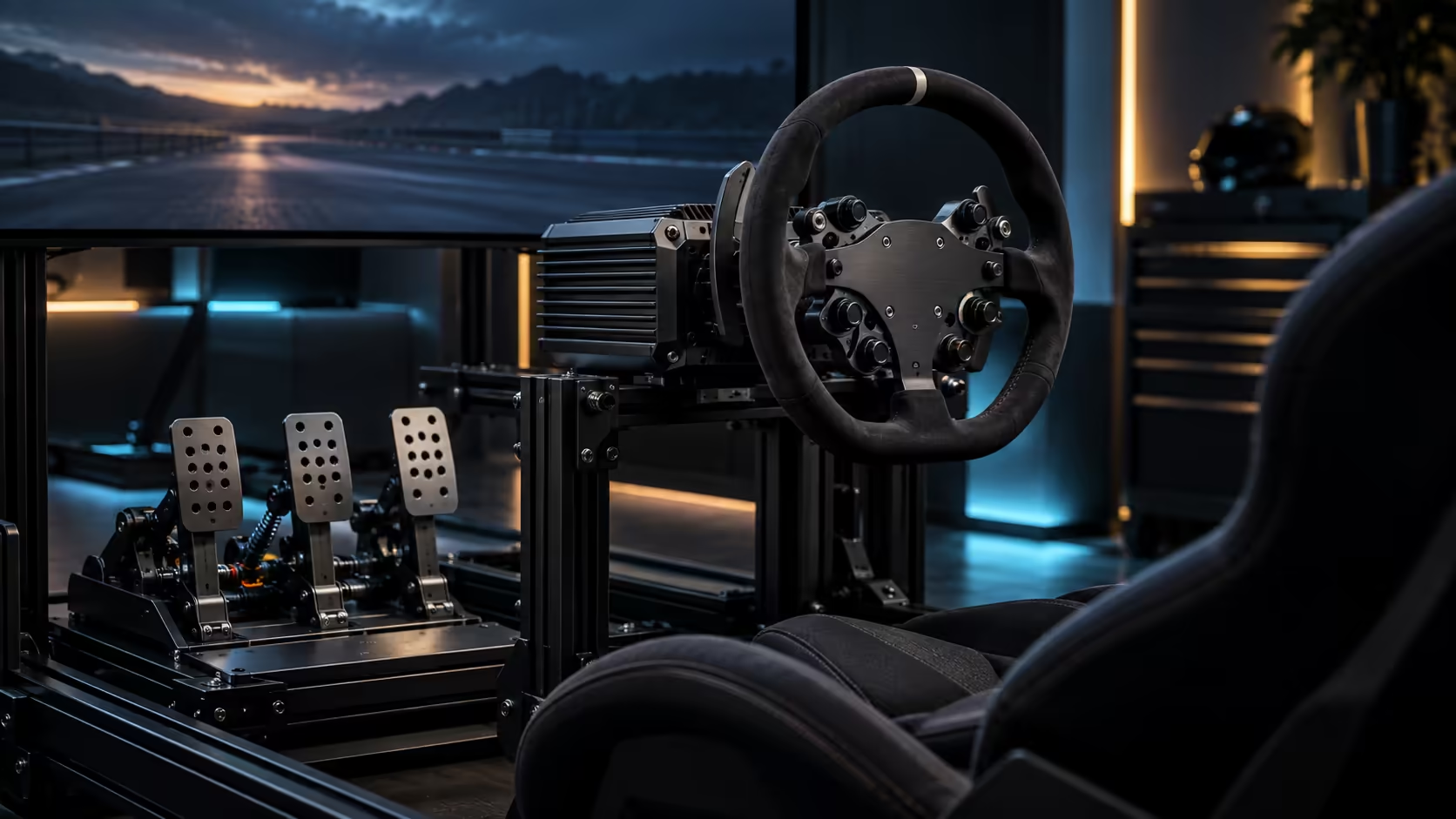
A real car's brake pedal barely moves. Push harder and the pedal travels a few extra millimetres while the hydraulic pressure behind it climbs sharply, which is the opposite of how most entry-level sim pedals work. Load cell brake pedals measure that pressure directly rather than approximating it through travel, and the difference between the two approaches is the single biggest jump in realism most drivers ever make in this hobby.
Quick Answer
A load cell measures how hard you push against a rigid stop, while a position-based pedal simply measures how far a spring lets the plate travel. Your leg reproduces pressure far more consistently than it reproduces distance, which is why the 150kg sensor in the R14,999 P700 pedal set turns braking into a skill you can repeat lap after lap rather than a guess you make fresh each corner.
🔩 How each mechanism actually works
A position-based pedal sits on a spring or an elastomer, and pushing it moves a potentiometer or Hall sensor through a physical range of travel, from fully released to fully depressed. The pedal's resistance comes entirely from the spring pushing back, and the software reads how far along that travel your foot has moved the pedal.
A load cell pedal barely moves at all. Behind the plate sits a rigid stop and a strain-gauge sensor that measures the actual force bending a small metal element by well under 1mm, converting that flex into an electrical signal proportional to pressure. The plate feels almost solid, closer to a real brake pedal against hydraulic resistance than to a spring-loaded switch.
The two mechanisms also age differently. A potentiometer reads position through a physical wiper dragging across a resistive track, and after tens of thousands of presses that contact point wears, which is why an old position-based pedal often develops a dead spot or a scratchy reading at one particular point in its travel. A strain gauge has no sliding contact at all, just a metal element flexing within its elastic range, so there is nothing analogous to wear out under normal use over the pedal's working life.
🦵 Why pressure beats distance for consistency
The human body is a poor tool for reproducing exact distances without visual feedback, but it is a genuinely good tool for reproducing muscle effort, which is closer to what pressing against a load cell asks of you. Ask someone to move their foot exactly 34mm with their eyes closed twice in a row and the two attempts will differ noticeably. Ask them to push with a specific, practised amount of leg force twice in a row, and trained muscle memory gets far closer both times.
That difference matters most under threshold braking, the technique of keeping a car balanced right on the verge of tyre lock-up while braking as hard as possible. On a position-based pedal, small variations in exactly how far your foot has travelled translate directly into inconsistent brake pressure lap to lap. On a load cell pedal, the same trained push produces close to the same braking force every time, because force is what the sensor is actually reading.
Resolution compounds the advantage further. A load cell reading across its full range in fine steps can resolve force differences of a percent or two, which is enough to tell a front tyre balanced right on the verge of losing grip apart from one a fraction under that threshold. A basic position sensor working over a few centimetres of travel simply has fewer distinct steps to report, which flattens exactly the fine distinctions threshold braking depends on.
🎮 Where position-based pedals still make sense
None of this makes position-based pedals a bad choice outright. They are simpler to manufacture, which keeps entry-level sim racing setups affordable, and for casual driving where lap-time consistency matters less than simply having working brakes, the difference is genuinely small. A gaming setup built around occasional, relaxed driving does not need the same braking precision a competitive time trial or an online league race rewards.
The gap widens specifically as stakes rise: closer racing, tighter margins between drivers, and longer sessions where fatigue starts eroding consistency are all situations where a load cell's advantage compounds rather than staying constant. A driver doing an hour a week of relaxed offline laps will rarely notice the difference; a driver doing three or four hours of competitive online racing will notice it every single lap.
🔧 Getting the most from a load cell once you own one
A load cell pedal only delivers its consistency advantage if it is calibrated correctly and mounted to something that does not move under a hard push. Skipping calibration, or mounting a load cell pedal set on a surface that flexes or slides, throws away the exact advantage the sensor exists to provide, since the reading becomes a mix of your leg force and the pedal's own unwanted movement. The simulation accessories range carries the mounting hardware worth pairing with a load cell set, and the racing simulation shelf lists pedal sets against their sensor type, which is the specification worth checking first.
Frequently Asked Questions
Is a load cell pedal genuinely always more accurate than a position-based one?
For repeatable braking force, yes, because it measures the exact thing your leg is best at reproducing consistently. Position-based pedals can still be perfectly usable for casual or less competitive driving.
Does a load cell pedal move at all?
Very little, typically well under 1mm, because the sensor measures force against a rigid stop rather than travel through a spring, which is also why it does not develop the wiper wear a potentiometer eventually shows.
Why does threshold braking specifically benefit from a load cell?
Threshold braking depends on holding a precise, repeatable pressure right at the edge of lock-up. Pressure is easier for the body to reproduce consistently than distance, which is what a load cell measures.
Do I need to calibrate a load cell pedal before using it?
Yes. Calibration sets the sensor's zero and maximum reference points, and skipping it means every later brake input is measured against an incorrect baseline, which shows up as braking that feels wrong from the very first lap rather than something that develops over time.
Ready to brake by pressure instead of by guesswork?
Compare pedal sets by sensor type on the Racing Simulation shelf before deciding where the upgrade budget goes.