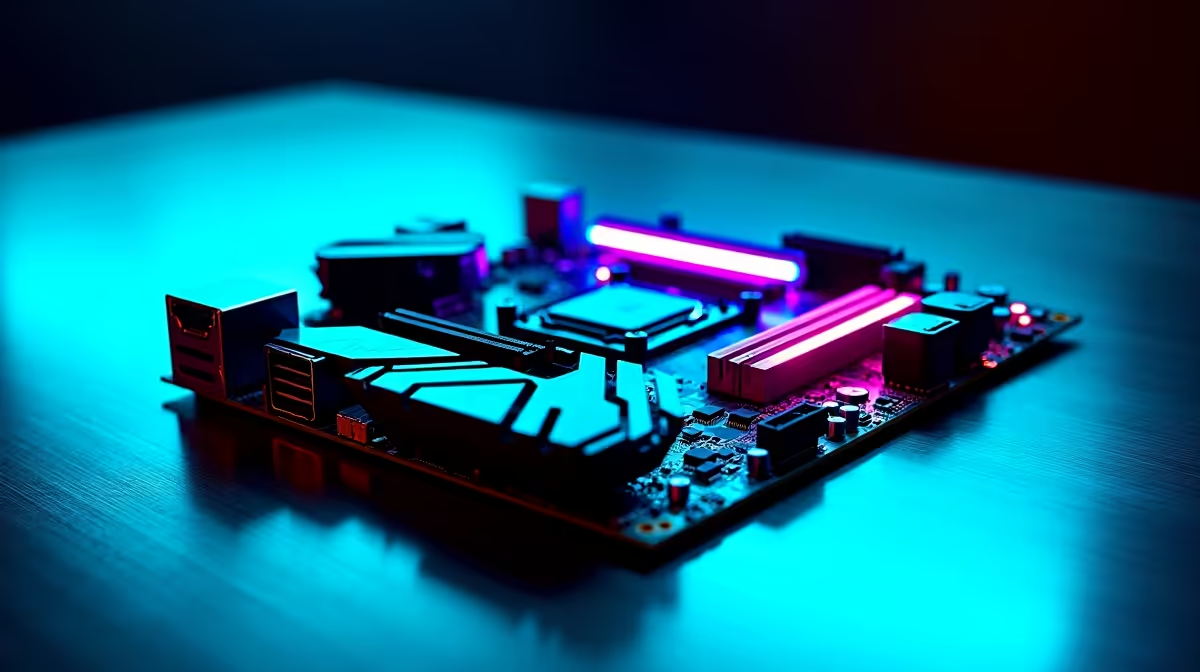
A premium AM5 board should be selected as the physical and electrical map for a specific PC, not as insurance purchased through a chipset name. What to look for in a premium AM5 motherboard begins with processor, memory, graphics, storage and external-device requirements. The R38,999 kit fixes that map with the X870E ROG Crosshair Dark Hero from ASUS.
Quick Answer
Look for an exact AM5 board that supports the planned processor, memory configuration, graphics, drives, cooler, case connections and realistic expansion. In the R38,999 package, the ROG Crosshair X870E Dark Hero hosts a 9950X3D, 48GB KLEVV DDR5-7200 and DeepCool LQ360. Premium branding does not guarantee faster games or every desired connection, so verify the model rather than inferring from X870E.
🧾 Build a connection inventory
List every device that must connect on day one: graphics hardware, storage, external drives, audio, networking equipment, capture devices and case ports. Then list only credible additions with a time frame.
Mark requirements as critical, useful or optional. A board that misses a critical storage or external-device path leaves the shortlist regardless of appearance. Useful headroom can justify more spend, while optional connections should receive less weight.
Use the exact Dark Hero documentation to map each item. Do not publish or buy against an assumed slot count or rear-panel layout.
Review named alternatives in Evetech's AMD motherboard range.
🧠 Match CPU and memory deliberately
The 9950X3D provides 144MB GameCache and up-to-5.7GHz maximum boost capability. The board creates its operating platform, but it cannot guarantee one clock or frame-rate result.
Forty-eight gigabytes of KLEVV CRAS V RGB DDR5 is rated at 7200MHz. Verify full capacity at baseline, then apply documented settings and test stability. The processor memory controller and firmware contribute to the stable rate reached.
Give memory controls value only when the buyer will use them responsibly. A platform full of tuning options is not useful if no stable baseline is kept.
Compare processor choices through Evetech's AMD CPU category. A premium board paired with the wrong processor class does not create balance.
📐 Check layout, case and cooling
The case must support the exact board form factor, LQ360 radiator position and eventual graphics card. Map cable access, storage placement and fan paths before ordering open components.
Large hardware can block board connections after assembly. Use the board diagram and case layout to determine installation order and future maintenance access. A technically present connector has less practical value if it requires major disassembly every time it is used.
Follow the Dark Hero documentation for pump and fan connections. The LQ360 still needs correct mounting and thermal validation; a premium board cannot correct a poor cold-plate contact.
Power supply choice is based on the final CPU, GPU and device list. Motherboard tier alone does not determine wattage.
💵 Make premium features earn R38,999
The package price also covers CPU, memory and cooler, so do not assign R38,999 to the board. Score the Dark Hero on the exact requirements it passes and compare a named lower-cost board using the same list.
Move any price difference to graphics or storage in a second complete build. If that change improves the target experience without losing a critical connection, the mainstream option may be stronger value. If it removes a required capability, the premium model has a concrete role.
Compare coordinated platforms through Evetech's AMD upgrade kit category. A bundle simplifies selection only when every fixed part fits.
After assembly, record firmware, recognised hardware, stable memory and cooler behaviour. This creates a recovery point before later configuration changes.
Avoid unlimited future claims. AM5 and X870E provide current platform context, but no board guarantees every later processor or device. Price known requirements and credible plans. Check current availability when the complete connection and case map passes.
Create a rear-and-internal connection diagram before deciding. Draw the devices that remain permanently connected, the storage that must live inside the chassis and any hardware that moves between systems. This reveals whether a connection needs a dedicated board path, can share an external hub or is only an occasional convenience.
Now add bandwidth and physical-conflict questions without inventing answers. The exact Dark Hero documentation should show how the required devices can be arranged. If one planned part changes the use of another connection, record that interaction. A premium board is most useful when its implementation supports the combined plan, not merely each device in isolation.
Firmware and recovery practices deserve a score. Establish a stable default configuration, save a record of recognised hardware and note how to return to it. This is especially important before exploring the KLEVV kit's 7200MHz target. A board full of controls does not help if the owner cannot identify which change caused instability.
Consider the upgrade process as physical work. A later graphics or storage change should be possible without unnecessarily removing the radiator or disturbing memory. Map screw access, cable slack and drive positions. Case selection and assembly order can improve this outcome as much as the motherboard itself.
Finally, compare two fully named alternatives. Give each the same CPU, GPU, storage, external-device and cooling requirements. Record the first requirement each board fails and the premium feature it uniquely satisfies. If the Dark Hero passes several daily needs that the other board misses, its place in the bundle is concrete. If both pass, the lower-cost platform may free valuable Rand for graphics or storage.
Keep the selected board map with the build so later additions use planned connections instead of being fitted by trial and error.
Add a troubleshooting route to that map. Mark where cooler controls, memory, storage and graphics connections can be inspected without removing unrelated hardware. A premium board in a thoughtful case can make diagnosis easier, but the benefit comes from accessible implementation rather than chipset status.
Test the chosen board at default stable settings before enabling memory targets or advanced controls. Confirm the exact processor, full 48GB, drives and cooler monitoring. This baseline proves the essential platform works and gives every later change a comparison point.
When comparing cost, include adapters or hubs an alternative board would require. Those additions can narrow a price difference, while unused Dark Hero features can widen it. The complete connection solution is the fair unit of comparison.
Frequently Asked Questions
What should be listed before comparing AM5 boards?
List the exact processor, memory, GPU, storage, cooling, external devices, case connections and credible expansion.
Which board comes in this package?
The R38,999 kit includes the X870E ROG Crosshair Dark Hero made by ASUS.
Why compare exact models?
Ports, slots, layout and controls vary between boards, even within the same chipset class.
How does memory planning affect the board choice?
The board, firmware and processor memory controller all contribute to whether the 48GB DDR5 configuration reaches a stable target.
Should styling lead the decision?
No. Physical fit and required connections should pass before appearance receives budget.
Does a premium board guarantee faster games?
No. CPU, GPU, memory, software and settings determine gaming performance.
What physical checks matter?
Confirm board fit, radiator support, GPU clearance, storage placement, cable access and airflow in the chosen chassis.
Ready to make a premium AM5 board answer to every cable, drive and expansion plan?
Compare Evetech AMD motherboards and use the Dark Hero only where its exact implementation strengthens the R38,999 platform.