Quick Answer
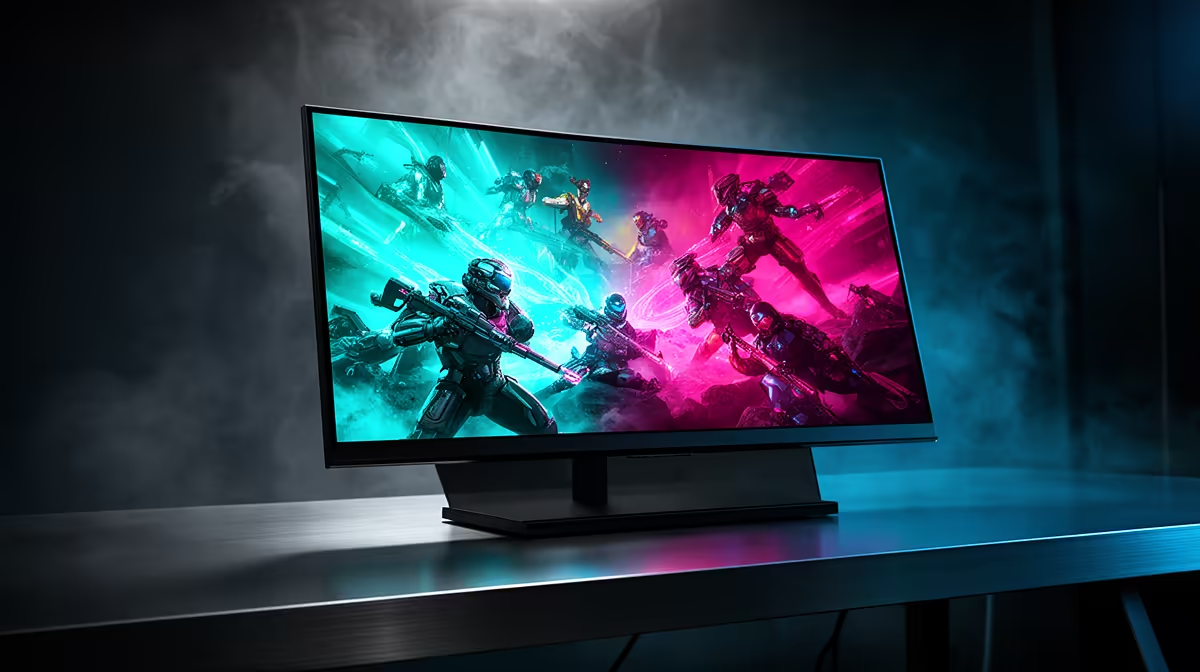
Mini-LED monitors use thousands of individually dimmed LED zones behind the LCD panel — typically 500–2,000 zones — delivering up to 1,000–2,000 nits peak brightness and deep local dimming contrast. SA buyers can find Mini-LED monitors at Evetech from R6,500 (27-inch 1440p) to R18,000+ (32-inch 4K), offering HDR performance between OLED and standard LCD at a lower burn-in risk.
What Makes Mini-LED Different From Standard LED and OLED?
Standard LED monitors have 8–64 backlight zones. Mini-LED panels use 500–2,000 zones, achieving per-zone dimming precise enough to show a bright star against a black sky without a visible halo. OLED achieves perfect per-pixel dimming but costs 2–3x more and carries burn-in risk. Mini-LED sits in the middle — better HDR than standard LCD, no OLED burn-in concerns, and longer lifespan for static content like productivity tools. Peak brightness of 1,000+ nits makes Mini-LED the better choice for brightly lit SA home offices and gaming rooms.
SA Mini-LED Monitor Price Guide
R6,000–R8,000: 27-inch 1440p 165 Hz Mini-LED entry tier — Samsung Odyssey G7 equivalent. R9,000–R12,000: 27-inch 4K 144 Hz Mini-LED — strong for content creation and premium gaming. R13,000–R18,000: 32-inch 4K 144–160 Hz Mini-LED with 1,000+ nits and VESA DisplayHDR 1000 certification — currently stocked at Evetech. R18,000+: ultrawide and oversized Mini-LED formats for simulation and content studios.
Gaming on Mini-LED: What to Expect
Mini-LED monitors with 165–240 Hz refresh rates and 1 ms response times (GtG) are strong gaming choices. HDR gaming in titles like Cyberpunk 2077 and Alan Wake 2 benefits significantly from 1,000 nit peak brightness and 1,000+ dimming zones. The main limitation is blooming — visible light bleed around bright objects on dark backgrounds — which improves as zone count increases. Monitors with 2,000+ zones show minimal blooming at typical viewing distances.
FAQ
What is the difference between Mini-LED and OLED for SA buyers in terms of price?
Mini-LED monitors in SA currently run R6,500–R18,000 depending on size and spec. Comparable OLED monitors (same size and resolution) cost R12,000–R30,000. Mini-LED is the better value for HDR without the burn-in risk or price premium. For office work with static elements, Mini-LED is recommended over OLED.
Is Mini-LED worth the premium over standard IPS monitors in SA?
For HDR content and gaming in a brightly lit room, yes — Mini-LED's 800–2,000 nit peak brightness and local dimming visibly outperform standard IPS monitors capped at 350–450 nits. For dark-room gaming where OLED is on the table, standard IPS may not justify the Mini-LED premium. For a Johannesburg home office flooded with afternoon sun, Mini-LED's brightness advantage is immediately apparent.
What GPU does a Mini-LED 4K monitor pair best with for gaming?
For 4K 144 Hz on a Mini-LED monitor, an RTX 4070 Super or RTX 4080 is needed to sustain 120+ fps in AAA titles like Hogwarts Legacy on High settings. An RTX 4070 hits 80–100 fps at 4K in demanding titles — still very smooth with a VRR panel. At R13,000–R18,000 for the monitor, pairing with an RTX 4080 (~R18,000–R22,000) makes sense as a total investment.
a Mini-LED monitor, check the local dimming zone count in the spec sheet — aim for 500+ zones for gaming and 1,000+ zones for HDR content creation. Zone count is a more useful spec than peak brightness alone.