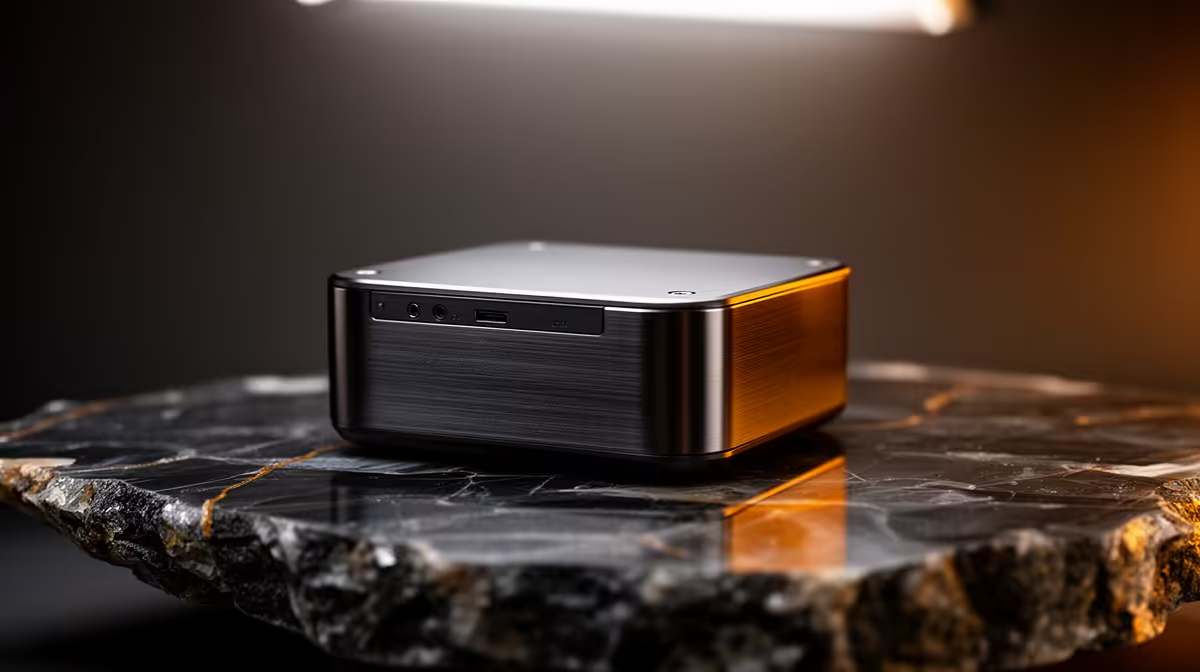
Mini PCs reward premium spending only in specific places. Knowing where the extra rand actually changes the experience keeps a small machine from becoming a small disappointment.
Quick Answer
On a mini PC, premium spending pays off in the CPU tier, 32 GB RAM, a fast 1 TB-plus NVMe and good cooling; a strong configuration runs about R12,000 to R22,000 in SA. It rarely pays off in extreme gaming GPUs, since most mini PCs use integrated or modest graphics by design.
Where premium genuinely helps
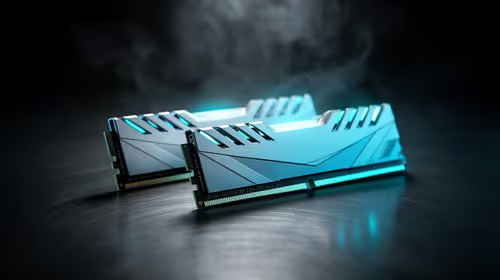
A higher CPU tier (a Core Ultra 7/9 or Ryzen 7/9 class chip) is the upgrade you feel daily in compiles, multitasking and content work. 32 GB RAM future-proofs heavier workloads and many browser tabs, while a 1 TB-plus NVMe avoids the cramped storage that plagues cheap mini PCs. Good cooling matters more in a small chassis, since a throttled premium chip performs like a mid one.
Where premium is wasted on a mini PC
Do not pay premium expecting flagship gaming; most mini PCs lean on integrated graphics that handle esports titles, not 4K AAA. If heavy gaming is the goal, a small-form-factor desktop with a real GPU is the better spend than a maxed-out mini PC. Skip paying for ports you will never use, and weigh whether a slightly larger chassis would let the same chip run cooler and quieter for less.
FAQ
Can a premium mini PC handle AAA gaming?
Usually only at modest settings, since most rely on integrated graphics. For serious gaming, a small-form-factor desktop with a dedicated GPU is the better-value choice.
How much RAM should a premium mini PC have?
32 GB is the sweet spot for heavy multitasking and content work, with 16 GB fine for general use. Check whether the RAM is upgradeable before you buy a sealed model.
Does cooling matter in a mini PC?
Greatly. A small chassis traps heat, so a premium chip can throttle to mid-tier speeds. Good cooling and airflow are worth paying for to keep the performance you bought.
mini PC premium on the CPU, 32 GB RAM and a 1 TB NVMe. If you want real gaming power, put the money toward a small-form-factor desktop with a dedicated GPU instead.