A music production PC that crackles, drops out, or runs out of voices mid-mix kills the creative flow faster than any plugin can save it. Ableton, Pro Tools, FL Studio, and Cubase ask for a specific blend of hardware: enough CPU to carry a heavy plugin chain, generous RAM for sample libraries, fast storage for streaming, and crucially, an audio interface that handles latency. Get that balance right and the machine disappears, leaving just you and the track.
Quick Answer
A solid DAW PC needs a strong multi-core CPU with a high clock speed, 32GB of RAM (64GB for large sample libraries), and fast NVMe storage. Low latency comes from the audio interface and its ASIO driver, not the GPU, so the graphics card tier is largely irrelevant for studio work. Budget for the CPU, RAM, and interface first; the GPU last.
CPU: clock speed and cores both matter
Modern DAW work pulls in two directions, and your CPU has to satisfy both. Real-time tracking and many software instruments lean on single-core speed, because a single demanding synth or amp sim runs on one thread. Mixing a finished project, with dozens of tracks and effects, spreads across many cores. So the ideal chip combines a high single-core boost with a healthy core count.
In practice that means a current high-end consumer CPU with a strong boost clock and somewhere from 6 to 16 cores, depending on how large your projects get. Aim for at least a 3.5GHz base and a high boost for responsive tracking, with more cores if you regularly run big mixes loaded with effects. The sweet spot is a chip that is fast on one core and still has plenty of threads for the mixing stage.
Why the GPU barely matters here
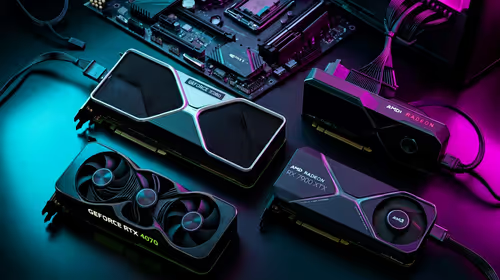
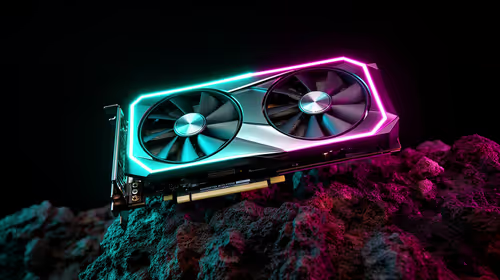
This is the part that saves you money. The audio engines in Pro Tools, Ableton Live, FL Studio, Cubase, and Studio One do not use GPU acceleration. Your graphics card draws the interface and nothing more. A modest GPU that comfortably drives your monitors is entirely sufficient, and pouring budget into a high-end gaming card buys you nothing in the studio.
Spend that money where it counts instead: a faster CPU, more RAM, a better audio interface. If your machine also doubles as a gaming or video rig, by all means fit a stronger GPU for those tasks, and if you also do colour-graded video work alongside music, the certified options in the professional workstation graphics range are the relevant tier. For audio alone, though, understand the GPU does nothing for your DAW's performance.
RAM: feed the sample libraries
Memory is where your sample libraries and project data live while you work. Most contemporary studio PCs now treat 32GB as standard, and that is the right starting point for the majority of producers. If you compose with large orchestral or cinematic sample libraries that stream from disk and hold gigabytes in memory, 64GB is the ideal target and removes a common ceiling.
Running short on RAM forces the system to page to disk, which in a real-time audio context shows up as glitches and dropouts. It is cheaper to fit enough memory up front than to fight performance problems later, so size your RAM to the libraries you actually load.
Storage: a tiered approach
Storage strategy makes a real difference to a studio machine, and the trick is to split the load across drives.
- Keep your operating system and DAW on a fast NVMe SSD so the application launches quickly and runs responsively.
- Put active projects and your streaming sample libraries on a separate fast SSD. Streaming many sampled instruments at once is demanding, and a quick drive prevents the stuttering you get when a slow disk cannot keep up.
- Use a larger drive for archived projects, finished mixes, and libraries you are not currently using, keeping your fast storage free for the work in front of you.
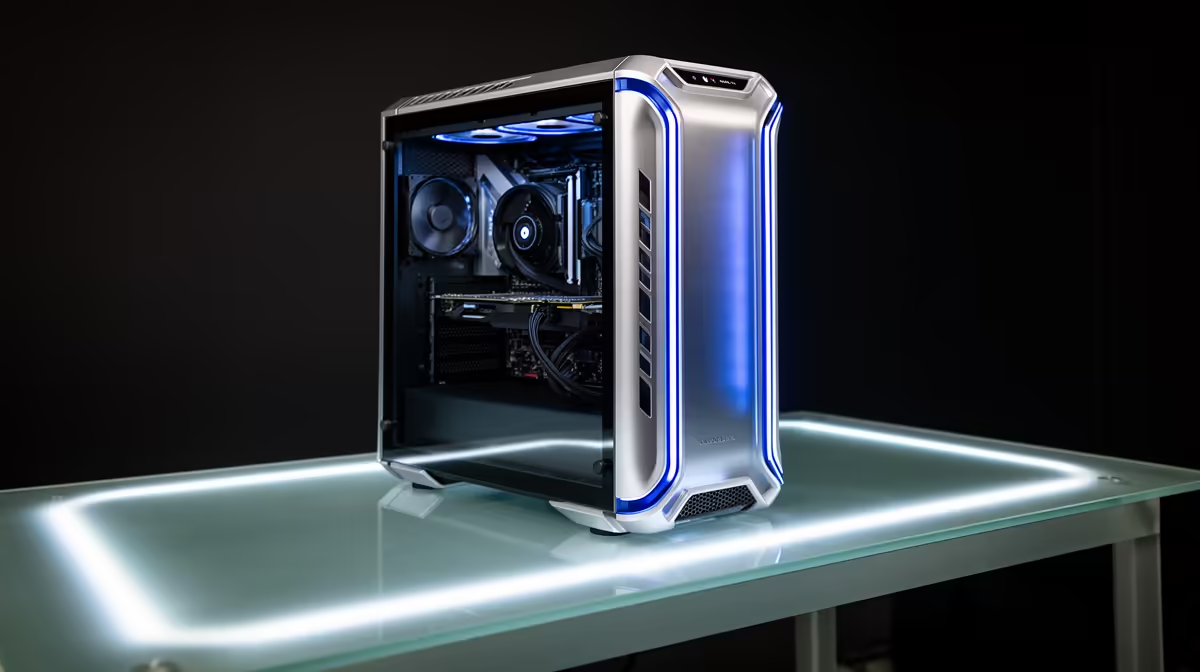
Fast NVMe storage drastically reduces project load times and sample-streaming issues, which is exactly what you want when a session needs to open now, not in a minute. You can size these tiers around a tower from the most popular complete builds at Evetech and adapt the storage to your library size.
Latency comes from the interface, not the PC
Here is the point that trips up most first-time builders. Low latency, the near-instant response between playing a note and hearing it, is set by your audio interface and its driver, not by raw PC horsepower. On Windows, an ASIO driver bypasses the standard Windows audio mixer and gives the DAW direct hardware access for the lowest latency.
That is why a dedicated audio interface matters so much. Professional-grade interfaces ship with ASIO drivers tuned for low-latency performance, and they handle the analogue-to-digital conversion that built-in motherboard audio simply cannot do cleanly. A fast CPU helps you run lower buffer sizes without crackling, but the interface and its driver are what make low-latency monitoring possible in the first place. Budget for a proper interface as a core part of the system, not an afterthought.
Tuning for stability
Even with strong hardware, a little setup discipline pays off. Use the ASIO driver, set a buffer size that balances latency against stability (lower for tracking, higher for mixing), and keep background software to a minimum during sessions. These tweaks let the same machine run more tracks and effects without dropouts.
Matching the build to your DAW
The four big DAWs all reward the same priorities, with minor leanings. Ableton Live and FL Studio are happy on a strong consumer CPU and benefit from fast storage for clip and sample work. Pro Tools and Cubase scale up gracefully with more cores and RAM as sessions grow large and effect-heavy. Across all of them, the formula holds: high-clock multi-core CPU, ample RAM, tiered fast storage, a quality audio interface, and a GPU that just needs to drive your screens. Spec in that order and any of the four DAWs will run a heavy session without crackling.
Frequently Asked Questions
Do I need a powerful graphics card for music production?
No. DAW audio engines do not use GPU acceleration, so the graphics card only draws the interface. A modest GPU that drives your monitors is plenty, and budget is better spent on the CPU, RAM, and audio interface.
How much RAM do I need for a music production PC?
32GB is the sensible standard for most producers, and 64GB is ideal if you work with large streaming sample libraries. Too little RAM forces paging to disk, which causes glitches and dropouts during real-time playback.
What gives me low latency, the PC or the audio interface?
The audio interface and its ASIO driver. ASIO bypasses the Windows audio mixer for direct hardware access and the lowest latency. A fast CPU lets you run lower buffer sizes without crackling, but the interface is what makes low-latency monitoring possible.
Which CPU is best for a DAW?
A high-end consumer CPU with a strong single-core boost and 6 to 16 cores. Single-core speed handles real-time instruments, while extra cores carry large mixes full of effects. Aim for a high boost clock and enough cores for your typical project size.
Should I use one drive or several in a studio PC?
Several. Keep the operating system and DAW on one fast NVMe drive, active projects and streaming libraries on a second SSD, and archives on a larger drive. Splitting the load prevents sample-streaming stutters and keeps sessions loading quickly.
Building a studio machine for Ableton, Pro Tools, FL Studio, or Cubase? Put your budget into the CPU, RAM, and interface and browse the most popular PC builds at Evetech to start from a balanced configuration.