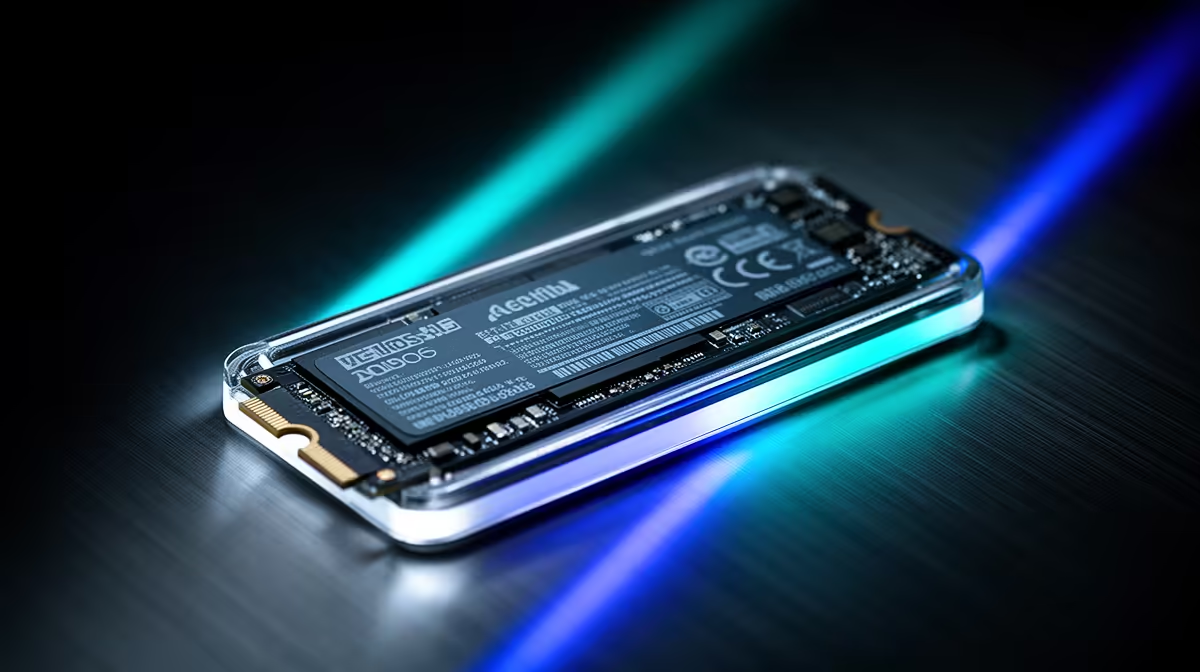
PCIe 4.0 NVMe drives can post around twice the sequential ceiling of PCIe 3.0 models, but a game rarely reads one huge file in a perfect queue. It asks for many assets, unpacks data and waits on CPU work. That is why the loading-screen gap can be much smaller than the box numbers suggest.
Quick Answer
Buy a good Gen 4 SSD when the price is close, you move large files or your creative work can use its throughput. Keep a healthy Gen 3 NVMe drive for a game library when capacity matters more than benchmark speed. Check motherboard support, drive endurance, sustained write behaviour and warranty before choosing a generation.
Sequential speed is the headline test
Sequential benchmarks read or write a long continuous block with a deep command queue. Video files, disk images and project archives can resemble that workload. A Gen 4 link gives the controller more bandwidth, allowing a capable drive to move those files faster.
Game loading mixes small reads, decompression, shader work and engine setup. Queue depths can be low. Once another part of the chain becomes the limit, extra link bandwidth sits unused.
Compare real load times for the same game and system. A five-second difference can matter to you; a benchmark bar with twice the MB/s may translate into less than a second.
Gen 4 describes the interface, not the whole drive
A weak Gen 4 SSD can perform worse than a strong Gen 3 model after its cache fills. Controller design, NAND type, firmware and available spare area shape sustained behaviour. The generation badge sets a maximum path.
DRAM-less drives can use Host Memory Buffer to store mapping information in system RAM. That can work well for gaming and normal desktop use. Heavy writes or a platform without HMB support can expose different behaviour.
QLC NAND stores more bits per cell and can lower cost per gigabyte. It may have lower endurance and slower direct-to-NAND writes than TLC once cache is exhausted. Check independent long-write tests for content workloads.
Browse the SSD range, popular SSD choices and the dedicated NVMe selection.
Platform support sets the link
A Gen 4 drive can work in a Gen 3 M.2 slot when standards and keying are compatible, but it will run at the slower link. Check the motherboard manual because some slots connect through the CPU while others share chipset bandwidth.
Populating one M.2 slot can disable a SATA port or reduce another slot on some boards. Plan all drives and expansion cards before installation.
Laptops need the correct physical length and single- or double-sided clearance. A thick desktop heatsink may not fit under the laptop cover.
Heat can reduce sustained performance
Fast controllers generate heat during long transfers. A motherboard M.2 heatsink and airflow can prevent throttling. Remove protective film from the thermal pad and use the correct pad thickness.
Gaming creates short bursts and may never heat the drive enough to throttle. Video cache and large-copy work can. Monitor temperature during the workload you care about rather than assuming every Gen 4 drive needs an elaborate cooler.
Capacity often beats peak speed for games
Modern libraries grow fast. A larger SSD lets you keep more games installed and leaves free area for updates. Drives can slow as they fill because the controller has less space for caching and maintenance.
Choose the capacity that leaves comfortable free space after your operating system and main games. A 2TB Gen 3 drive can be a better library than a 1TB Gen 4 model if both load your games within a similar time and the larger one prevents constant shuffling.
Creative work can use Gen 4
Editing high-bitrate footage, generating proxies and moving project folders create longer reads and writes. A fast Gen 4 drive can reduce copy and cache time when the CPU and application keep up.
Separate source, cache and export drives can improve a busy workflow. One benchmark-fast drive handling every task at once may compete with itself. Measure the transfer sizes and duration you see each day.
DirectStorage is a reason to buy well, not overspend
DirectStorage lets supported games use a more efficient path for asset delivery. Results depend on the game, GPU, CPU and storage implementation. It does not make every Gen 4 drive twice as fast in every title.
Choose a reliable NVMe SSD with enough capacity and current firmware. Let supported games show the benefit rather than buying from a promise about future software.
Migration and installation
Back up important files before cloning. Update motherboard firmware where required, install the drive at a slight angle and secure it without overtightening. Refit the heatsink evenly.
After booting, confirm link speed with a hardware information tool. Initialise a blank secondary drive in Windows, then test it. A result below expectation can come from the wrong slot, power setting, temperature or a nearly full drive.
Update SSD firmware only through the maker's supported tool and keep a current backup first. Recheck link speed and health after installation.
Keep a second verified copy of every active project before any storage migration begins.
Frequently Asked Questions
Check endurance for the write workload.
Drive warranty and terabytes-written ratings give context for repeated cache, scratch and export work. They do not predict an exact failure date, but they help separate a read-heavy game drive from a model built for heavier writes.
Monitor SMART health and keep backups. An SSD can fail before its endurance figure, while reaching the rating does not mean it stops on that day. Important project data needs another copy regardless of generation.
When replacing a drive, secure-erase or dispose of the old device through an appropriate process after verifying the new copy. Speed should never outrun data handling.
Does Gen 4 make games load twice as fast?
No. Link bandwidth can double, while game loading also depends on small reads, decompression and engine work.
Can I install a Gen 4 SSD in a Gen 3 PC?
Often yes. It will operate at Gen 3 speed when the slot and drive are otherwise compatible.
Is a heatsink required?
It depends on the drive, airflow and workload. Long writes benefit more than normal game loading.
Compare NVMe SSDs by capacity, sustained performance and motherboard fit, using Gen 4 speed where your real workload can use it.