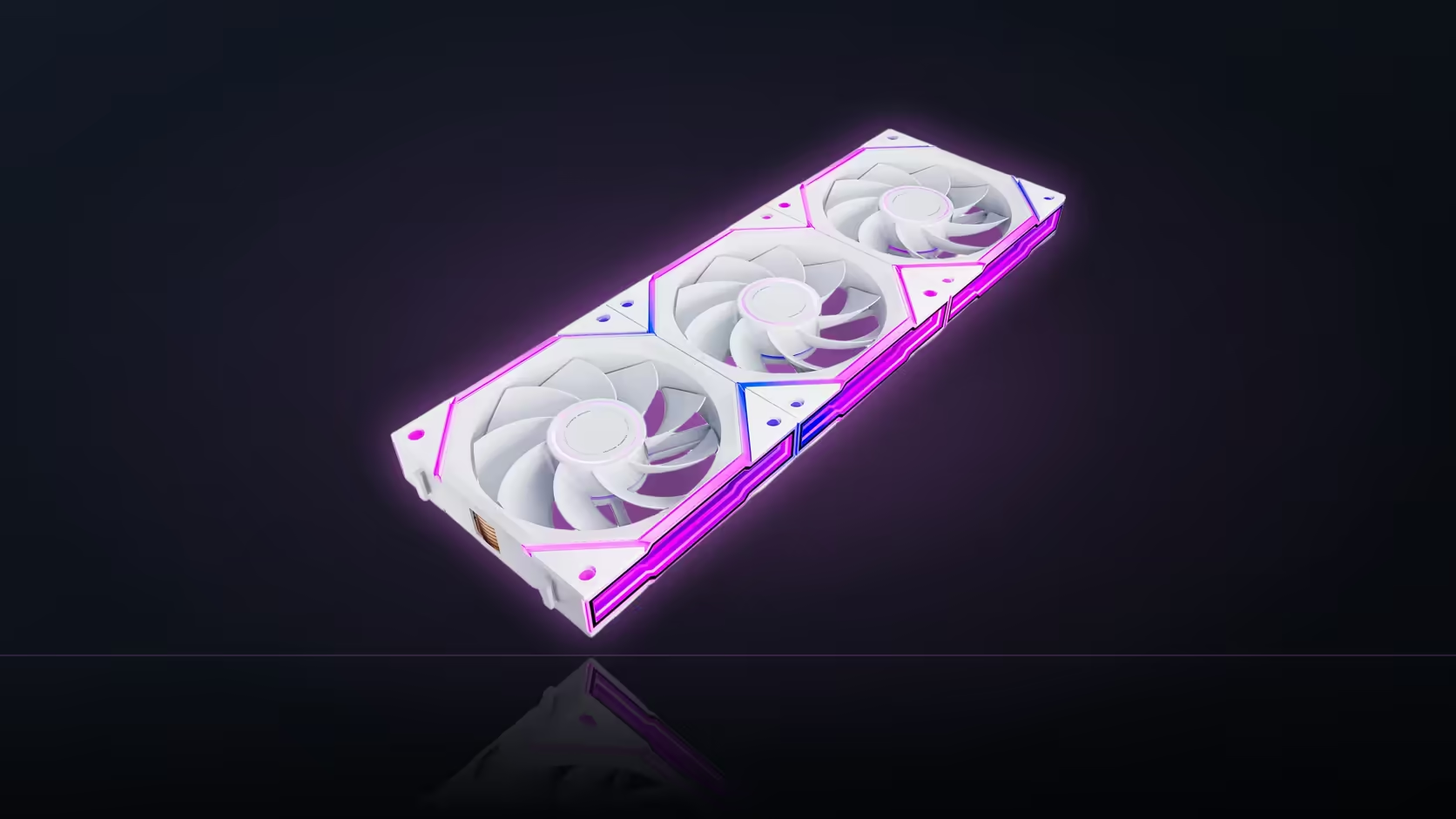
Fifty rand rarely decides a build on its own, but it is worth knowing exactly what that fifty rand buys before dismissing it as trivial. Set a single Nyota Ultra against a single Amici 5GT and the cheaper fan actually wins on the headline airflow number, which makes the comparison more interesting than a straightforward "pay more, get more" story.
Quick Answer
A Nyota Ultra single is R249 against R199 for an Amici 5GT single, a R50 gap. The cheaper 5GT lists more airflow at 61.5 CFM against the Ultra's 58.5, so the extra R50 is not buying airflow. What it buys instead is a higher 2000 RPM speed ceiling, against the 5GT's 24-LED mirror ring on the other side of the trade.
🌬️ Which fan actually moves more air on paper
The Amici 5GT's published 61.5 CFM airflow figure is higher than the Nyota Ultra's 58.5 CFM, despite the 5GT costing R50 less as a single. Anyone assuming the pricier fan automatically leads on airflow would be reading the comparison backwards. This is a case where the cheaper option genuinely wins the headline spec, and it is worth stating plainly rather than glossing over because it complicates a tidy "more expensive means better" narrative.
⚡ Where the Ultra pulls ahead
The Ultra's advantage sits in its speed ceiling rather than its airflow: it runs to 2000 RPM at the top of its range, while the 5GT is listed up to 1800 RPM. That headroom matters most under sustained load, where a restricted intake position benefits from the extra speed available if the fan curve needs to push harder. On an open exhaust position with little restriction, that ceiling is far less likely to matter in practice.
💡 Comparing the two lighting rings
The 5GT names a 24-LED infinity mirror ring, a higher LED count than the Ultra's ring, which layers 16 addressable LEDs into its own depth effect. More LEDs on the 5GT does not automatically mean a superior visual result, since the construction of the ring and how the light layers matters as much as the raw count, but it is a genuine point in the 5GT's favour worth weighing against the Ultra's higher speed ceiling.
🛒 How the gap changes across pack sizes
The price difference widens considerably once you compare packs rather than singles: a Nyota Ultra three-pack is R649 against R449 for an Amici 5GT three-pack, a R200 gap rather than the R50 seen on singles. For a full intake row, that is a meaningful amount to weigh against the speed ceiling and lighting trade-offs already covered. Both ranges also list reverse-blade versions, so blade direction is available on either fan regardless of which one you choose. Warranty cover is likewise a non-issue either way: the same 1 Year Local Warranty applies across the AsiaHorse range, so neither fan asks you to trade cover for price or performance.
🎯 Which build genuinely benefits from the Ultra's headroom
The Ultra's 2000 RPM ceiling is most relevant on a restricted mounting position, a front intake behind a dense mesh filter, or a radiator mount where the fan works against real resistance and benefits from having extra speed in reserve under sustained load. On those positions specifically, the 200 RPM gap between the two fans can translate into a genuine cooling advantage when a curve needs to push harder than usual. An open rear exhaust or a top mount with no filter rarely calls for that upper range at all in normal use, which is where the 5GT's lower price and higher CFM figure make a stronger case on their own terms.
🧮 Running the numbers on a full three-fan build
Scaling both options to a full three-fan front intake makes the comparison concrete: three Amici 5GT singles would run to R597 bought individually, though the R449 three-pack undercuts that considerably, while three Nyota Ultra fans individually would total R747 against the R649 pack price. Comparing the two three-packs directly, the R200 saving on the 5GT side is enough to fund a genuinely different accessory elsewhere in the build, whether that is an extra case fan for a different position or a fan controller from the accessories range.
🔊 A note on the noise figures either fan might carry
Both families publish figures for their respective ranges rather than isolating one per model, so any comparison of noise levels between the Ultra and the 5GT is worth checking directly against each specific listing rather than assumed from the family-level figures alone, since a difference here could reasonably tip a decision either way depending on how sensitive the build's intended location is to fan noise.
🛠️ Deciding between the two for your own build
Neither fan is the objectively better choice across every scenario; the Ultra earns its extra rand on restricted, load-heavy positions where the higher ceiling genuinely helps, while the 5GT's higher raw airflow and lower price suit open positions and larger fan counts where the budget matters more than a speed ceiling that will rarely be reached. Working out which category a given position falls into, rather than picking one fan family for the whole build by default, is the more useful exercise than treating this as a single verdict to apply everywhere. Compare the two families directly in the case fan range, and check case accessories for the cabling either one needs.
Frequently Asked Questions
Which fan lists more airflow, the Ultra or the 5GT?
The Amici 5GT, at 61.5 CFM against the Ultra's 58.5, despite being the cheaper of the two as a single.
What does the extra R50 on the Ultra actually buy?
A higher speed ceiling of 2000 RPM against the 5GT's 1800 RPM top speed, rather than more airflow.
How do the lighting rings compare?
The 5GT names 24 LEDs in its infinity mirror ring, while the Ultra layers 16 addressable LEDs into its own ring design.
Does the higher speed ceiling matter in every build?
It matters most on a restricted intake position under load, and far less on an open exhaust that rarely needs the extra headroom.
How does the price gap change on three-packs?
It widens to R200, with the Ultra pack at R649 against R449 for the 5GT pack.
Are reverse blades available on both fans?
Yes, both ranges list a reverse-blade version, so blade direction choice is not limited to either model.
Ready to weigh airflow against speed ceiling before choosing between these two?
Compare both fan families side by side in Evetech's case fan range.