Quick Answer
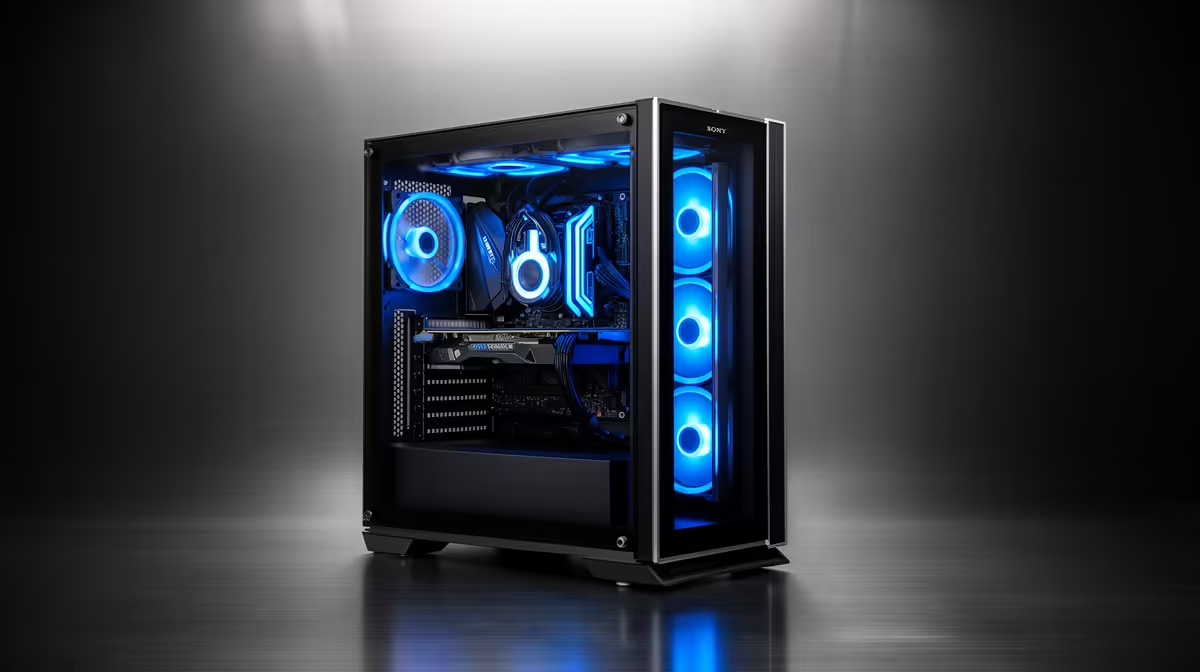
For Adobe Premiere Pro editing, the PC case to target is a quiet, airflow-focused mid-tower with room for a long GPU and good drive bays, like a Fractal North or NZXT H7 Flow (around R1,500 to R2,800 at Evetech). Editing rigs run sustained loads, so cooling and quiet matter more than RGB.
Why An Editing Case Differs From A Gaming One
Premiere exports and renders pin the CPU and GPU for minutes at a time, generating sustained heat rather than gaming bursts. A mesh-front airflow case like the NZXT H7 Flow or Fractal North keeps components cool through long renders so they hold clocks. Look for clearance for a long GPU (most are over 300mm), a tall CPU cooler, and several storage mounts for project and scratch drives. Quiet operation matters too, since you sit beside the machine for hours.
Starter To Serious Case Path
Start with a solid airflow mid-tower around R1,500 that fits an ATX board, a long GPU and a couple of NVMe and SATA drives. Step up to a premium case near R2,800 for better build quality, sound damping and tidier cable routing if your edits run all day. Plan a positive-pressure fan layout with filtered intakes so dust stays off the boards during long sessions. The case is what keeps an editing rig cool, quiet and stable under load.
FAQ
What case suits a video editing PC?
A quiet, airflow-focused mid-tower like the NZXT H7 Flow or Fractal North. It keeps the CPU and GPU cool through long renders and has room for a long GPU and several drives for footage and scratch.
Do editing rigs need more cooling than gaming PCs?
Often yes, because renders and exports sustain load for minutes, generating steady heat rather than bursts. A mesh-front case with good airflow keeps clocks stable through those long jobs.
How many drives should an editing case hold?
Look for room for at least two or three drives: an NVMe for the OS and apps, a fast scratch disk, and bulk storage for footage. Several mounts keep your media organised and your timeline responsive.
mesh-front mid-tower, run filtered positive pressure, and keep a separate fast NVMe scratch disk inside it so long Premiere renders stay cool and quick.