Competitive players sometimes blame the case for lag, but a case cannot affect network latency. What it does affect is thermal consistency: a poorly ventilated case lets the CPU and GPU heat-soak and throttle late in a session, which shows up as stutter, not ping.
Quick Answer
For competitive gamers, a PC case affects consistency and thermals, not network latency: a high-airflow case keeps a GPU cool so clocks stay stable through long matches, but it does not change your ping. Prioritise an airflow-focused case around R900 to R2,000 with mesh front and good fan support over looks.
Airflow is the case's real job for competitive play
A mesh-front airflow case keeps an RTX 4070 or RX 7800 XT below throttling temps across a long ranked session, holding boost clocks and steady 1% low frame times. Look for a case around R900 to R2,000 that fits at least three 120mm intake fans and one exhaust, with unobstructed front mesh. That stable cooling is what keeps frame pacing consistent when matches drag on.
Where the latency myth comes from
Frame-time stutter from a throttling GPU feels like lag, so people upgrade the case hoping to fix ping. The case helps the stutter, not the ping. Ping comes from your fibre line, routing, and Wi-Fi versus Ethernet. So fix thermals with airflow, and fix latency with a wired connection and a good router, separately.
Upgrade priority for a competitive build
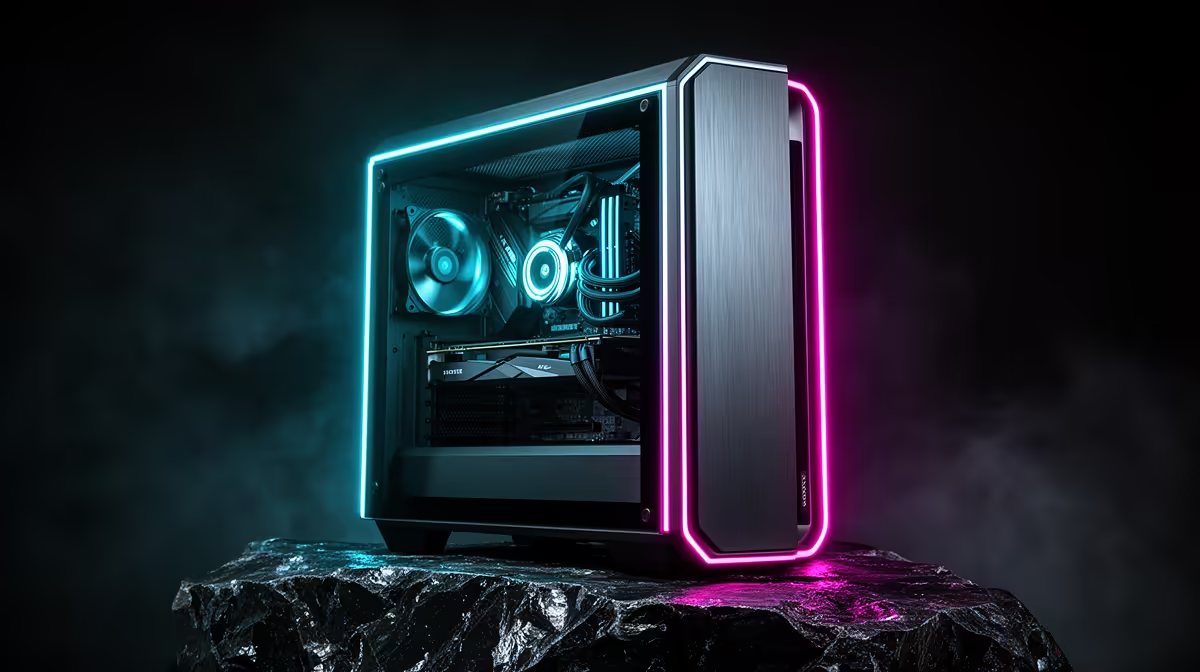
Get airflow and fan support first, then cable management for clean intake paths, then dust filters for sustained performance. Skip premium tempered-glass cases that restrict front airflow if competitive consistency is the goal. Spend the saved rands on a wired Ethernet setup and a quality cooler, which together do more for stable competitive performance than a flashy case.
FAQ
Does a PC case affect gaming latency?
No. A case cannot change network ping. It affects thermals: good airflow prevents the GPU from throttling and stuttering late in a match. Latency comes from your connection, so fix that separately with Ethernet.
What case features matter for competitive gaming?
Airflow above all: a mesh front, support for three or more 120mm intake fans, and a clear path to the GPU. A R900 to R2,000 airflow case keeps clocks stable through long sessions far better than a restrictive glass case.
Will a better case improve my frame rate?
Indirectly. By keeping the GPU cool, a high-airflow case prevents thermal throttling that lowers clocks and frame rates late in a session. It will not raise peak FPS on a cool system, only protect sustained performance.
mesh-front case with room for three intake fans, then fix latency separately with a wired Ethernet connection; the case handles thermals, the cable handles ping.