Tired of watching progress bars crawl while your creative vision waits? For South African game developers, every second spent compiling shaders or loading massive assets is a second lost. The local dev scene is exploding, and staying competitive means eliminating bottlenecks. Enter the next leap in storage technology: the PCIe 5.0 SSD for game development. This isn't just a speed bump; it's a foundational shift that could give you a serious edge. 🚀
Why Raw Speed Redefines the Development Workflow
In game development, storage speed is about more than just faster loading screens for the end-user. It's about your productivity. When you're working with multi-gigabyte 4K textures in Unreal Engine 5 or compiling complex codebases, your storage drive is constantly being hammered. A slow drive means you're stuck waiting, breaking your creative flow and extending project timelines.
Imagine hitting 'build' and being able to test your changes almost instantly, instead of being forced into a coffee break. That's the practical difference. Upgrading your storage is one of the most impactful investments you can make, and modern NVMe SSDs provide the baseline for any serious development rig today.
The PCIe 5.0 Leap: What's Under the Hood?
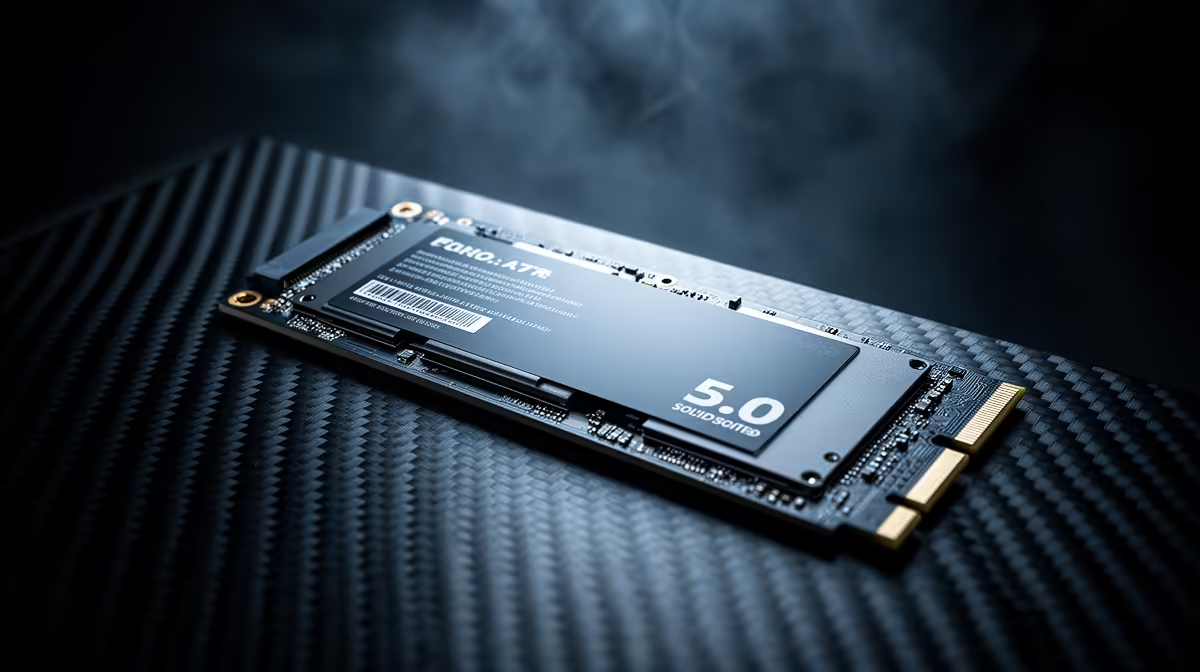
So, what makes a PCIe 5.0 SSD so special? It's all about bandwidth. Think of it like upgrading from a single-lane farm road to a multi-lane highway.
- PCIe 4.0 SSDs: These drives, which are still incredibly fast, typically top out at sequential read speeds of around 7,000 MB/s. They have been the gold standard for a few years, and you can find some fantastic Gen 4 NVMe SSDs that offer a brilliant balance of price and performance.
- PCIe 5.0 SSDs: The new generation effectively doubles the theoretical bandwidth, pushing read speeds past 12,000 MB/s and beyond.
This monumental increase means tasks like real-time asset streaming, handling uncompressed high-resolution video for cutscenes, and working with enormous datasets become buttery smooth. It's the technology needed to fully leverage modern game engine features and APIs like Microsoft's DirectStorage, which allows the GPU to load game assets directly from the SSD, bypassing the CPU to crush loading times.
Is a PCIe 5.0 SSD Worth It for SA Devs Right Now?
Let's be honest: PCIe 5.0 is cutting-edge tech, and that often comes with a premium price tag. Is it overkill? For some, maybe. But for professionals where time is literally money, the investment in a PCIe 5.0 SSD for game development starts to make a lot of sense. ✨
If you're an indie developer in Cape Town or a small studio in Johannesburg, the time saved on a single project could justify the cost. You're not just buying speed; you're buying more iterations, faster bug-fixing, and a smoother creative process. It's about future-proofing your workflow for the increasingly complex and data-heavy games of tomorrow. Making the jump to a Gen 5 NVMe SSD means your rig is ready for whatever comes next.
Compatibility Check! 🔧
Before you splash out on a blazing-fast PCIe 5.0 SSD, double-check your motherboard and CPU specs. You'll need a compatible platform (like Intel's Z790 or AMD's X670 B650 series) to unlock those top-tier speeds. An incompatible board will cap your new drive's performance at PCIe 4.0 levels, so always verify first!
Building a Balanced Rig for Next-Gen Speed
A super-fast SSD is only one part of the puzzle. To truly harness the power of PCIe 5.0, your entire system needs to be up to the task. This means pairing your new drive with a modern CPU and a motherboard that explicitly supports the PCIe 5.0 standard for M.2 slots.
Furthermore, these drives generate significant heat when operating at peak performance. A robust cooling solution—whether it's the motherboard's built-in heatsink or the one included with the SSD—is non-negotiable to prevent thermal throttling and ensure you get the speeds you paid for. If you're planning a new build or a major upgrade, looking for the best SSD deals can help you balance your budget across all the necessary components. 💻
Ready to Obliterate Bottlenecks?
For South African creators pushing the boundaries of game development, waiting is not an option. A PCIe 5.0 SSD isn't just an upgrade; it's a competitive advantage. Browse our curated selection of Gen 5 NVMe SSDs and give your projects the speed they deserve.