Building a new workstation in South Africa? You’re staring at spec sheets, and one question keeps popping up: PCIe 5.0 vs 4.0. Is the new standard a must-have for serious performance, or is it just expensive hype? The truth is… it depends entirely on your workflow. For some, it’s a massive bottleneck remover; for others, it's cash that could be better spent on a faster CPU. Let's dig into the PCIe 5.0 vs 4.0 workstation debate.
What is PCIe and Why Does It Matter?
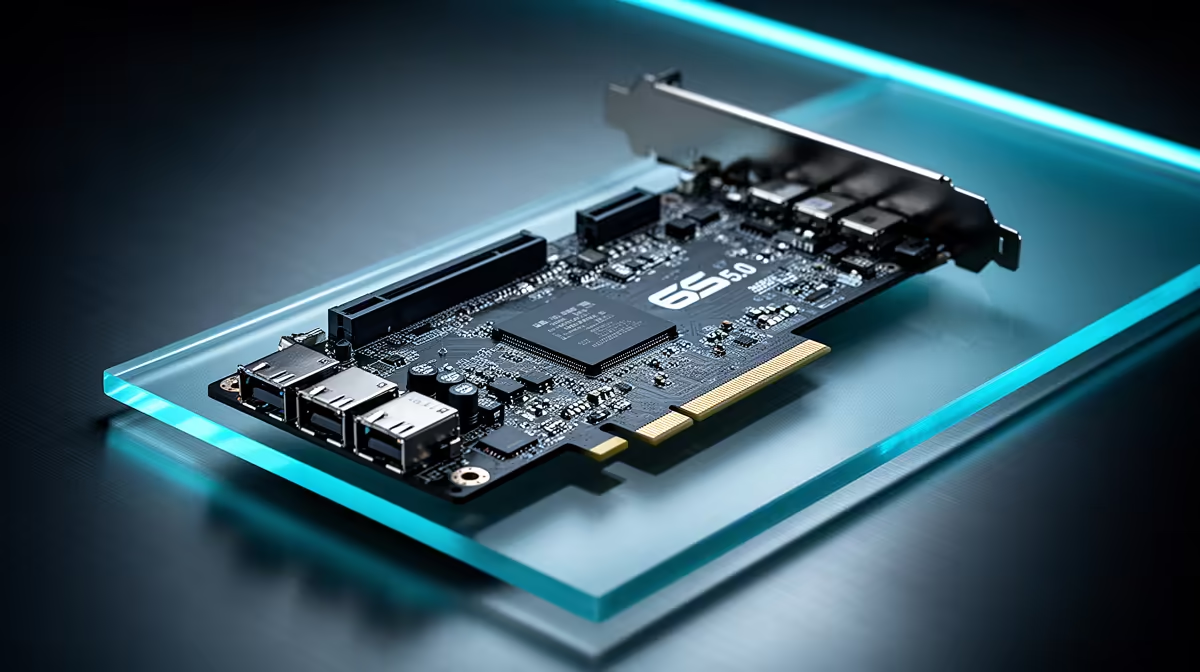
Think of Peripheral Component Interconnect Express (PCIe) as the highway system inside your computer. It connects high-speed components like your graphics card and NVMe SSD directly to your CPU. Just like a real highway, it has lanes (x1, x4, x8, x16) and different speed limits, which are called generations.
Each new generation effectively doubles the bandwidth (the speed limit) of the previous one. This is crucial because a slow "highway" can create a bottleneck, leaving your powerful processor and GPU waiting for data.
The Core Difference: PCIe 5.0 vs 4.0 Speed Explained
The debate between a PCIe 5.0 vs 4.0 workstation boils down to one thing: raw data throughput. Here’s a quick comparison for a full x16 slot, typically used by a graphics card:
- PCIe 4.0: Offers up to ~32 GB/s of bandwidth.
- PCIe 5.0: Doubles that to a staggering ~64 GB/s.
While that jump looks massive on paper, the real-world impact depends entirely on whether your components can actually use that extra speed. For now, even the most powerful consumer graphics cards don't fully saturate a PCIe 4.0 x16 slot for gaming, let alone need a 5.0 slot. The real difference emerges in highly specialised, data-intensive tasks.
When a PCIe 5.0 Workstation Actually Makes Sense 🚀
So, who truly benefits from the blistering PCIe 5.0 speed? If your work involves moving colossal files constantly, this upgrade is for you.
The Content Creator & 3D Artist
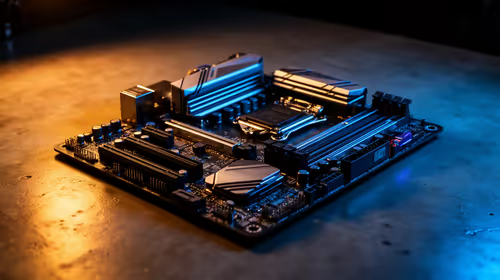
If you're editing multiple 8K video streams or working with massive 3D rendering projects, every second counts. PCIe 5.0 NVMe SSDs can load and save gigantic project files and assets in a fraction of the time, dramatically speeding up your workflow. The foundation for this power begins with the right motherboard, so choosing from the latest Intel motherboards that support the new standard is your first step.
The Data Scientist & AI Developer
Working with enormous datasets for machine learning or scientific simulation? A PCIe 5.0 workstation can significantly reduce the time it takes to load these datasets into system memory or onto the GPU. This means less waiting and more time for analysis and iteration.
Check The M.2 Specs! 🔧
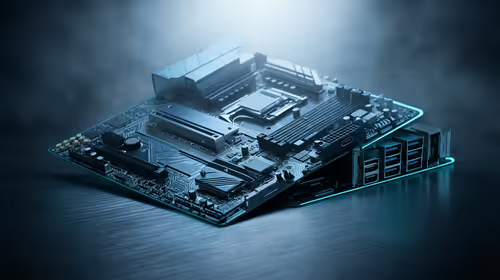
When comparing motherboards, don't just look for 'PCIe 5.0 support'. Check how many M.2 slots get the Gen 5 treatment. Often, only the primary slot connected to the CPU is Gen 5, while others might be Gen 4. Knowing this helps you plan your storage layout and avoid paying a premium for features you won't fully utilise.
The Case for a PCIe 4.0 Workstation: Smart Power Today ✨
For the majority of users, including most gamers and many professionals, a PCIe 4.0 workstation hits the sweet spot of performance and value.
The current PCIe 4.0 ecosystem is mature, reliable, and significantly more affordable. The motherboards, SSDs, and other peripherals offer incredible performance that is more than enough for today's applications. Opting for a top-tier PCIe 4.0 setup can save you a few thousand Rand, which you can reinvest into more RAM, a better CPU, or a bigger SSD. Whether you're team blue or team red, you'll find a powerful and stable platform among the latest AMD motherboards that deliver exceptional value.
The Verdict: Choosing Your Workstation's Backbone
So, what's the final call on PCIe 5.0 vs 4.0 for your next build?
- Go for PCIe 5.0 if: Your daily work involves massive data transfers (8K video, huge datasets, complex 3D scenes) and you have the budget to be an early adopter. It's an investment in future-proofing your productivity.
- Stick with PCIe 4.0 if: You're a gamer, a streamer, a photographer, or a creative professional whose projects don't constantly push terabytes of data. A PCIe 4.0 workstation provides phenomenal performance and better value for your money right now.
Ultimately, the smartest choice is a balanced one. You can find excellent value in both Intel and AMD-based motherboards that deliver all the performance you need for today's demanding tasks without the premium price tag of the absolute cutting edge.
Ready to Build Your Ultimate Workstation?
The PCIe 5.0 vs 4.0 debate shows that the best workstation is one built for your specific needs. Whether you're chasing next-gen speed or maximising value today, the right foundation is everything. Explore our custom PC builder and configure the perfect machine to conquer your projects.