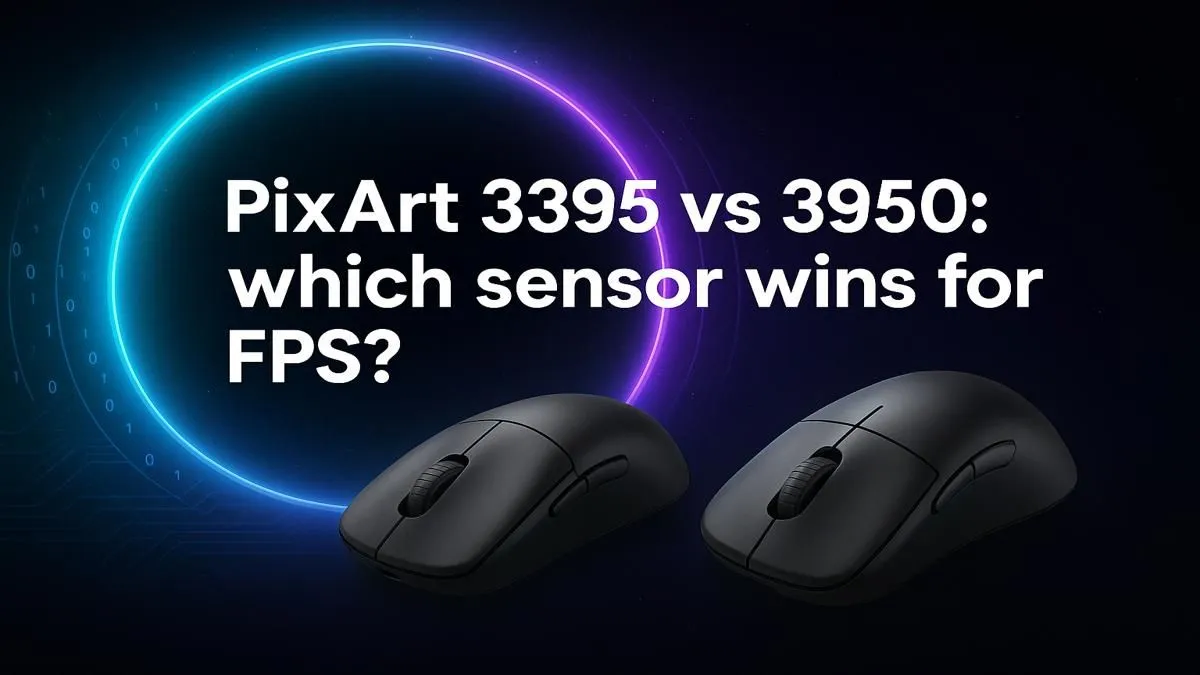
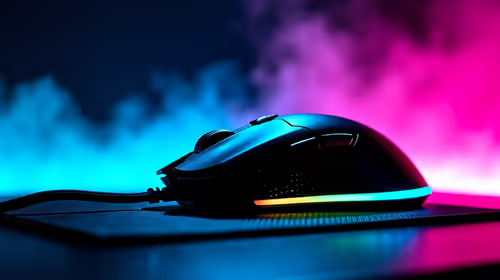
Staring down a long corridor in Valorant, lining up that perfect headshot... the last thing you need is your mouse failing you. For South African FPS players, the gear has to be on point. The sensor is the heart of your mouse, and two names dominate the scene: PixArt 3395 and 3950. But which one is right for you? This deep dive into the PixArt 3395 vs 3950 debate will give you the real story, helping you click with confidence.
What's the Real Difference: PixArt 3395 vs 3950?
Before we declare a winner, let's understand the players. A mouse sensor is a tiny camera that tracks the surface beneath it, translating your physical movements into digital precision. The quality of this component is critical for accuracy.
The PixArt PAW3395 is the current champion for a huge range of high-performance gaming mice. It's known for its raw, reliable performance, offering specs that were once unthinkable, including flawless 1:1 tracking and Motion Sync technology for smoother cursor movement. It's the go-to choice for dozens of top brands.
So, what about the PAW3950? Here's the inside scoop: the 3950 isn't an off-the-shelf sensor you'll find listed on every box. It's a custom, flagship sensor developed by PixArt in collaboration with Razer, branded as the "Razer Focus Pro". Think of it as a finely-tuned, slightly more powerful version of the 3395. For a breakdown of all the parts that make up a great pointer, check out our overview of gaming mouse components.
The Spec Showdown: Does It Matter in-game? 🚀
When you compare the PixArt 3395 vs 3950 (Focus Pro), the numbers lean slightly towards the 3950. It boasts a higher max CPI (30,000 vs 26,000) and IPS (750 vs 650).
But here's the honest truth... for gaming, those differences are almost purely academic.
Most pro gamers use a CPI between 400 and 1600. No human can move their hand fast enough to exceed the 650 IPS limit of the 3395, let alone the 750 IPS of the 3950. Both sensors provide 'flawless' tracking, meaning they won't spin out or lose accuracy during intense flick shots. Whether you prefer the absolute stability of a wired mouse or the freedom of a wireless one, both these sensors deliver elite performance.
The key takeaway? Both are top-of-the-line. The 3950 is technically superior, but the 3395 is so good that you will not be able to feel a difference in a blind test.
Sensor vs. Skates 💡
't obsess over sensor specs! Upgrading your mouse feet (skates) to aftermarket PTFE or glass versions can provide a more noticeable improvement in glide and consistency than switching between a 3395 and 3950. Check out our range of [mouse accessories](https: www.evetech.co.za buy-mouse-accessories x 1595) to perfect your aim.
The Verdict: Focus on Feel, Not Specs ✨
So, when deciding between a mouse with a PixArt 3395 and one with a 3950, what should you do?
Forget the sensor debate.
Seriously. The performance gap is so small it's irrelevant. Instead, focus on the things that actually impact your aim and comfort:
- Shape & Weight: Does the mouse fit your grip style (palm, claw, fingertip)? Is it light enough for quick movements without causing fatigue?
- Build Quality: Does it feel solid? Are the clicks satisfying?
- Connectivity: Do you want the untethered freedom of a modern wireless mouse with no perceptible lag?
Choosing a mouse with a standard PixArt 3395 won't put you at a competitive disadvantage. It's a phenomenal sensor that powers some of the best mice on the market. The PixArt 3950 is an incredible piece of engineering, but it's just one part of the premium package offered by specific Razer mice.
Ultimately, the best mouse for you is the one that feels like an extension of your hand. Both these sensors are more than capable of taking you to the top of the leaderboard.
Ready for Flawless Tracking?
The debate between the PixArt 3395 and 3950 proves one thing: we're in a golden age of gaming mice. Find your perfect match with a sensor that won't let you down. Check out our best gaming mouse deals and experience tracking perfection.