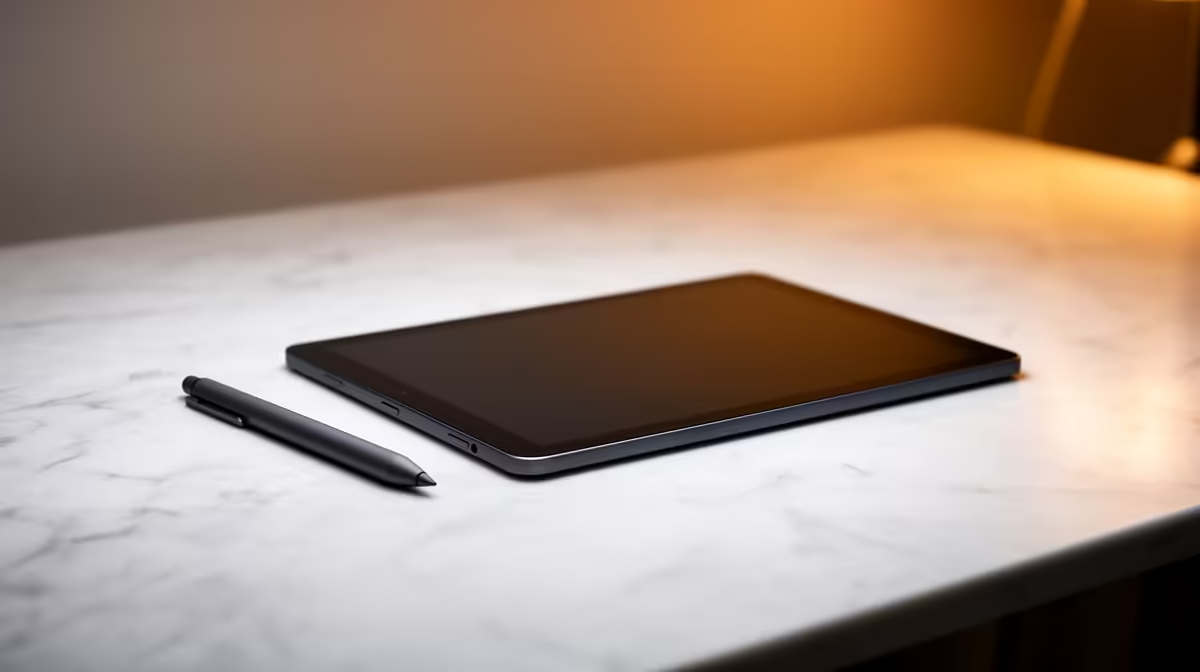
A postgraduate student should choose a note-taking tablet around reading, annotation, handwriting search, citation workflow and secure export rather than novelty. It is useful when journal articles, field notes or diagrams move cleanly into the research system; it is unnecessary when a laptop and paper already work well.
Rehearse one complete research cycle from source reading to cited draft
Import a representative PDF, annotate it, write a linked note and export both into the reference or writing workflow. Check pen feel, screen size, file naming, search, cloud permissions, offline access and whether annotations remain readable on another computer. Include any institutional data-handling rules.
The factpacks do not verify a note-taking tablet model or dependable price. The ASUS ExpertBook P1503 with an Intel Core i5-13420H, 8GB memory, 512GB storage and Windows 11 Pro at R9,858 is a verified laptop reference, not a pen tablet. Confirm live research-software, battery, display and port support.
Budget for the pen and case if separate. Encrypt sensitive material appropriately, keep notes in tested independent backups and avoid locking the thesis workflow into a format that cannot be exported. Test handwriting recognition using the student’s normal notation.
Buy after the research-cycle trial demonstrates better retrieval or synthesis. Choose a conventional laptop when writing, analysis and desktop applications dominate the degree.
Equipping postgraduate research? > Compare Evetech laptops against the actual reading, analysis and writing tools.