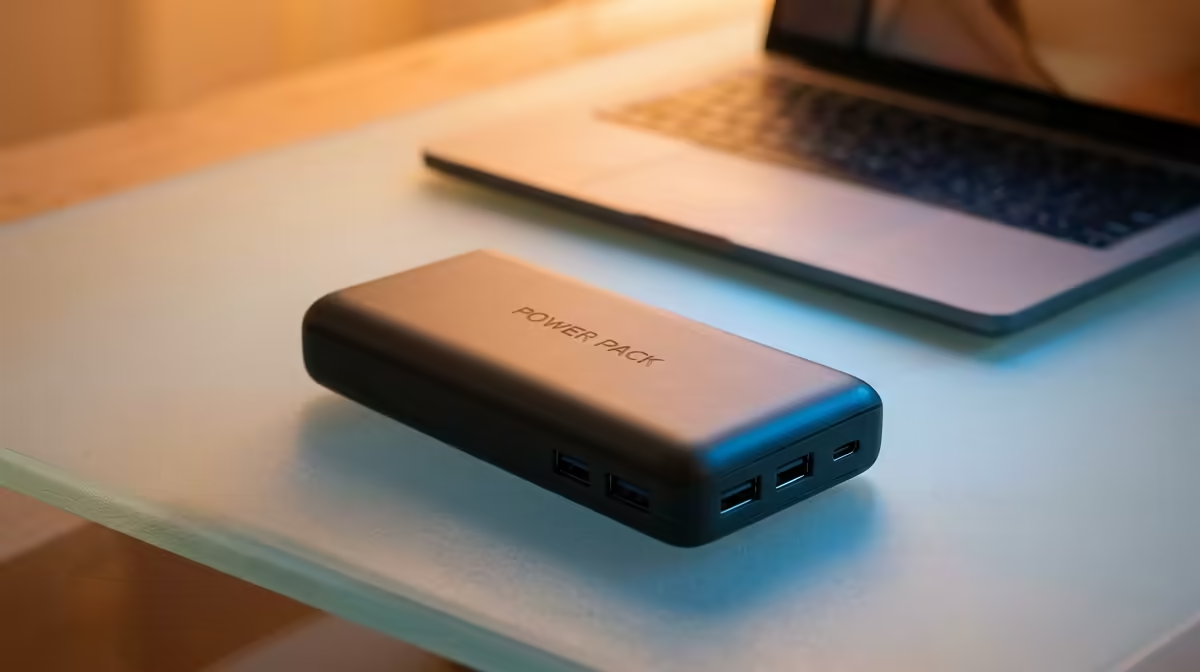
A power bank is useful for a homeschooling family when it safely keeps phones, tablets or low-power learning devices available away from a socket. It is not a universal backup for desktop PCs, monitors or routers. Match output, cable and device charging requirements carefully.
Plan supervised charging
List every device, its charging standard and expected study duration. Test one full lesson with the normal cable while watching temperature and remaining capacity. Keep the bank on a hard ventilated surface, away from bedding, liquids and direct sun. Children should know not to use damaged or swollen units.
Capacity labels describe stored energy under defined conditions, not guaranteed lesson hours. Cable loss, conversion and device age reduce usable runtime. Record how much charge the target device gains in thirty minutes, then build expectations from that observation rather than from packaging alone.
No power-bank SKU or verified price is available in the supplied product facts. Compare rated capacity, usable output, port standards, protection features, charging time, local warranty and return conditions. Confirm laptop charging support explicitly if that is required.
A small bank can keep a phone connected for class communication, while a larger solution may still fail with high-power devices. Label household cables, inspect them regularly and charge under adult supervision. Buy only after calculating the device load and safe operating location.
Planning portable learning power? > Browse Evetech charging accessories after matching device requirements.