


PCIe 5.0 vs PCIe 4.0 for Strategy and Sim Games in SA
PCIe 5.0 and PCIe 4.0 differ most in lane support, compatibility, and upgrade value for strategy and sim games. SA buyers should match the choice to their actual hardware and games.
Read moreAccessory choice for A Practical Breakdown of Low-Profile starts with connector fit. For practical breakdown, confirm cable length, port shape and warranty path before buying.
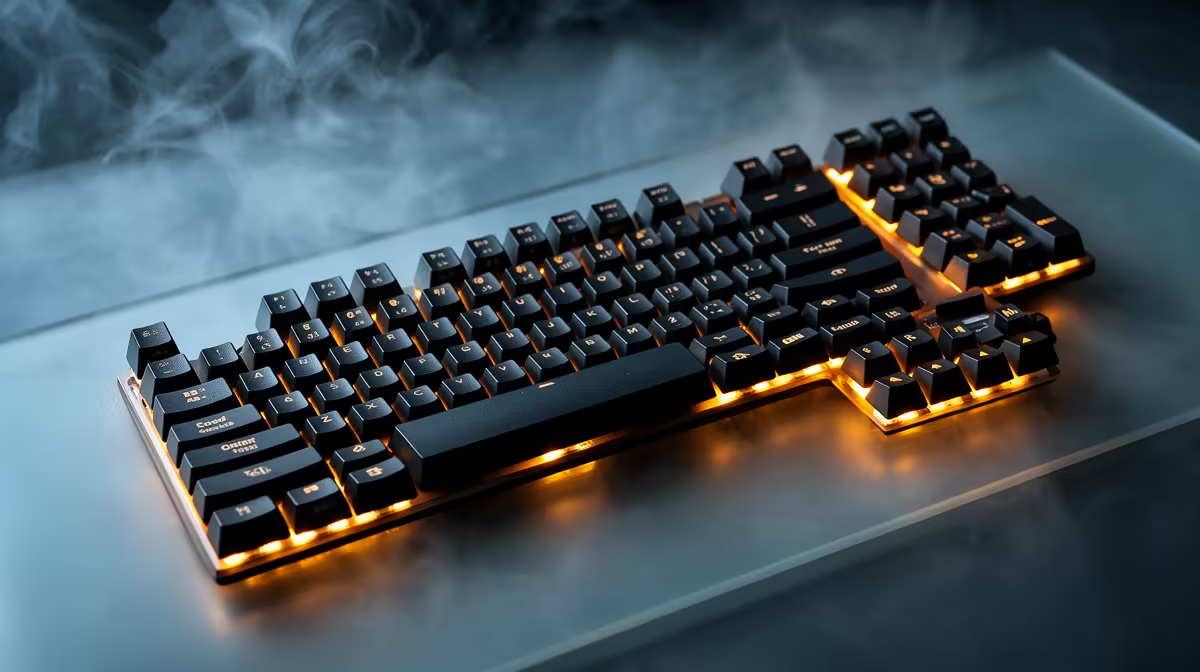
Key travel and typing fatigue matters most after the first hour at the desk, when comfort and control stop being theory. The shortlist should start with hand position, desk width and the way key travel and typing fatigue changes mouse space.
For key travel and typing fatigue, comfort starts with wrist angle, key travel and the space around the keyboard. For key travel and typing fatigue, use a 10mm wrist-height check before buying.
Start with the desk, not the box. For key travel and typing fatigue, check wrist angle, desk width and where the mouse sits after the keyboard is placed. A split shape, 10mm wrist-height check or low-profile keycaps can help with key travel and typing fatigue, but only when the hand position feels natural after more than a quick test.
Useful ergonomic features for key travel and typing fatigue remove repeated strain. Split layout spacing can open the shoulders, macro keys can reduce repeated commands, and reliable wireless mode support can keep the desk cleaner when judging key travel and typing fatigue. If a wrist rest is part of key travel and typing fatigue, it should support pauses without lifting the hands while typing.
Avoid forcing a new layout too quickly when buying for key travel and typing fatigue. A keyboard for key travel and typing fatigue should still handle games, documents, chat and shortcuts without slowing you down. Give key travel and typing fatigue time, but do not ignore immediate pressure points around the wrist, thumb or mouse hand.
the desk and mark where your mouse actually moves before buying for key travel and typing fatigue. Comfort depends on the whole workspace.
Often, yes. Judge key travel and typing fatigue after a few real sessions, then decide using wrist angle, shortcut reach and typing accuracy.
Yes, if key travel and typing fatigue keeps movement keys natural and leaves enough mouse space. For key travel and typing fatigue, comfort should not make core controls harder to reach.
Measure desk width, mouse space and keyboard height for key travel and typing fatigue. Those simple checks prevent many comfort upgrades from feeling cramped when judging key travel and typing fatigue.
Halving the travel distance means fingers lift 2 mm less per keystroke, reducing cumulative muscle effort over thousands of presses per hour.
Yes for most typists. Less finger travel lowers the effort per stroke, but the reduced tactile feedback can cause more errors initially.
Not inherently. Low-profile switches come in clicky, tactile and linear variants; the profile height does not directly change the sound level.
Yes. Shorter travel means less time to feel the actuation point, leading to accidental double-presses until muscle memory recalibrates.
On a hard surface the shorter travel amplifies impact sound slightly and vibration feedback; a thin rubber mat helps dampen both.
Yes. Laptop island keys share the short 1.5-2.5 mm travel of low-profile boards, making the adaptation period much shorter.
PCIe 5.0 and PCIe 4.0 differ most in lane support, compatibility, and upgrade value for strategy and sim games. SA buyers should match the choice to their actual hardware and games.
Read more
AM5 vs AM4 for video editing in 4K Difference explained is mostly about compatibility, budget, upgrade path, and setup fit. SA buyers should check device support and real needs before expecting a clear win from either option.
Read more
OLED vs QD-OLED for strategy and sim games buyers - what changes is mostly about compatibility, budget, upgrade path, and setup fit. SA buyers should check device support and real needs before expecting a clear win from either option.
Read more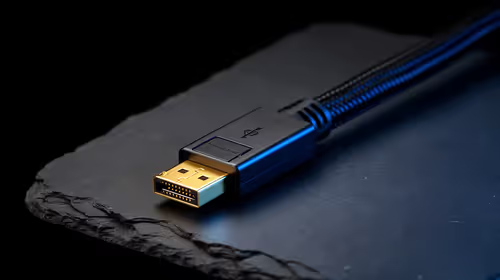
DisplayPort 2.1 and 1.4 differences matter when SA PC builders match GPUs, monitors, and refresh targets. Use this difference between displayport 2 1 and displayport 1 4 explained pc builders guide to avoid mismatched parts.
Read more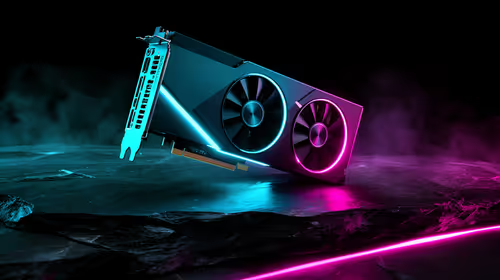
Ray tracing vs Path tracing depends on Strategy and sim games needs, platform limits, and budget fit. Compare compatibility, latency, upgrade path, and real setup constraints before choosing for an SA build.
Read more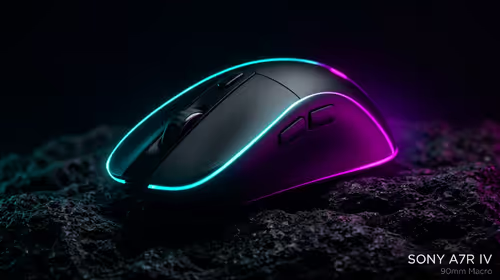
wireless mouse guide for Gqeberha gamers should be shortlisted around the job it must do. South African buyers should compare sensor, shape, weight, and wireless latency, warranty path, and upgrade room before treating any pick as best.
Read more
From 1 October 2026, WhatsApp Business Platform service replies in South Africa are expected to cost about $0.0076, or 12 cents, per delivered message.
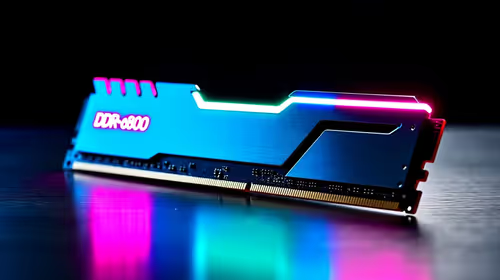
DDR5-8000 RAM Kits pros and cons depend on the build, budget, and workload. Weigh gaming needs, platform fit, power, cooling, warranty support, and South African pricing context before shortlisting it.
Wi-Fi 6E vs Wi-Fi 6 depends on AAA single-player gaming needs, platform limits, and budget fit. Compare compatibility, latency, upgrade path, and real setup constraints before choosing for an SA build.
Ryzen 9 9950X3D dead pixel checks should isolate the panel first. Run colour fills, inspect the monitor menu, test another cable or input, and capture proof before linking it to the SA CPU upgrade.

YouTube will count public views from the first frame across video formats from 24 August, while earnings and eligibility remain tied to engaged viewing.
Canonical expects Ubuntu on WSL users to outnumber native Ubuntu desktop users before the end of 2026. The software is open source and runs inside supported Windows PCs.
Telkom's daily bundles pair WhatsApp access with 10 all-network voice minutes. The R15 option includes 300MB, while the R17 option uses a fair-use threshold.
A 10,000-hour test found similar image retention across older and newer OLED TVs, while newer panels were brighter and more efficient. Local OLED monitors started at R9,999.

Windows 11 update KB5121003 is linked to crashes in several multiplayer games on versions 24H2 and 25H2. Check the build, report the fault and avoid risky file or update changes unless the problem is confirmed on your PC.

Comsol's standalone 5G network covers about one million Gauteng homes and starts commercial ISP service in September. Early packages range from R275 to R875 a month, but coverage and fair-use rules still decide the real value.

Sennheiser's Momentum True Wireless 5 adds user-replaceable batteries, 12-hour playback and a $299.95 launch price. There is no confirmed South African date, so compare longevity with live earbuds from R199 to R2,999.

AVerMedia's GC531 and GC535 are professional HDMI capture devices for continuous streaming, with RGB24 capture up to 2K30 and 4K30. South African creators should compare them with live 4K capture cards from R2,099.