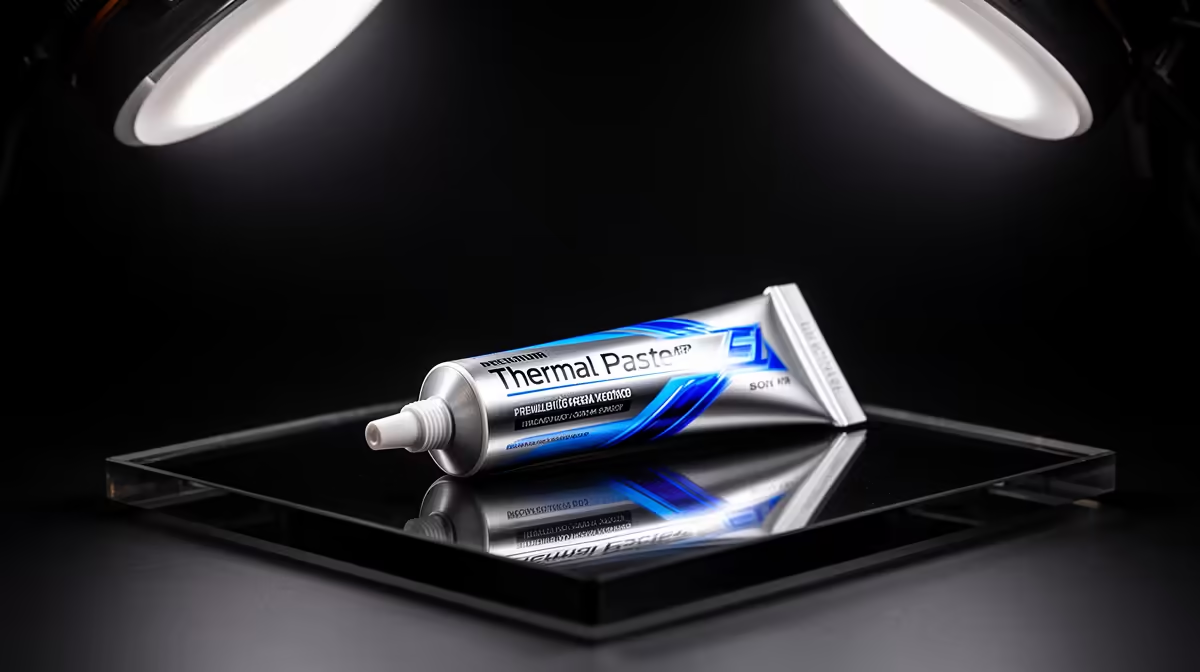
PTM7950 is a phase-change thermal interface, and that unusual behaviour makes authenticity and application more important than a brand-name paste swap. If you are asking where to get PTM7950 in South Africa, check the exact product and seller evidence, then compare it with locally listed paste and cooler upgrades before opening a laptop.
Quick Answer
PTM7950 availability in South Africa shifts through specialist sellers and shipment routes, so avoid permanent stock claims. A small overseas order can add freight, customs treatment and uncertain authenticity. Start with Evetech's current CPU cooler range and local thermal-interface options before deciding whether PTM7950 solves a measured cooling problem.
🌡️ Understand the phase-change behaviour
PTM7950 is designed to change physical behaviour as temperature rises, helping it conform at the interface under operating heat. Use the maker's current technical data for the exact form.
It can be supplied as a sheet or another format. Thickness, protective films and dimensions matter. Do not treat every listing with the name as identical.
A phase-change material may need heat cycles to settle. Record initial and later results under the same workload before judging it.
Standard thermal paste remains suitable for many desktop CPUs and is easier to source and reapply. PTM is useful when pump-out or long sustained laptop heat is the problem you can demonstrate.
Liquid metal is a different conductive material with greater electrical and material-compatibility risk. PTM should not be described as liquid metal or handled through the same assumptions.
No interface fixes a loose cooler, blocked heatsink or failed fan. Diagnose the complete thermal path first.
💻 Decide whether the device should be opened
Laptops can benefit from stable interfaces under repeated heat cycles and have delicate screws, cables and pads. Check service guidance and warranty implications before opening one.
Record screw locations and lengths. A long screw in the wrong hole can damage a board or case.
Disconnect power and battery through the supported service procedure. Never work on a live system.
Thermal pads on memory or power components can use different thicknesses. Do not replace or compress them because they look untidy.
Desktop CPU heat spreaders offer an easier flat surface, while cooler mounting pressure and socket geometry still matter.
GPU service carries greater risk. Cooler disassembly, pad placement and die contact require exact model information. Use a qualified technician when you lack the tools or documentation.
✂️ Apply the sheet without contamination
Confirm the correct sheet dimensions and thickness for the target. Store it through the seller's and maker's temperature guidance.
Clean old interface material with a supported solvent and lint-free method. Keep fluid away from connectors and the board.
Measure the contact area, then cut the sheet without stretching it. Avoid touching the active surface with bare fingers.
Remove protective film from the correct side at the correct step. Leaving one layer in place can destroy thermal contact.
Lay the material flat without folds or missing corners. Do not stack pieces unless the technical instructions call for it.
Mount the cooler once with even pressure. Lifting it after contact can tear or shift the sheet. Use a fresh piece when the interface is disturbed and the maker does not approve reuse.
Tighten screws in the stated order and small alternating steps. Overtightening can damage the device and does not guarantee lower temperature.
📈 Test before and after with the same workload
Before service, record room temperature, idle, sustained load, clock, fan speed and power. Clean vents and check fans.
After application, begin with a short controlled load. Stop if temperature rises without stabilising or a fan does not run.
Repeat the same test after several heat cycles. Compare steady temperature and clock, not one quick peak.
Listen for fan-speed changes. A lower temperature with the same fan curve is different from a similar temperature at lower noise.
Check core-to-core or hotspot spread where trustworthy sensors are exposed. A large change can indicate uneven contact.
Keep the old results and service date. If performance worsens months later, dust, fan wear and mount movement can be compared with a baseline.
📦 Compare authenticity, cost and local alternatives
Ask for product origin, packaging and specification evidence. Generic material using the PTM7950 name can be hard to verify.
Evetech's cooler best-sellers show current local cooler options. A better heatsink or fresh reputable paste may solve the issue with a clearer support path.
Price the sheet, delivery, tools and possible rework. A small material order can have a high shipping share.
Do not reuse a sheet after removing the cooler unless the exact product instructions permit it and the surface remains intact. A fresh interface is safer for consistent contact.
For stored PTM material, keep films and labels, avoid heat and note purchase date. Reject sheets with contamination, folds or unknown thickness.
Make a paper template of the contact surface before cutting expensive material. Check the template against screw holes and nearby components, then transfer the outline without touching the active sheet.
Store unused offcuts only if their identity and thickness remain clear. A loose unlabelled square should never be trusted inside a laptop or graphics card.
Choose PTM7950 when its phase-change behaviour addresses a known pump-out or sustained-heat issue. Choose local paste when simplicity, authenticity and easy reapplication matter more.
Frequently Asked Questions
What does PTM7950 do differently from thermal paste?
It is a phase-change interface designed to conform under operating heat. Use the exact technical data and application instructions.
Is it mainly for laptops or desktop CPUs?
Enthusiasts use it in several device types, but fit, service risk and benefit differ. Diagnose the exact machine before opening it.
Does it need reapplication as often as paste?
Service life depends on authentic material, installation and use. Follow current maker guidance and monitor the thermal baseline.
Is it harder to apply than liquid metal?
They are different materials. Liquid metal is electrically conductive and carries separate compatibility risks. PTM sheets require careful cutting and film removal.
Why is mainstream South African stock limited?
Niche demand and specialist sourcing can affect listings. Check current sellers without assuming the route will remain fixed.
Can PTM7950 be reused?
Do not assume reuse after lifting the cooler. Follow the exact material instructions and use a fresh piece when integrity is uncertain.
What local alternative can I use?
Check Evetech's current cooler range for reputable thermal paste and cooler upgrades that suit the device.
Ready to solve a measured cooling problem?
Browse Evetech's current cooler range and compare paste, heatsink and fan upgrades before opening the device.