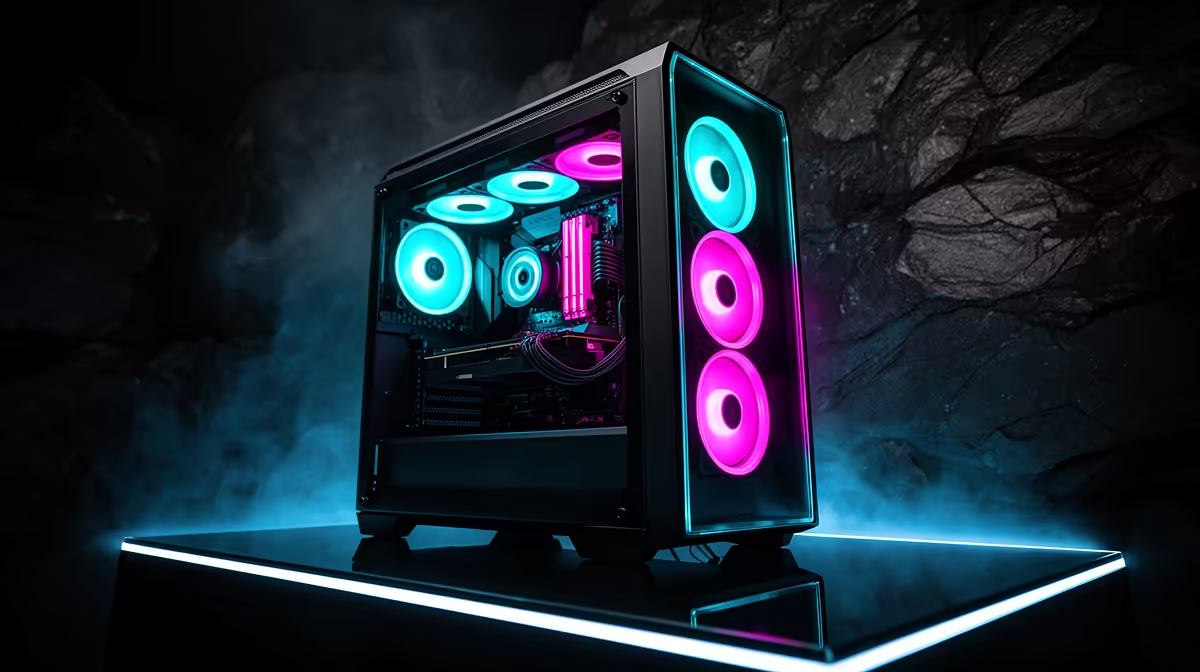
The extra R10,000 between a R15,000 and R25,000 gaming PC should unlock a stronger graphics card first, then better balance around it. That can move you from careful 1080p settings into confident high-refresh 1080p or 1440p play. The exact gain depends on named current systems. A tier label cannot promise a GPU or frame rate by itself.
Quick Answer
Use R15,000 for a focused 1080p tower with a value CPU, 16GB matched memory and a useful entry GPU. At R25,000, protect a meaningful graphics step, 1TB SSD and a platform that will not hold it back. Move to 32GB when the current basket still keeps the stronger card. Compare one-percent lows in your five main games at the monitor resolution you own.
What the R15,000 rung is trying to do
This build needs discipline. A modern value processor and mainstream board leave room for the graphics card. Sixteen gigabytes in two modules covers many game sessions. Storage may begin at 500GB or 1TB depending on current prices.
The monitor target should be 1080p unless benchmarks prove more. Esports can reach high frame rates, while demanding releases may need medium settings or quality upscaling. Ray tracing belongs in the game-specific test rather than the budget promise.
There is little value in a premium motherboard, oversized cooler or elaborate case. Choose functional airflow, the correct socket and enough USB and storage.
What R25,000 should unlock
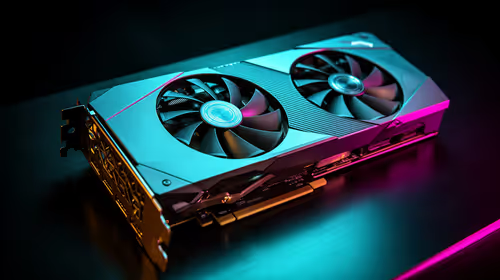
The higher rung should not look like the R15,000 PC with more RGB. It should show a graphics card with a meaningful performance and VRAM step. That creates room for 1440p, higher textures and stronger one-percent lows.
The processor can move up when CPU-heavy games and high refresh need it. The platform can also gain a board with another M.2 slot or better network features. Those changes remain secondary to the graphics target.
Thirty-two gigabytes becomes easier to justify for streaming, creation and large games. If it consumes the GPU step, keep 16GB and plan a matched future replacement only when measured use demands it.
Compare complete current systems
Open the gaming PC deal range and PC best-seller page. Build one named basket near each rung and record CPU, GPU, memory layout, SSD, PSU model and case.
The R15,000 and R25,000 figures are spending envelopes. They do not establish current stock. If you quote an exact product price, use the local pack and state as of July 2026.
Watch for a cheap system whose lowest price comes from integrated or display-class graphics. Open the full model, not the category card.
The GPU step in real resolutions
At 1080p, the R25,000 GPU can raise settings, ray-tracing headroom and refresh. Some competitive games become CPU-limited, so the full gain may not appear at low settings.
At 1440p, the larger graphics allocation has more work and tends to separate from the entry tier. Compare native and upscaled results. Give one-percent lows real weight: a tight 90 fps delivery can play better than 120 fps average punctured by deep drops.
At 4K, the R25,000 system may run selected games with tuned settings, but it should not be sold as an automatic maximum-setting 4K build. Pixel load is more than twice 1440p.
CPU: enough versus excessive
A strong six-core processor can feed many mid-range graphics cards. Eight cores help background creation, streaming and some games. Large-cache gaming chips can improve CPU-heavy lows.
Compare the exact CPU/GPU pair. An expensive CPU beside a weak graphics card is a poor R25,000 gaming allocation. A value CPU that holds the new GPU at high use can be the better balance.
Include motherboard and cooler cost. A CPU sold without a cooler changes the line. A high-power chip may need more case airflow and a stronger board.
Memory and storage differences
Both rungs should avoid one-module memory where the platform expects dual-channel operation. Sixteen gigabytes is the R15,000 baseline. Thirty-two gigabytes at R25,000 adds working room, but capacity should not be bought at the cost of graphics performance that the monitor uses.
A 1TB SSD is a practical goal at either rung. The R25,000 system can move to 2TB when the library and current basket allow it. Drive capacity changes convenience more than frame rate.
Leave free space for updates and check whether the motherboard has another usable M.2 slot. Buying all storage at once is optional; buying a quality PSU is not.
Power supply and case
The stronger GPU can require more power, a different connector and more physical space. Confirm the PSU's exact quality, rated capacity, cable arrangement and protections. Do not accept a vague high-wattage line in place of the model.
Check card length, slot thickness and side-panel cable clearance. A front radiator or drive cage can reduce usable length. Mesh intake and clear exhaust help the card hold clocks without an aggressive fan curve.
This foundation is part of what the extra R10,000 should buy. A high-tier GPU in an unknown PSU and sealed case is an unfinished build.
The monitor may be the better upgrade
If the R15,000 tower already holds 120 fps at 1080p but the monitor is 60Hz, putting all R10,000 into the PC may waste part of the gain. A suitable high-refresh monitor can change motion and latency.
Keep the monitor outside this tower comparison unless the total must include it. If it shares the R25,000, build a balanced desktop-plus-display basket and compare that against the stronger tower on the old screen.
Use a simple value test
Take the current price difference between two named configurations. Divide it by the average and low-frame improvement in your game set, then add the value of memory, storage and PSU differences you would have bought anyway.
Do not assign equal value to frames beyond the monitor's range. Give more weight to settings, resolution and lows you can see. The R25,000 rung earns its place when it changes the whole monitor target or keeps demanding games inside it.
Frequently Asked Questions
Is the R25,000 PC always much faster?
It should contain a meaningful GPU step, but current named specifications and game benchmarks decide the size of the gain.
Should the extra R10,000 go entirely to the GPU?
The GPU receives the largest performance share, while power, cooling, CPU balance and memory must remain suitable.
Is R15,000 enough for 1440p?
Some games and settings can run there, but focused 1080p is the safer baseline. The R25,000 tier provides more 1440p headroom.
Compare named R15,000 and R25,000 PCs by their exact GPU step, one-percent lows and monitor match, rejecting cosmetic upgrades that do not move play.