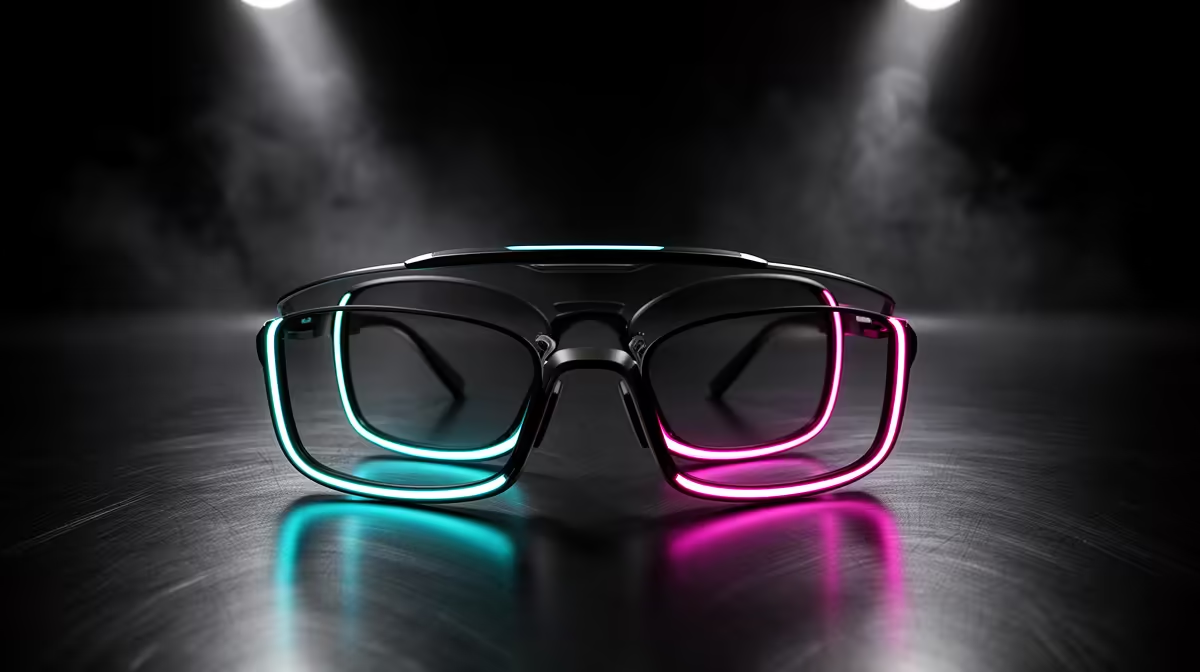
Slip on a pair of Gen 2 and a Gen 1 side by side and you cannot tell them apart, which is exactly the point. The frame Meta got right the first time stayed put, and the upgrades all went inside. The honest Ray-Ban Meta Gen 1 vs Gen 2 question is not whether Gen 2 is better, it clearly is, but whether the two fixes that matter (battery and camera) are worth swapping a pair you already own and like wearing.
Quick Answer
Ray-Ban Meta Gen 2 roughly doubles on-glasses battery life to about 8 hours, jumps to a 12MP sensor with 3K Ultra HD video, and launched at $379, up from Gen 1's $299 starting price. If you own Gen 1 and your only frustrations are short battery and soft video, Gen 2 is a worthwhile upgrade. If those never bothered you, keep Gen 1.
What actually changed
Two complaints defined Gen 1: it ran out of charge too soon, and the video was merely fine. Gen 2 targets both directly and leaves almost everything else alone. The frame, the styles (Wayfarer, Skyler, Headliner), the fit and the dimensions are effectively identical, with Gen 2 adding a barely-there two grams you will never feel on your face.
That makes this a rare upgrade where you can ignore the styling debate entirely and judge it purely on the internals. If you are weighing a first pair or deciding whether to step up, the AR and smart glasses at Evetech shows what is currently stocked and priced locally.
Battery: the fix that changes how you use them
This is the headline. Gen 1 managed roughly four hours of typical use on the glasses, which meant rationing your recording and asking the AI sparingly to make it through a day out. Gen 2 stretches that to around eight hours of mixed use, close to double.
The charging case improved too, holding around 48 hours of additional charge versus the older case's 32. The combined effect is that Gen 2 stops feeling like a device you constantly nurse. You can film through a full afternoon, lean on the assistant, take calls and still have charge left, which is the difference between glasses you wear all day and glasses you save for moments.
Camera: from fine to genuinely useful
Gen 1's camera was a 5MP sensor shooting at up to 1440 by 1920. Gen 2 moves to a 12MP sensor capable of 3K Ultra HD video at 30fps, with a 1080p mode that pushes up to 60fps. Meta has also been rolling out software modes like slow motion and hyperlapse.
In practice this is the jump from a camera that captured the memory to one you would actually post. The extra resolution and HDR give you sharper detail, better dynamic range in bright SA outdoor light, and more room to crop or stabilise after the fact. For anyone using the glasses for travel clips, point-of-view filming or quick social video, this is the upgrade that justifies the rest.
What did not move
It is worth being clear about what Gen 2 does not change. The open-ear audio, the touch controls, the assistant capabilities and the overall daily experience are broadly the same family of features. There is no in-lens display here, that is a different and pricier product line entirely. So if your interest is a visual heads-up display, neither generation is what you are after.
This is a refinement, not a reinvention. Meta took a well-liked product and removed its two real weaknesses without touching what people already loved.
How the daily experience feels
Numbers aside, the lived difference between the two is mostly confidence. On Gen 1, you ration. You think twice before filming a long clip because you are watching the battery, and you keep the better moments for when you know you have charge. Gen 2 removes that mental overhead. You film when something is worth filming, lean on the assistant when it is useful, and stop treating the glasses as a limited resource.
The camera jump compounds that. A clip you would previously have shrugged at and not bothered sharing becomes something worth posting, which changes how often you actually reach for the glasses in the first place. A device you trust to perform gets worn more, and a device that gets worn more earns its cost. That feedback loop, not any single spec, is the strongest argument for Gen 2 over Gen 1 for someone who films regularly.
South African buying context
Neither generation is sold through official SA retail channels, so local buyers import, which adds shipping, duties and the rand-dollar gap on top of the $299 or $379 sticker. That import overhead is exactly why the upgrade maths is sharper here than in the US: paying twice for two imports is a real cost. If you are buying your first pair, going straight to Gen 2 makes obvious sense. If you already imported Gen 1, the case to import again rests entirely on whether battery and video are the things holding you back. The accessories best sellers at Evetech give a clear read on where local demand for wearables and companion gear currently sits.
Who should upgrade
- Upgrade if: you film often and want shareable 3K video, or you keep hitting Gen 1's battery wall before the day is done.
- Stay on Gen 1 if: you mostly use the audio and assistant, rarely record long clips, and the four-hour battery has never been a problem for your routine.
- Buy Gen 2 new if: you have never owned a pair. There is no reason to start on the older generation at a similar import effort.
Frequently Asked Questions
How much better is Gen 2's battery really?
Roughly double. Gen 1 lasted about four hours of typical use on the glasses, while Gen 2 reaches around eight. The charging case also holds more, around 48 hours of extra charge versus 32, so Gen 2 needs far fewer trips back to a plug across a long day.
Is the camera upgrade noticeable in normal use?
Yes. Gen 2 moves from a 5MP sensor to a 12MP one and adds 3K Ultra HD recording with HDR. The result is sharper, more postable footage with better handling of bright outdoor light, which is a meaningful step up from Gen 1's softer 1440 by 1920 clips.
Do Gen 1 and Gen 2 look different?
Practically no. They share the same frame styles, fit and dimensions, with Gen 2 adding only about two grams you will not feel. Every visible change is internal, which is why the upgrade decision comes down to features rather than looks.
Can I buy these officially in South Africa?
Not through official local retail at the time of writing, so SA buyers typically import. That adds shipping, duties and the exchange-rate gap on top of the dollar price, which is worth factoring into whether a second import for the upgrade is justified.
Does either generation have an in-lens display?
No. Both the Gen 1 and Gen 2 Ray-Ban Meta glasses are audio-and-camera devices with an AI assistant, not heads-up displays. A visual in-lens screen is a separate, more expensive product, so do not buy either generation expecting on-lens visuals.
If smart glasses are on your list, the upgrade only matters once you know which features you actually use. Browse the smart and AR glasses available at Evetech and match the pair to how you really wear them, all day, camera-first, or assistant-led.