A machine that maps your home, plans a route, vacuums and then empties itself sounds like a luxury, until you realise the navigation and self-cleaning that cost flagship money two years ago now sit in the mid-range. Robot vacuums in South Africa have crossed from gadget to genuinely supported appliance, with local channels and warranties behind the major brands.
Quick Answer
A modern robot vacuum maps your home autonomously using either a spinning LiDAR turret or a vSLAM camera, then cleans on a planned route rather than bouncing randomly. Dreame, Ecovacs and Roborock all run official South African channels with local warranties, so a robot vacuum here is a properly backed purchase, not a grey-import gamble.
How they actually navigate
The single biggest divide between models is how they see your home. Two approaches dominate.
LiDAR navigation
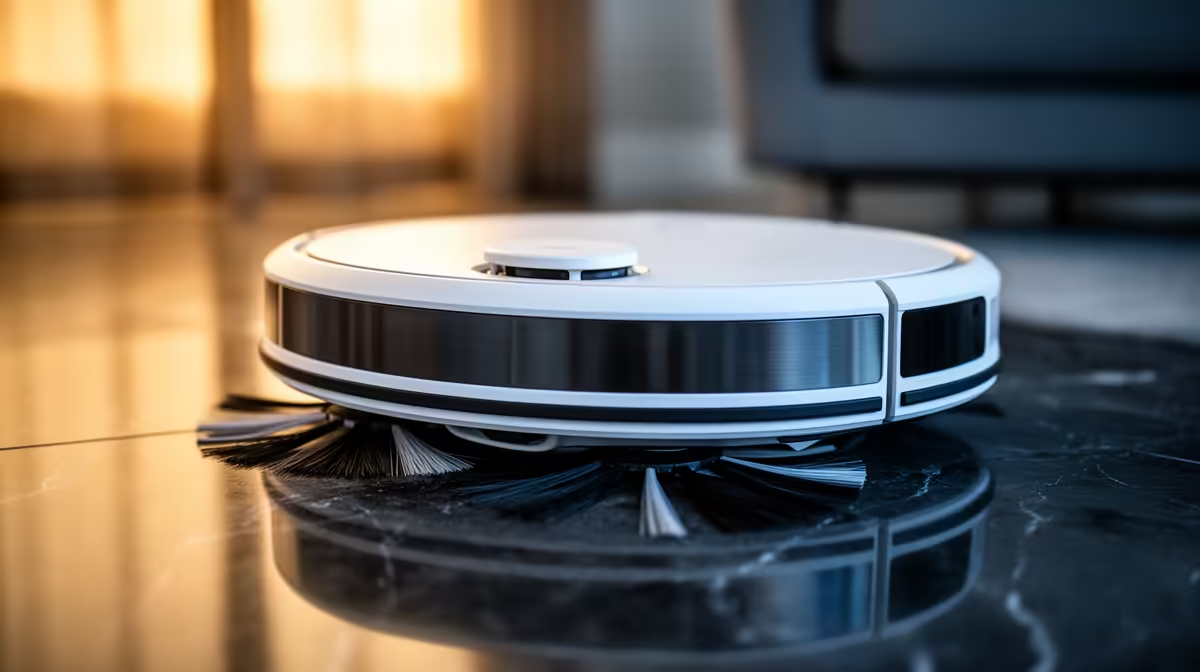
A LiDAR unit spins a small laser turret, usually on a raised hump, and measures how long light takes to bounce back off walls and furniture. From those readings it builds an accurate floor plan and knows exactly where everything is. The big advantage is that lasers do not need light, so a LiDAR robot maps and cleans just as well in a dark room as a bright one, which matters for night-time runs.
vSLAM navigation
A vSLAM robot uses a camera, usually facing up or forward, to recognise visual features in the room and stitch them into a map. It tends to sit on a slimmer chassis since there is no spinning turret, but it leans on ambient light. In a dim passage or a curtained lounge it can lose its bearings, so it suits well-lit homes best.
Suction, docks and mopping
Beyond navigation, three numbers and features decide real cleaning ability. Suction is measured in Pascals (Pa); flagship 2026 models push figures like 30,000Pa and beyond, though for hard floors and short-pile rugs a strong mid-range figure is plenty. Treat the headline Pa number as a ceiling, not a constant, since the robot only uses full power on demanding surfaces.
A self-empty dock changes the ownership experience more than any spec. Instead of emptying a small onboard bin every run, the robot returns to a base that vacuums its dustbin into a larger bag you touch once a month or two. Mopping is the third axis: simple models drag a damp pad, while better ones lift the pad over carpet, wash it at the dock, and dry it to avoid that musty smell.
The South African angle
The reason robot vacuums are worth buying here now is local support. Dreame, Ecovacs and Roborock all operate official SA distribution, which means in-warranty repairs, genuine spare brushes and filters, and app servers that stay online. That removes the old risk of buying an imported unit only to find no parts and no warranty when something fails. You can see the current line-up in the smart home and appliances range at Evetech, and consumables like replacement brushes and filters turn up among the top-selling accessories.
Obstacle avoidance and the pet question
Mapping tells the robot where the walls are; obstacle avoidance tells it where the cables, socks and pet bowls are. The two are separate skills. A robot can map a room beautifully and still swallow a charging cable or smear a pet accident across the floor if it lacks proper object recognition. Newer units add a forward camera or structured-light sensor specifically to spot and steer around small obstacles in real time.
For SA homes with pets, this matters more than the headline suction figure. A robot that reliably dodges a chewed toy and recognises a pet mess to avoid it is worth more day to day than one with a bigger Pa number that ploughs straight through. If you have a dog or cat, prioritise a model with genuine obstacle avoidance and an anti-tangle brush that does not wind itself solid with hair.
Running costs and consumables
A robot vacuum is not a buy-once appliance; it has consumables. Side brushes, the main roller, filters and mop pads all wear and need replacing periodically, and self-empty docks use disposable dust bags. Factor that into the decision, because a cheap unit with hard-to-find parts can cost more over its life than a slightly pricier one with readily stocked spares.
This is another reason local distribution counts. With Dreame, Ecovacs and Roborock all running official SA channels, genuine consumables are easy to source here rather than waiting on an overseas order. Budget a modest amount each year for brushes, filters and bags, and the robot keeps cleaning properly instead of slowly losing suction as worn parts clog up.
Who each type suits
Match the robot to your home rather than the spec sheet. A multi-room home with rugs and pets benefits from LiDAR, high suction and a self-empty dock, since you want it to run unattended and rarely need touching. A smaller, well-lit flat can do nicely on a slimmer vSLAM unit at a lower price. If your floors are mostly hard tile or laminate, a competent mop function earns its place; if you are wall-to-wall carpet, prioritise carpet detection and pad-lift instead.
Setting realistic expectations
A robot vacuum is a maintenance tool, not a replacement for every clean. It excels at the routine sweep that keeps dust and crumbs from building up, run daily or every second day, so your floors never reach the state that needs a deep clean. What it does not do well is stairs, upholstery, tight corners behind furniture, and the once-a-season scrub. Think of it as the thing that keeps the floors consistently tidy between your bigger cleans, not the thing that ends cleaning altogether.
Set up well, with virtual no-go zones around pet bowls and cable nests and a sensible cleaning schedule, a good unit genuinely buys back time. Set up poorly, or bought on the wrong specs for your floors, it becomes a gadget that gets stuck and gets ignored. The four variables above are what tip it from one outcome to the other.
Frequently Asked Questions
Is LiDAR or vSLAM better for a typical SA home?
LiDAR is the safer default because it works in any lighting and maps more precisely. vSLAM can match it in a bright, open home but struggles in dim rooms, so choose it only if your lighting is consistently good.
How much suction do I really need?
For hard floors and thin rugs, a solid mid-range Pa figure cleans well. Very high numbers mainly help with deep-pile carpet and pet hair, so do not pay a premium for a ceiling figure your floors will never call on.
Do robot vacuums sold in South Africa carry a local warranty?
Yes, when bought through official channels. Dreame, Ecovacs and Roborock run authorised SA distribution, so you get a local warranty, genuine parts and supported apps rather than the risks of a grey import.
Is the self-empty dock worth the extra cost?
For most people, yes. It cuts hands-on maintenance to emptying a bag every month or two instead of a small bin after every clean, which is the difference between a robot you forget about and one you keep babysitting.
Can a robot vacuum replace my upright vacuum entirely?
For routine daily and weekly cleaning, often yes. For deep cleans, stairs and upholstery you will still want a handheld or upright, so think of the robot as maintenance between your bigger cleans.
Ready to hand the floors over to a machine with proper local backing? Explore the smart home and appliances range at Evetech and pick a robot vacuum matched to your home and floors.