Each time a new memory standard emerges, the same question lands: do I buy now or hold out for the new thing? Right now that thing is DDR6, and the temptation to wait is strong. But for anyone planning a build in 2026, the maths is clear. DDR6 for mainstream desktops is not expected until around 2027, and DDR5 is the standard shipping in every current Intel and AMD platform. Waiting means a year or more with no PC at all.
Quick Answer
Buy DDR5 now. Consumer DDR6 modules are expected around 2027, while DDR5 is the current shipping standard across Intel and AMD. For an SA build in 2026, waiting for DDR6 means at least another year without a working system, for an upgrade that brings no benefit until the matching platforms exist. DDR5 is the practical, available choice today.
The timing reality
The first thing to understand is that DDR6 is not a 2026 product for desktop buyers. The standard is still being finalised, and mainstream consumer modules are expected to arrive around 2027. Early availability tends to land in servers and specialist segments before it reaches everyday desktop kits.
What "expected 2027" really means
A target year is the start of the story, not the end. New memory standards arrive at a premium, in limited supply, and ahead of the motherboards and CPUs that support them. Even once DDR6 sticks appear, the full platform, the matching boards and processors, takes time to mature and to become affordable. The gap between "DDR6 exists somewhere" and "DDR6 is a sensible mainstream buy" is typically another year or more on top of launch.
The cost of waiting
For a build planned in 2026, waiting for DDR6 is not a small delay. It is potentially two years of sitting on an old or non-existent machine while the early adopters pay top dollar to debug a brand-new platform. That is a steep price for memory that delivers no real-world gain until the rest of the ecosystem catches up. If you are speccing parts now, the DDR5 memory range at Evetech is where a 2026 build actually gets its RAM.
Why DDR5 is the right buy now
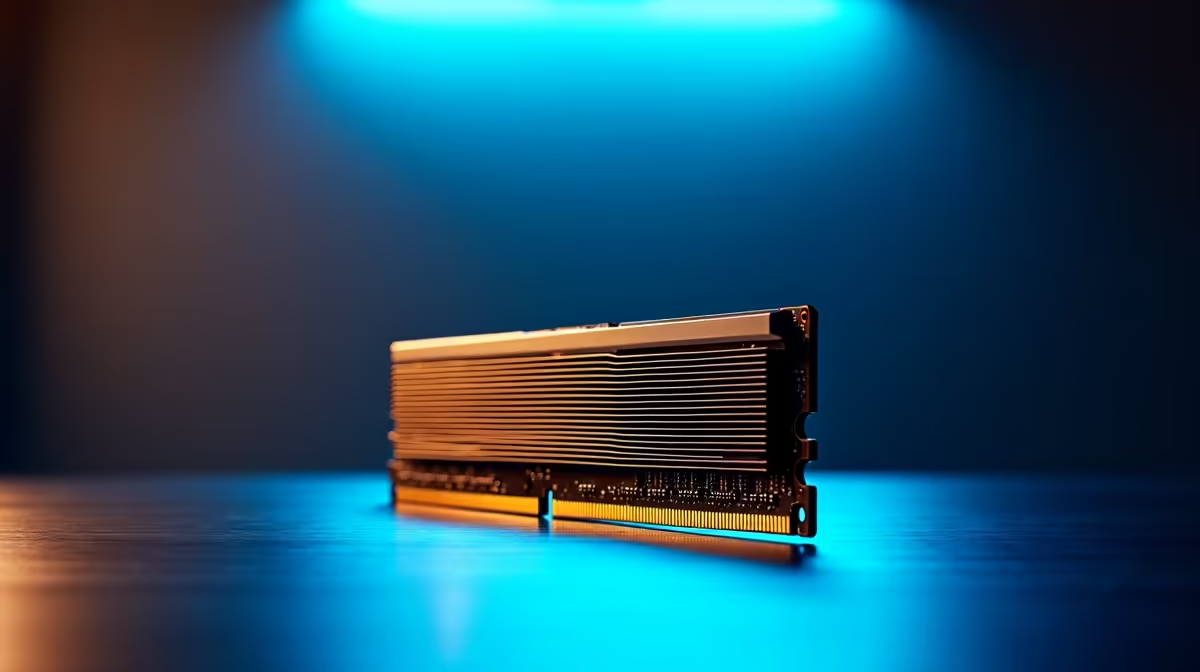
DDR5 is not a compromise you settle for, it is the mature, current standard. It ships in every modern Intel and AMD platform, the supporting motherboards and CPUs are widely available, and prices have settled well below where they sat at launch. You are buying into a proven, stable ecosystem rather than a brand-new one.
A mature, well-supported platform
When a memory standard has been shipping for a few years, the rough edges are gone. Compatibility is broad, kits are plentiful across speeds and capacities, and you are not paying the early-adopter tax. DDR5 is squarely in that comfortable phase right now, which is exactly when a standard is at its best value for a mainstream builder.
Performance that is plenty for 2026
DDR5 has the bandwidth and capacity that current games and applications actually use. For gaming, content creation, and general high-end desktop work in 2026, it is not a bottleneck. The headline numbers DDR6 will eventually bring do not translate into a noticeably better experience until software and platforms are built around it, which is years away. Buying DDR5 today costs you nothing in real-world performance.
Choosing speed and timings
Within DDR5 there is still a sensible choice to make. For an AMD build, memory in the sweet-spot speed range tends to pair best with the platform's integrated memory controller, and pushing far beyond that brings little real gain while costing more. Intel platforms are a touch more flexible with higher speeds. For most builders the practical advice is to pick a well-reviewed kit at a mainstream speed with reasonable timings, enable the memory profile in the BIOS so it runs at its rated speed rather than a slower default, and not to chase exotic numbers that only show up in benchmarks. Capacity usually matters more than squeezing out the last few percent of frequency: a comfortable amount of RAM at a solid speed beats a smaller, faster kit for almost every real workload.
The "future-proofing" trap
The strongest argument for waiting is future-proofing, and it is weaker than it sounds. DDR6 will use a different physical platform, new motherboards, new CPU sockets, so it is not a straightforward swap into a DDR5 board. There is no upgrade path that lets a DDR5 build "become" a DDR6 build.
That means waiting does not future-proof anything. When DDR6 matures, moving to it will mean a new platform regardless of what you buy now. So the choice is really between using a capable DDR5 system for the next few years, or owning nothing while you wait. A working machine you use today beats a theoretical machine you might build in 2027.
A practical plan for SA buyers
For a South African builder in 2026, the sensible move is to buy a solid DDR5 kit now, paired with a current Intel or AMD platform, and get on with using the machine. When DDR6 genuinely matures and the matching platforms become affordable, that will be the moment for a fresh build, not a half-measure upgrade today.
Match the capacity to your workload: a comfortable amount for gaming, more for heavy content and multitasking. Buying the right DDR5 kit now and revisiting the question in a few years is far smarter than leaving a build half-finished waiting on a standard that is not ready. To see how current speeds and capacities stack up against each other, check what South African builders are selecting from the memory best sellers at Evetech.
Frequently Asked Questions
When will DDR6 be available for desktop PCs?
Mainstream consumer DDR6 is expected around 2027, and even then it will arrive at a premium with limited platform support. Affordable, well-supported DDR6 for everyday desktops is likely another year beyond that.
Can I upgrade a DDR5 PC to DDR6 later?
No. DDR6 will require a different motherboard and CPU platform, so it is not a simple swap. Moving to DDR6 in the future will mean a new build regardless of what you buy now.
Is DDR5 fast enough for gaming in 2026?
Yes. DDR5 has the bandwidth and capacity current games and applications use, and it is not a bottleneck for high-end gaming or content work in 2026.
Will DDR5 prices crash when DDR6 launches?
Not in a way that helps a 2026 builder. DDR5 is already mature and reasonably priced. Waiting two years on the chance of a small saving means going without a working system in the meantime.
Should SA buyers wait for DDR6 or build now?
Build now with DDR5. It is the current, available, well-supported standard, and waiting for DDR6 means at least another year with no usable machine for no real benefit today.
For a 2026 build, DDR5 is the standard that is shipping, stable, and good value right now. Browse DDR5 memory kits at Evetech, match the capacity to your workload, and start building today.