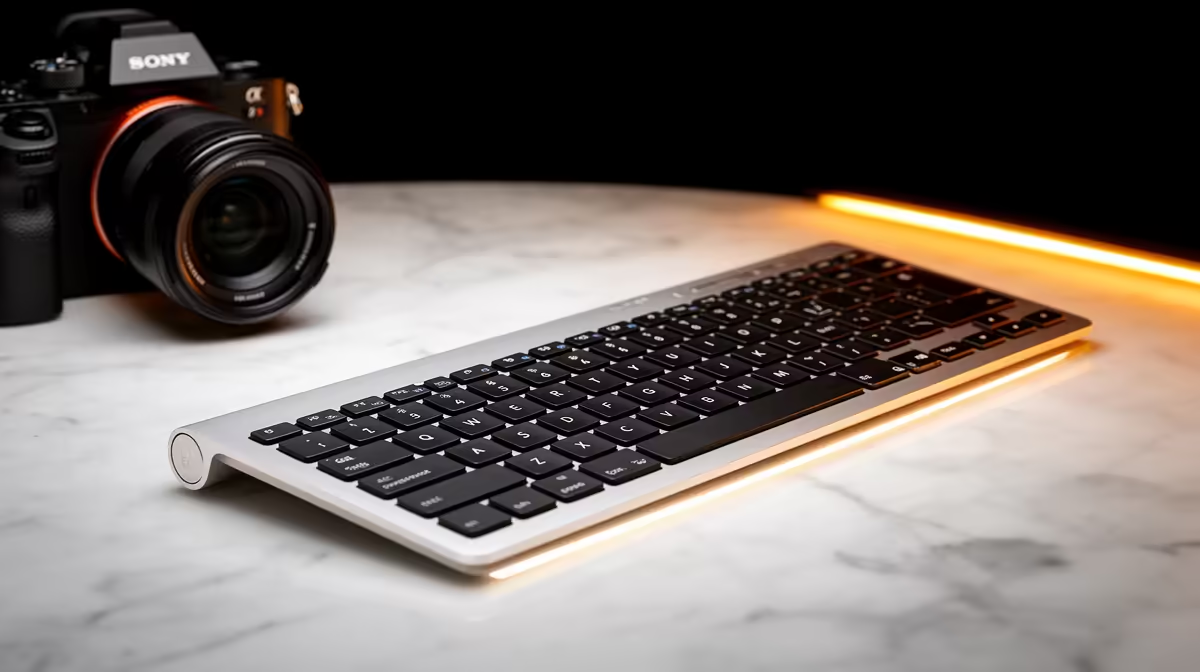
Wireless productivity keyboards is worth judging by the way your hands, mouse and shortcuts share the same desk. Treat wireless productivity keyboards as a control decision first, then compare macros, RGB and software profiles.
Quick Answer
For wireless productivity keyboards, prioritise layout size, switch feel and reliable input behaviour. For wireless productivity keyboards, response features should support the game and desk layout instead of becoming distractions.
Start With Layout And Response For Wireless Productivity Keyboards
With wireless productivity keyboards, the useful question is how the board changes control. For wireless productivity keyboards, check layout size, switch feel and mouse space before chasing extras. 1000Hz polling can make wireless productivity keyboards feel more immediate on supported models, but it is only one part of the chain from finger movement to game response.
Features That Deserve Attention For Wireless Productivity Keyboards
For wireless productivity keyboards, TKL sizing can free up mouse space, gaming mode can reduce accidental interruptions, and macro keys can speed up repeated commands. RGB is useful when it marks profiles or zones for wireless productivity keyboards, but the board still needs stable keys, sensible software and a cable or wireless setup that fits the desk.
Common Buying Traps Around Wireless Productivity Keyboards
Avoid forgetting daily typing comfort when choosing wireless productivity keyboards. For wireless productivity keyboards, the better upgrade should feel controlled in games and comfortable in normal typing. If one feature sounds impressive but the layout is wrong for wireless productivity keyboards, the keyboard will still feel wrong after the first week.
Compare wireless productivity keyboards keyboards by the control problem they solve: space, response, comfort or repeated commands.
FAQ
Does wireless productivity keyboards matter for casual players?
Wireless productivity keyboards can matter, but only when it solves a real control or comfort problem. Casual players weighing wireless productivity keyboards may get more from layout and reliable keys than from extreme specs.
Should 1000Hz polling decide the keyboard choice for wireless productivity keyboards?
No. Treat it as one useful signal for wireless productivity keyboards. For wireless productivity keyboards, switch feel, layout, stable connection and desk space still shape the final experience.
What is the safest way to shortlist wireless productivity keyboards?
Start wireless productivity keyboards with layout, key feel and the games or apps you use most. After wireless productivity keyboards feels right, macros, lighting and wrist support can become tie-breakers.