Quick Answer
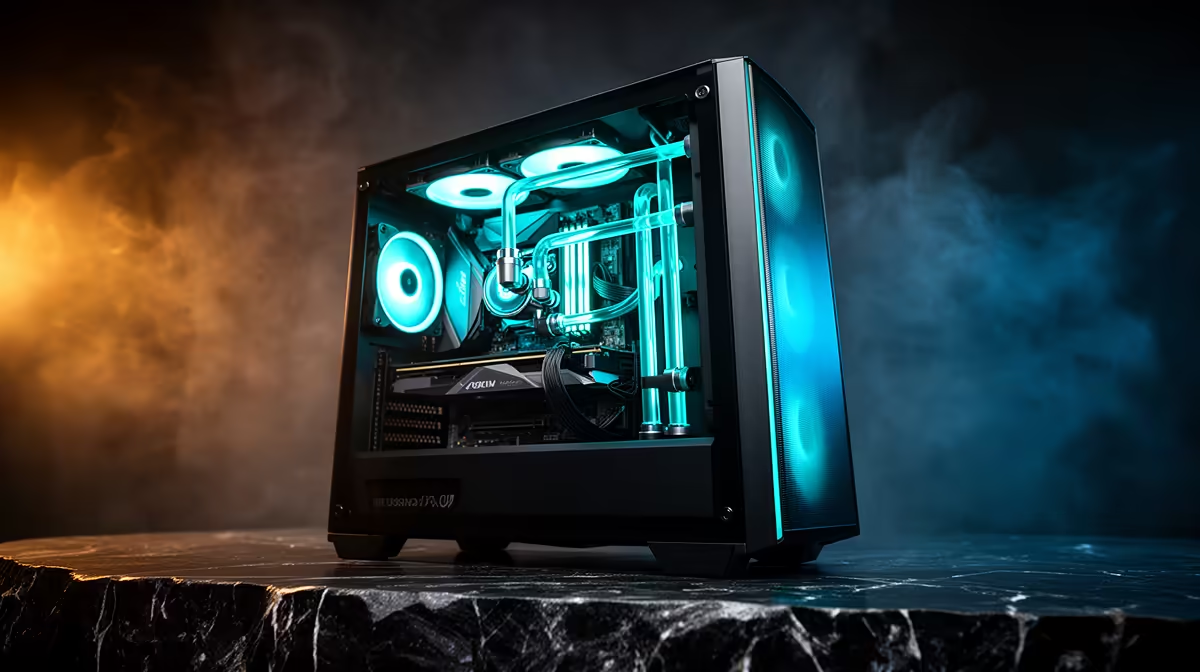
For Standerton, a local AI and Stable Diffusion build under R20,000 should buy core performance first and comfort features only after the R20,000 ceiling still holds. The practical target is 32GB RAM, 1TB NVMe, and the best NVIDIA GPU with 12GB VRAM the budget can support. That makes the build useful for SDXL tests, LoRAs, and local image batches without pretending it is a premium workstation.
Parts That Must Make The Cut
Keep the parts list disciplined: CPU, RAM, SSD, PSU, and GPU must stay balanced. If the quote forces 16GB RAM, a tiny SSD, or an unknown PSU, rebalance before buying. A named Ryzen, Core, RTX, or Radeon class part is easier to evaluate than a vague gaming-PC label.
What R20,000 Can And Cannot Do
R20,000 is a strong mainstream tower band, but it is not a blank cheque for 4K, heavy rendering, or every AI model. Expect smooth everyday work plus 60 fps class gaming where the topic overlaps with games. Spend extra only when it improves the main workload, such as more VRAM for AI, more RAM for creative apps, or better CPU speed for sims.
Local Buying Notes For Standerton
For Standerton buyers, order with clear delivery details and test the PC on the first day with the exact app or game that drove the purchase. Keep packaging until the tower has passed a real workload test, then record the component list for warranty support.
FAQ
Should I force every part into the R20,000 tower budget?
No. If you still need a monitor, audio interface, controller, or backup drive, treat that as part of the real setup cost. The tower should not consume the whole plan if the workflow needs supporting gear.
Is 16GB RAM acceptable for this build?
16GB is the cut-down option, not the preferred target. For this use case, 32GB gives better longevity and fewer slowdowns when browsers, launchers, creative apps, or large project files are open.
Which upgrade should come first later?
Upgrade storage first if the SSD fills up, then RAM or GPU depending on the workload. Avoid replacing the CPU platform too soon by choosing a sensible motherboard and PSU now.