Quick Answer
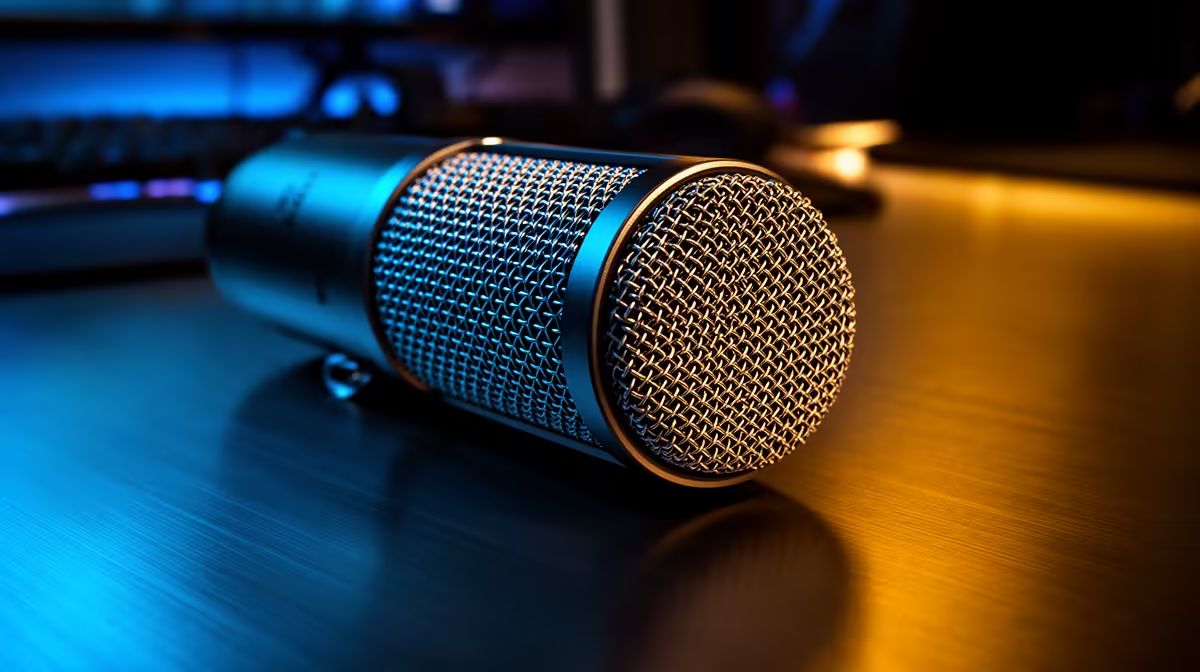
For a streaming mic with backup and storage in mind, pick a USB mic that records a clean local file (a Razer Seiren V2 X around R2,200 or a Blue Yeti near R3,000), and plan a 1TB NVMe drive (around R900 to R1,500 at Evetech) so high-bitrate recordings have fast, ample storage. Audio quality plus a reliable local archive is the goal.
Mic choice for clean, recoverable audio
A good USB mic gives clean audio that is easy to archive and reuse, where a noisy cheap capsule produces files you constantly have to clean up. A Razer Seiren V2 X around R2,200 or a Blue Yeti near R3,000 records a clear 48kHz local track. Recording a separate local audio file in OBS means a power cut or stream drop does not lose the episode, which is the heart of backup planning for a creator.
Storage planning for recordings
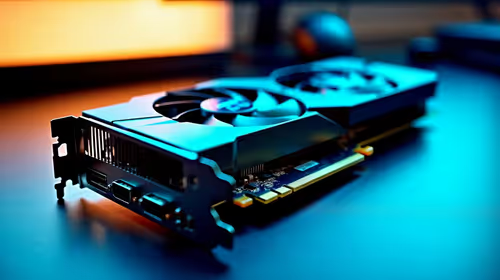
Streaming and recorded audio plus video add up fast: a 1-hour 1080p60 OBS capture is several GB, and a separate WAV audio track adds more. A 1TB NVMe SSD (around 3,000 to 5,000MB/s) gives both the sustained write speed to capture without dropped frames and the space to hold weeks of recordings before you offload them. Plan storage as part of the mic purchase, not an afterthought.
A simple backup workflow
Record the local OBS file to a fast NVMe drive, then regularly copy finished episodes to a second drive or cloud so a single failure never loses content. A 2TB external drive is a sensible archive once your NVMe fills. Keep audio at 48kHz so re-edits stay clean. This combination of a good mic, fast capture storage and a copy step protects the work you put in.
FAQ
What mic suits a streamer planning backups?
A clean USB mic like a Razer Seiren V2 X around R2,200 or a Blue Yeti near R3,000, recording a separate 48kHz local track in OBS so a stream drop or power cut never loses the episode.
How much storage do streaming recordings need?
A 1-hour 1080p60 capture is several GB plus a separate audio track, so a 1TB NVMe SSD around R900 to R1,500 gives the write speed and space for weeks of recordings before offloading.
How should I back up stream recordings?
Record locally to a fast NVMe drive, then regularly copy finished episodes to a second drive or cloud. A 2TB external archive handles overflow, so a single drive failure never costs you content.
a separate local audio track in OBS to a fast NVMe drive, so a dropped stream or power cut never costs you the recording.