


PCIe 5.0 vs PCIe 4.0 for Strategy and Sim Games in SA
PCIe 5.0 and PCIe 4.0 differ most in lane support, compatibility, and upgrade value for strategy and sim games. SA buyers should match the choice to their actual hardware and games.
Read moreEvery spec on complete breakdown of gddr7 graphics memory explained in plain English. What matters for gaming and creator work in 2026, what's marketing fluff, and how each number translates.

Dropping a massive chunk of your hard-earned ZAR on a new graphics card is a serious commitment. You want a rig that crushes frame rates today and survives tomorrow's massive texture packs. Enter GDDR7 graphics memory. This next-generation tech is about to rewrite the rules of performance. Let's explore exactly how it works and why 16GB matters for modern gaming and rendering.
Previous generations like GDDR6 pushed data efficiently... but GDDR7 takes it to an entirely new level. By using PAM3 signaling, this new memory standard transmits three data states per clock cycle instead of two. That means a massive boost in bandwidth without melting your power supply.
Industry data shows GDDR7 speeds can reach up to 32 Gbps. This translates to incredibly fast asset loading. When you are browsing the best gaming PC deals, keeping an eye out for next-gen memory ensures your system stays relevant for years.
GDDR7 also introduces better thermal efficiency. South African summers can push your rig's cooling to the limit. Because GDDR7 transmits data more efficiently, it generates less heat per gigabyte transferred. Your fans don't have to scream like jet engines just to keep your frame rates stable.
Modern titles are incredibly greedy. High-resolution textures, ray tracing, and uncompressed assets chew through VRAM in seconds. If you only have 8GB... you will likely face stuttering and annoying texture pop-in at 1440p.
Many recent console ports are designed around unified memory architectures. When they hit PC, they expect huge pools of VRAM. An 8GB card simply cannot keep up with these demanding titles anymore.
Moving to 16GB gives your GPU the breathing room it desperately needs. It is the absolute sweet spot for smooth 4K gaming. If you are hunting for daily tech specials to upgrade your setup, aiming for that 16GB mark is a brilliant move. It stops your PC from relying on slower system RAM when the action gets chaotic.
For 3D artists and video editors in South Africa, time is literally money. When you load heavy 4K video files or complex architectural renders, your system stores those assets directly in VRAM.
If your memory fills up... your timeline grinds to a halt. Upgrading to a card with 16GB of VRAM ensures buttery smooth playback. It also drastically reduces your final export times.
When working in Blender or Premiere Pro, ensure your software is set to utilise CUDA or OptiX. This forces the application to lean on your GDDR7 VRAM, slashing export times dramatically and keeping your workflow smooth.
Desktop users aren't the only ones who benefit from massive memory pools. Creators and gamers on the move need serious graphical horsepower too.
The latest generation of high-performance laptops is starting to pack desktop-class memory configurations. Having 16GB of VRAM in your backpack means true freedom. You can render heavy timelines or play AAA titles during load-shedding without missing a single beat.
Ready to Dominate the Next Generation of Gaming? The leap to GDDR7 graphics memory is massive. Whether you need a rendering powerhouse or a high-FPS gaming rig, we have the hardware you need. Explore our massive range of PC components and future-proof your setup today.
The products, tools and accessories referenced in this article are stocked at Evetech.co.za with local SA warranty, ZAR pricing and nationwide delivery.
The article breaks down the real-world impact on gaming FPS, creator workflows and everyday responsiveness — not just raw spec numbers.
Only a handful of specs meaningfully change your experience. The guide ranks them by real impact so you spend on what counts.
We cover upgrade headroom, platform longevity and the specific features worth paying extra for if you plan to keep this build for several years.
The article includes a clear generational uplift summary so you can judge whether upgrading from your current hardware is worthwhile.
PCIe 5.0 and PCIe 4.0 differ most in lane support, compatibility, and upgrade value for strategy and sim games. SA buyers should match the choice to their actual hardware and games.
Read more
AM5 vs AM4 for video editing in 4K Difference explained is mostly about compatibility, budget, upgrade path, and setup fit. SA buyers should check device support and real needs before expecting a clear win from either option.
Read more
OLED vs QD-OLED for strategy and sim games buyers - what changes is mostly about compatibility, budget, upgrade path, and setup fit. SA buyers should check device support and real needs before expecting a clear win from either option.
Read more
DisplayPort 2.1 and 1.4 differences matter when SA PC builders match GPUs, monitors, and refresh targets. Use this difference between displayport 2 1 and displayport 1 4 explained pc builders guide to avoid mismatched parts.
Read more
Ray tracing vs Path tracing depends on Strategy and sim games needs, platform limits, and budget fit. Compare compatibility, latency, upgrade path, and real setup constraints before choosing for an SA build.
Read more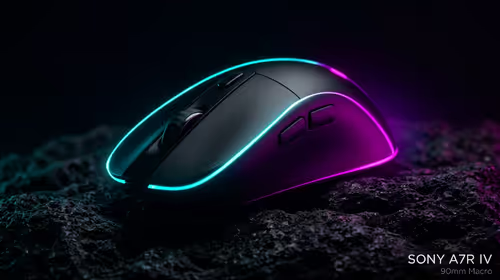
wireless mouse guide for Gqeberha gamers should be shortlisted around the job it must do. South African buyers should compare sensor, shape, weight, and wireless latency, warranty path, and upgrade room before treating any pick as best.
Read more
From 1 October 2026, WhatsApp Business Platform service replies in South Africa are expected to cost about $0.0076, or 12 cents, per delivered message.
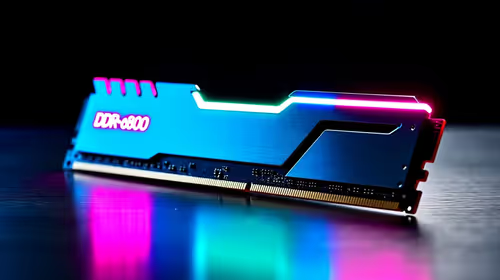
DDR5-8000 RAM Kits pros and cons depend on the build, budget, and workload. Weigh gaming needs, platform fit, power, cooling, warranty support, and South African pricing context before shortlisting it.

Wi-Fi 6E vs Wi-Fi 6 depends on AAA single-player gaming needs, platform limits, and budget fit. Compare compatibility, latency, upgrade path, and real setup constraints before choosing for an SA build.
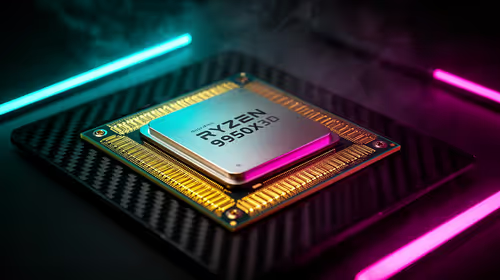
Ryzen 9 9950X3D dead pixel checks should isolate the panel first. Run colour fills, inspect the monitor menu, test another cable or input, and capture proof before linking it to the SA CPU upgrade.

YouTube will count public views from the first frame across video formats from 24 August, while earnings and eligibility remain tied to engaged viewing.
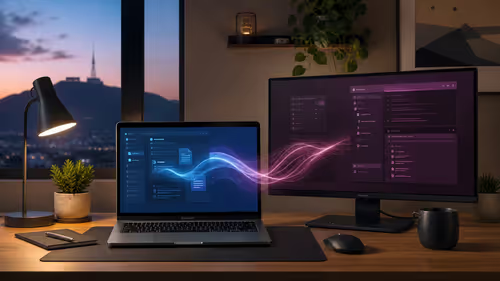
Canonical expects Ubuntu on WSL users to outnumber native Ubuntu desktop users before the end of 2026. The software is open source and runs inside supported Windows PCs.
Telkom's daily bundles pair WhatsApp access with 10 all-network voice minutes. The R15 option includes 300MB, while the R17 option uses a fair-use threshold.
A 10,000-hour test found similar image retention across older and newer OLED TVs, while newer panels were brighter and more efficient. Local OLED monitors started at R9,999.

Windows 11 update KB5121003 is linked to crashes in several multiplayer games on versions 24H2 and 25H2. Check the build, report the fault and avoid risky file or update changes unless the problem is confirmed on your PC.

Comsol's standalone 5G network covers about one million Gauteng homes and starts commercial ISP service in September. Early packages range from R275 to R875 a month, but coverage and fair-use rules still decide the real value.

Sennheiser's Momentum True Wireless 5 adds user-replaceable batteries, 12-hour playback and a $299.95 launch price. There is no confirmed South African date, so compare longevity with live earbuds from R199 to R2,999.

AVerMedia's GC531 and GC535 are professional HDMI capture devices for continuous streaming, with RGB24 capture up to 2K30 and 4K30. South African creators should compare them with live 4K capture cards from R2,099.