Quick Answer
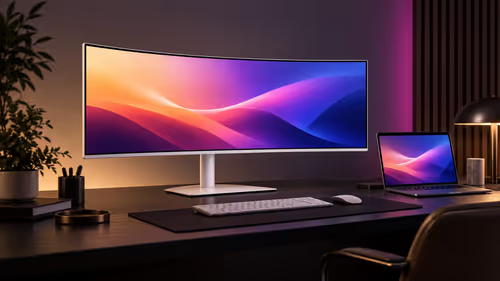
For video editing in 1080p a ultrawide panel with strong colour coverage matters more than headline refresh rate. Budget R6,500 to R14,000 for a screen that holds sRGB above 99 percent and stays sharp through long sessions.
Why panel quality leads here
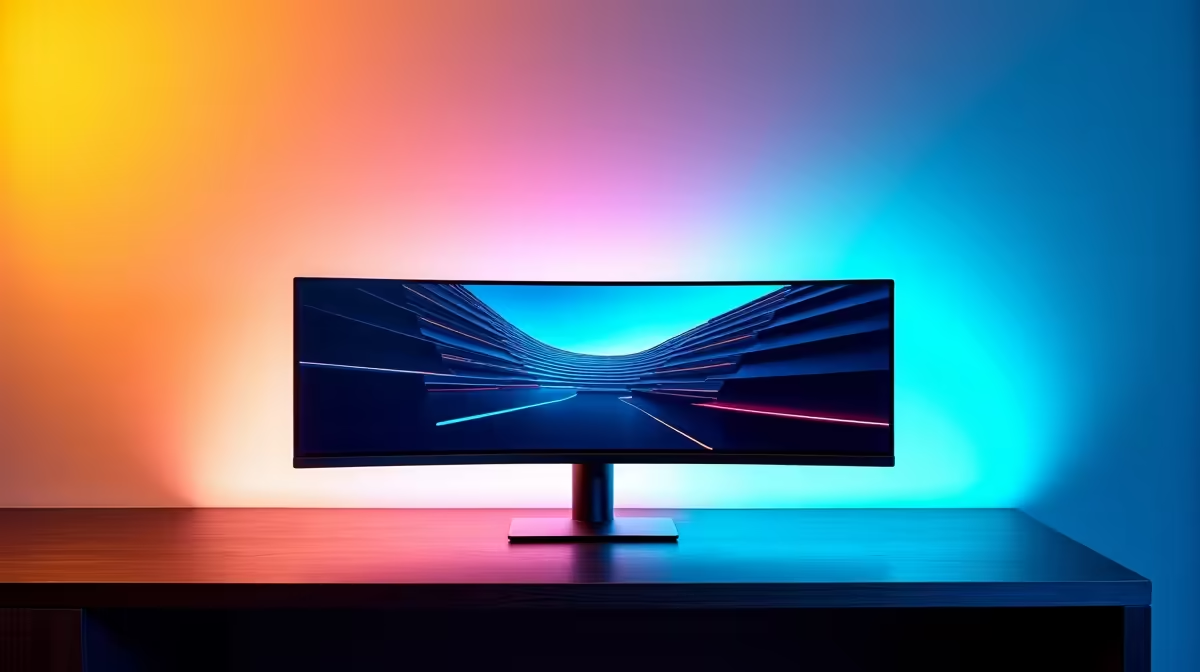
Work like video editing in 1080p lives and dies on colour accuracy and detail, not twitch response. A ultrawide (3440x1440) IPS panel gives you the resolution to see fine edges and the colour fidelity to trust what is on screen. Aim for at least 99 percent sRGB and a factory calibration note in the spec sheet, and confirm the panel is 8-bit or 10-bit rather than 6-bit+FRC for smooth gradients.
Specs that actually move the needle
A 34-inch screen at ultrawide is the sweet spot for desk distance. Look for 10-bit colour (or 8-bit+FRC), 350 nits or more, and a stand with height and tilt so you are not craning over a long day. A 60Hz to 75Hz refresh is plenty for this workload; spend the saving on the panel and a USB-C input that carries video and power down one cable.
How to spend your rands
Entry models start near R6,500 and do the job for hobby work. Step up toward R14,000 when colour accuracy is billable and you need wider gamut coverage such as DCI-P3. Pair it with a single high-speed cable rather than chaining adapters, and budget for a basic calibration tool if the work is paid.
Where to land your purchase
Resist the urge to over-spend on capability you will rarely touch. Put the saving toward warranty, build quality, or a complementary upgrade that you will actually feel every time you use it.
FAQ
What will this cost in rands?
Plan on R6,500 to R14,000. The lower end covers learning and hobby projects; the upper end buys verified colour coverage and a sturdier stand for daily professional use.
Do I need a high refresh rate for this?
No. For video editing in 1080p, 60Hz to 75Hz is fine and lets you put the money into a better panel. High refresh helps fast games, not detailed creative work.
Will ultrawide strain my eyes over long sessions?
Not if you choose a flicker-free, low-blue-light panel at 350 nits or more and sit at arm's length. Resolution that high actually reduces visible pixelation, which is easier on the eyes.
monitor to its native 3440x1440 and load the sRGB picture mode before you start any colour-critical work.