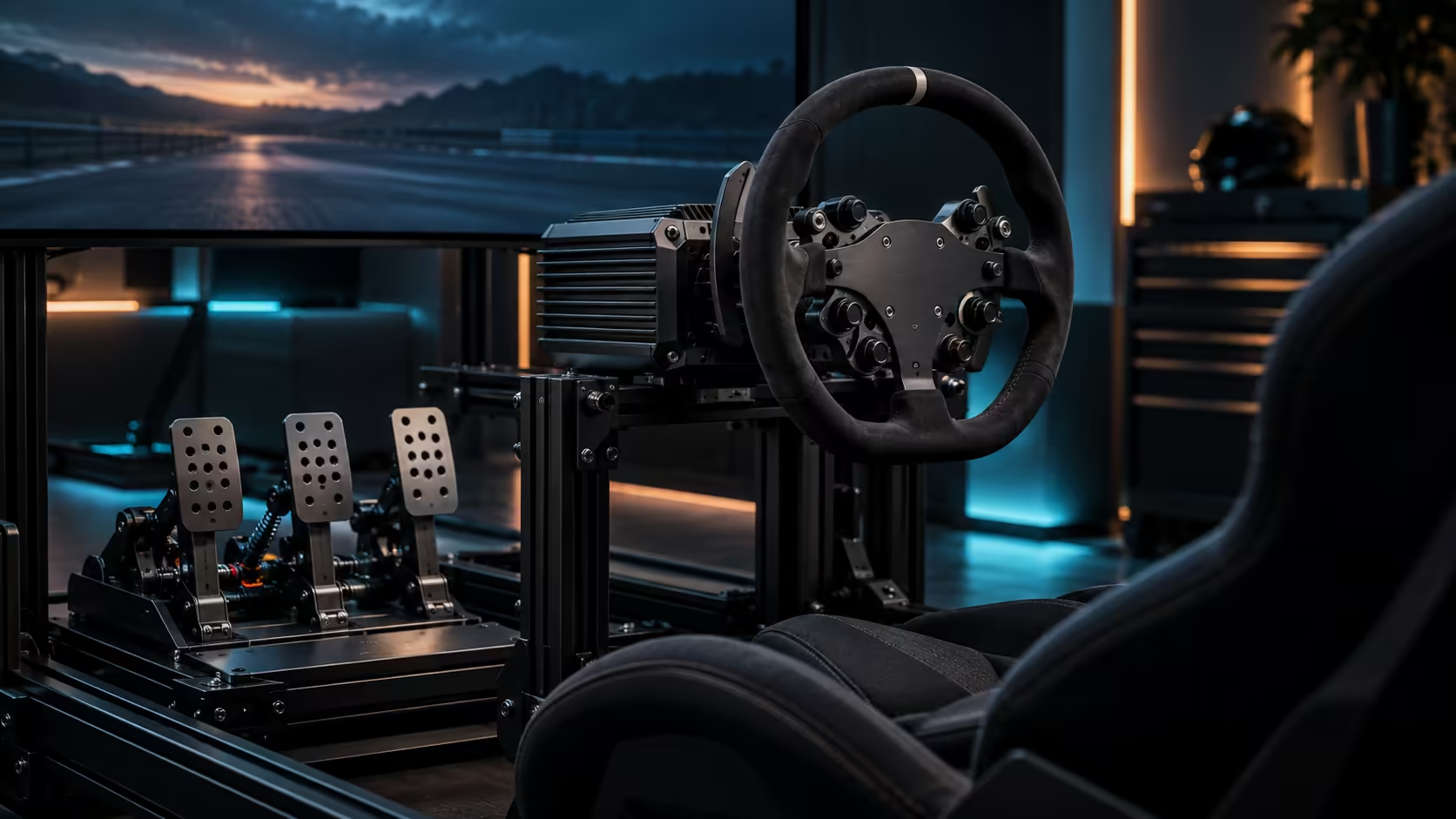
Torque is the one number on a wheel base that actually tells you how it will feel, and most buyers still read it like a horsepower figure rather than what it is. Direct drive wheel torque is the twisting force the motor applies to the steering shaft, measured in Newton-metres, and at 9Nm the Alpha EVO base inside the R14,999 Simagic Green Flag bundle sits well past the point where a driver notices strength and starts noticing detail instead.
Quick Answer
Torque is the raw twisting force a wheel base can apply, and it decides how sharply the wheel can react, not just how hard it can push. At 9Nm, the Alpha EVO base in the R14,999 bundle has enough headroom that the number stops being the limiting factor and the game's own force feedback data becomes the thing you actually feel.
🔧 What a Newton-metre actually measures
A Newton-metre is force times distance: one Newton pushing on a lever one metre long. Apply that to a wheel rim roughly 15cm from the shaft centre, and 9Nm at the shaft becomes a push of around 60 Newtons at your hands, which is close to the weight of a 6kg bag pressing against your palms at arm's length. That is the useful way to picture the number, because torque at the shaft and force at the rim are not the same thing, and a smaller rim on the same base always feels stronger than a bigger one.
What matters for feel is not the peak figure alone but how quickly the base can get there and let go again. A motor with high torque and slow response feels heavy and dull. A motor with the same torque and fast response feels sharp, because the wheel can build up resistance and release it within the same few milliseconds a tyre actually loses grip. Direct drive wins here specifically because there is no gearbox or belt storing and releasing energy on its own schedule between the motor and your hands.
⚡ Peak torque against sustained torque
Every direct drive base is rated by its peak figure, and 9Nm is a peak, not a number the base holds all day. Motors generate heat in proportion to the current needed to produce torque, and sustained high torque for long stretches raises winding temperature until the base throttles itself back to protect the electronics.
In practice this rarely bites during a normal session, because full peak torque only appears in short spikes such as a kerb strike or a wheel hitting the lock stop, not as a continuous force you hold for minutes. A driver running high average strength settings in a long stint is the case where thermal throttling shows up, usually as the wheel gradually going soft rather than cutting out. Setting the base output around two-thirds of maximum for extended racing keeps torque available for the sharp moments while leaving the motor running cool enough to hold that output consistently.
🏎️ How much torque a given car actually asks for
Cars do not all load a wheel evenly, and matching torque headroom to what you drive changes what you should look for in a setting. Light, low-downforce cars communicate mostly through small, fast wheel movements as the front tyres search for grip, and here the base's response speed matters more than its ceiling. Heavy GT-style cars and anything running high aerodynamic load put sustained weight through the wheel at speed, which is where a higher torque figure earns its keep by not running out of push mid-corner.
Rally-style driving asks for something different again: large, fast steering corrections on loose surfaces, where the base needs to reverse direction quickly rather than hold a single load. None of that depends on which specific game you drive, since force feedback strength is generated by the simulation and simply passed to whatever base is connected; a 9Nm ceiling gives you room to run any of those disciplines without hitting a wall, which is a different claim from the base supporting any particular title.
🌍 Long sessions change what torque you actually want
South African leagues that race European-hosted championships often schedule endurance rounds of an hour or more to fit a single evening slot, and torque behaviour changes over that kind of session in ways a five-minute test drive never shows. Wrist fatigue builds well before the motor thermally throttles, so the setting that felt right on lap one is often too strong by lap sixty.
Dropping overall strength a notch for anything past 45 minutes, and letting the in-game force feedback data do more of the communicating at a lower base output, keeps detail available without the base or your arms working harder than the race actually needs. Buying a base built to run those long endurance stints from a local retailer also means a warranty claim on the motor stays a domestic process rather than an overseas one if years of heavy use ever catch up with it. The racing simulation range and the dedicated sim racing shelf both list torque figures against price, which is the number worth comparing before anything else. Rounding out a rig with the right simulation accessories matters too, since a loose mount will mask torque quality regardless of how high the figure on the box reads.
Frequently Asked Questions
Is a higher torque figure always better?
Not past the point your mounting and your session length can use it. Torque headroom you never spend is wasted money, while too little leaves cars that load the wheel heavily feeling vague under load.
Does 9Nm run at full strength the whole session?
No. It is a peak figure for short spikes such as kerb strikes, not a sustained output. Long sessions at high average strength can trigger gradual thermal throttling.
Why does a smaller wheel rim feel stronger on the same base?
Torque at the motor shaft converts to force at your hands based on the rim's radius. A smaller rim puts your hands closer to the centre, so the same torque feels like more force.
Does torque figure alone determine feel quality?
No. Response speed, matters as much as peak strength, because it decides how quickly the base can build and release force as grip is lost and found.
Does a 9Nm base suit rally-style driving?
The demands are different rather than lower: rapid direction changes rather than sustained load. A base with torque headroom handles the fast reversals rally-style inputs create.
Ready to feel the difference torque headroom makes?
Compare the figures on the Racing Simulation shelf and match the base to the sessions you actually plan to run.