



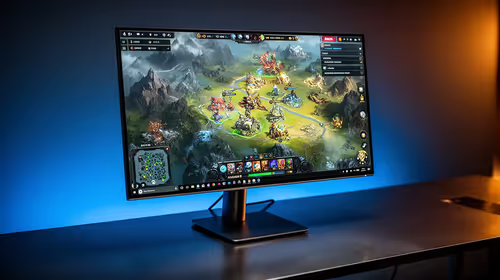
IPS vs VA for Strategy and Sim Games in SA
IPS vs VA for strategy and sim games should be judged by fit, not a single winner. Compare compatibility, latency, capacity, upgrade path, cost planning, and South African setup needs.
Read moreLearn all about QoS South Africa and how it can supercharge your internet. This guide explains how to prioritize traffic for gaming, streaming, and calls, ensuring a lag-free experience on your local network. Stop buffering and start winning! 🚀💻

Struggling with sluggish internet during crucial gaming moments or when streaming your favourite series? In South Africa, where network congestion and fibre stability can vary, prioritising your network traffic with QoS (Quality of Service) is essential. QoS South Africa helps you control which apps or devices get bandwidth priority, reducing lag and buffering. Whether gaming, working from home, or streaming, this tech smartly allocates network resources to match your needs.
Ready to optimise your connection? Let’s break down how QoS works and why it’s vital for every South African home network setup.
Your router acts as a traffic cop, deciding which network packets get through first. QoS lets you tell it exactly what to prioritise, like your gaming PC or streaming box. Without QoS, all traffic is treated equally, causing real-time services like gaming or video calls to compete with downloads or background updates. With QoS south africa features turned on, your latency-sensitive tasks stay smooth while less urgent traffic waits.
Most modern wireless routers come equipped with QoS controls. Choosing a router with robust QoS options makes a big difference. Explore top wireless routers here for South African internet configurations to find one that suits your setup.
Choosing the right strategy depends on your network size and daily usage patterns.
For an even stronger signal across your home, consider a wireless range extender to complement your QoS setup. They fill in those hard-to-reach dead zones, ensuring priority devices never lose connectivity during peak times. Check out trusted extenders here.
When on fibre with shared lines, set up device-based QoS to prioritise your workstation or gaming rig. It ensures smooth streaming even when others are downloading.
South African internet users often face unique challenges like variable fibre counts and last-mile congestion. Optimal hardware speeds up traffic management and reduces delay.
Most router interfaces have a QoS tab or section. Here’s a quick guide:
If your ISP provides specific QoS profiles, consider applying them to match local network conditions.
Finally, keep an eye on your network’s performance using built-in router diagnostics or third-party software. That way, you can tweak rules for the best balance of speed and stability.
Ready for a Faster, Smarter Network? Optimise your home’s internet with the latest wireless networking gear from Evetech. Shop now at Evetech for performance that leaves lag in the dust.
The main purpose of QoS (Quality of Service) is to manage network traffic to reduce packet loss, latency, and jitter. It prioritizes important data for a better user experience.
Yes, QoS can significantly improve gaming by prioritizing game data packets over other traffic. This helps to reduce lag and provides a more stable, responsive connection.
For most SA users, it's best to prioritize real-time applications. Use the 'best QoS settings for fibre SA' to give top priority to online gaming, VoIP calls, and video streaming.
Absolutely. QoS is excellent for streaming as it ensures video data gets priority bandwidth, preventing buffering and ensuring smooth playback, even when others are using the network.
Log into your router's admin panel, find the QoS or Traffic Management section, and enable it. You can then set rules to prioritize specific devices or applications.
QoS doesn't increase your total internet speed, but it makes your connection *feel* faster by ensuring the most important traffic gets the bandwidth it needs without interruption.
IPS vs VA for strategy and sim games should be judged by fit, not a single winner. Compare compatibility, latency, capacity, upgrade path, cost planning, and South African setup needs.
Read more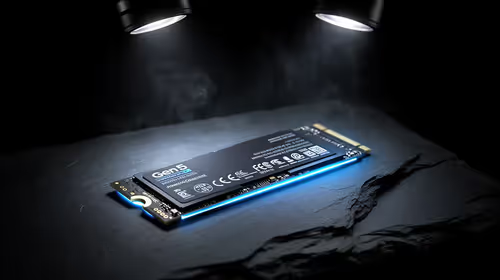
Gen 5 NVMe SSD guide for Bloemfontein gamers should be shortlisted around the job it must do. South African buyers should compare capacity, speed, thermals, and motherboard support, warranty path, and upgrade room before treating any pick as best.
Read more
Skip the RTX 5070 if your first-time builder budget needs better balance. Better SA picks can free room for the right CPU, PSU, case, monitor, storage, and cooling while still giving a strong first gaming PC experience this year in South Africa.
Read more
RTX 5080: weighing the pros and cons for SA should be shortlisted around the job it must do. South African buyers should compare GPU tier, VRAM, cooling, and PSU headroom, warranty path, and upgrade room before treating any pick as best.
Read more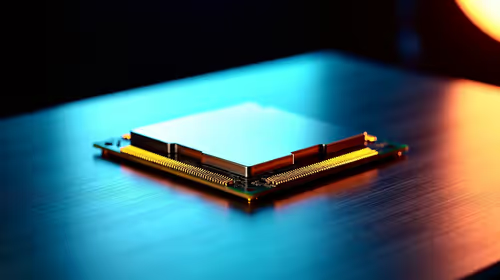
Core i5-13400F gives South African PC builders a capable mid-range CPU choice with clear limits. Check its gaming fit, discrete GPU requirement, LGA1700 platform costs, and upgrade path before locking in your parts list.
Read more
Pros and cons of the Wi-Fi 7 routers for SA should be shortlisted around the job it must do. South African buyers should compare WiFi standard, coverage, latency, and device support, warranty path, and upgrade room before treating any pick as best.
Read more
Steam content servers unreachable needs a download-path check, not an immediate reinstall of every game. Restart the client, inspect download settings and compare another connection when practical. Clearing the download cache is separate from deleting installed games.

Keychron G6 HE has built-in and swappable battery versions with different weights. The product brief lists 42g and 46g respectively, each with a 3g tolerance. Choose by grip and battery preference before treating one headline weight as universal.

Corsair HS80 v2 MAX supports 2.4GHz wireless and Bluetooth. Its maximum battery figures use RGB-off conditions and differ by connection. Check microphone routing, comfort and the exact device support before assuming every wireless mode behaves alike.

Windows taskbar notification badges can be shown or hidden in Taskbar behaviours. This changes the small app indicators, not the underlying messages. Choose a calmer desktop while keeping a deliberate routine for checking important conversations and app updates.

Windows title bar window shake can minimise other open windows when you shake the active window by its title bar. Inspect the Multitasking setting and switch it off if that gesture interrupts your work. The preference costs R0 and does not require new hardware.

Windows Print Screen opens Snipping Tool when its keyboard preference is enabled. Change the option under Accessibility, Keyboard to choose another workflow. Test whether you need a clipboard image or a saved file.

Windows desktop icons missing may be a visibility setting. Right-click the desktop, choose View and inspect Show desktop icons. If only system icons are absent, use Desktop icon settings. Check the Desktop folder before assuming files were deleted.

Windows set time zone automatically greyed out calls for a location and device-policy check. Automatic time-zone selection relies on location services. A manual time-zone choice is separate from synchronising the clock; check both before replacing hardware.
Windows title bar window shake can minimise other open windows when you shake the active window by its title bar. Inspect the Multitasking setting and switch it off if that gesture interrupts your work. The preference costs R0 and does not require new hardware.
Windows Print Screen opens Snipping Tool when its keyboard preference is enabled. Change the option under Accessibility, Keyboard to choose another workflow. Test whether you need a clipboard image or a saved file.
Windows desktop icons missing may be a visibility setting. Right-click the desktop, choose View and inspect Show desktop icons. If only system icons are absent, use Desktop icon settings. Check the Desktop folder before assuming files were deleted.
Windows set time zone automatically greyed out calls for a location and device-policy check. Automatic time-zone selection relies on location services. A manual time-zone choice is separate from synchronising the clock; check both before replacing hardware.