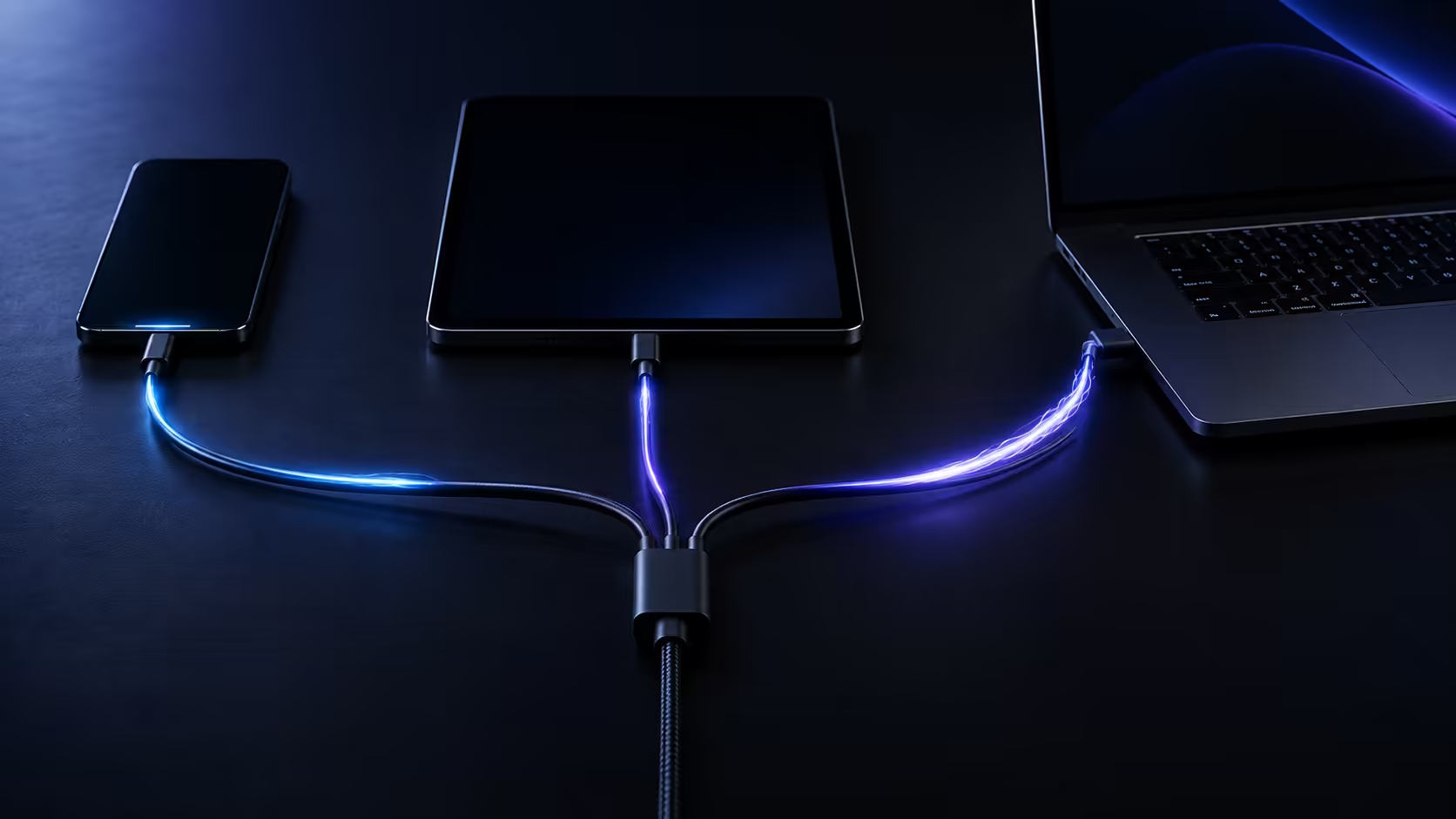
USB-C cable power ratings split cleanly at one current figure, and once you know which side of that particular line your phone, tablet or laptop sits on, buying the right cable stops being a guessing game entirely.
Quick Answer
Cable ratings are a ceiling, not a setting: the same 140W cable feeds a phone 20W and a laptop 140W without anything to configure. Ratings split at 3A, so 60W cables cover phones and tablets while laptops need the 5A class the R399 Anker 544 sits in.
⚡ Where the 3A and 5A classes actually split
USB-C cables fall into two current classes: a standard 3A rating, which combined with 20V charging tops out at 60W, and a 5A rating, which reaches the higher power tiers up to 240W depending on what the source and device both support. The Anker 544, from the comprehensive cable range, sits in the 5A class, stating 140W+ as its ceiling, well above what a 3A cable could ever carry regardless of the charger plugged into it.
That gap matters most at the top of the market, where a large laptop's own charger genuinely needs the full 5A figure to reach its rated output, and it matters least at the bottom of the market, where a phone charging at a fraction of that figure never notices the difference between the two classes at all.
📱 Phones and tablets rarely need more than 3A
Most phones charge somewhere between 15W and 45W, and even fast-charging tablets on our tablets range generally sit within what a 3A cable comfortably carries. Buying a 5A cable for a phone or tablet alone is not wasted money, since the cable still works perfectly well at lower power, but it is not a strict requirement either; a standard 3A cable meets everything these particular devices actually ask of it day to day.
💻 Laptops are where the 5A class starts to matter
A demanding laptop drawing anywhere from around 65W up to 140W or more needs the 5A class specifically, since a 3A cable physically cannot carry that much current safely, and the connection will always cap itself at 60W regardless of what the charger's own rating happens to be. This is the scenario the Anker 544 is built for: full-speed charging on a demanding laptop without the cable becoming the limiting factor in the chain.
🔋 Why the negotiation happens automatically
USB Power Delivery was built specifically so that a phone, a tablet and a laptop can all safely share the same cable without a person having to configure anything. Each device announces what it needs during a brief handshake the moment it is connected, the charger announces what it can supply, and the cable's own e-marker chip declares the current it can carry, with the whole system settling on the lowest of those three figures. This is why a single 140W cable never sends too much power into a phone in the first place: the phone itself simply never asks the connection for more than it actually wants at that moment.
Understanding how this negotiation actually works also explains a common point of confusion people run into. A 140W-rated cable plugged into a phone that only draws 20W is not "wasting" 120W of capacity in any meaningful sense, since that capacity was never going to be used regardless of the cable's rating. The extra headroom exists for the day a more demanding device gets plugged into the same cable, not as something the phone itself is missing out on today.
🔌 Buying one cable that covers your whole household
Given that a 5A cable carries everything a 3A cable does and more, the simplest approach for a household with a mix of phones, tablets and laptops is to buy 5A cables and use them everywhere consistently, rather than keeping two different classes of cable in rotation and risking a laptop ending up with the wrong one on a busy morning. Check your charger's own wattage rating alongside the cable, since the charger and cable both have to support the higher figure together for a laptop to actually charge at its full rated speed.
Frequently Asked Questions
Can a 5A cable damage a phone that only needs 20W?
No. The device itself requests the power it needs during negotiation; the cable's higher ceiling simply goes unused rather than forcing extra power into the phone.
Is it worth buying a 3A cable to save money if I only charge phones?
It is a reasonable choice for phone-only use, though a single 5A cable used everywhere removes the need to track which cable is rated for what.
Does a 5A cable charge a phone faster than a 3A one?
No, provided both cables are within the phone's actual charging speed. The phone's own charging circuitry sets the ceiling for how fast it accepts power, not the cable's maximum rating.
Why does my laptop charge slowly even with a 140W charger?
The most likely cause is a 3A cable in the chain, which caps the connection at 60W regardless of what the charger itself can output.
Does the negotiation between charger, cable and device happen every time I plug in?
Yes. The handshake runs fresh at every connection, so swapping a cable or charger takes effect immediately without needing to unplug and replug anything else in the chain.
Is there a downside to always using the highest-rated cable available?
Practically none, beyond a small difference in price. A higher-rated cable simply carries more headroom than most devices will ever use, without any negative effect on the devices themselves.
Does a device ever request more power than a cable can actually give it?
The negotiation prevents this by design. A device only requests a power level the connected cable has already declared it can carry, so a mismatch simply results in the device requesting less, rather than the cable ever being asked to exceed its own stated rating.
Do tablets ever need the full 5A class the way large laptops do?
A handful of larger, more powerful tablets edge close to that territory, but the great majority of tablets on the market charge comfortably within the 3A class, well short of what a full-size laptop-grade charger actually demands from the cable feeding it.
Ready to match your cable rating to what you actually charge?
Check whether a laptop is in the mix before deciding between the 3A and 5A classes.