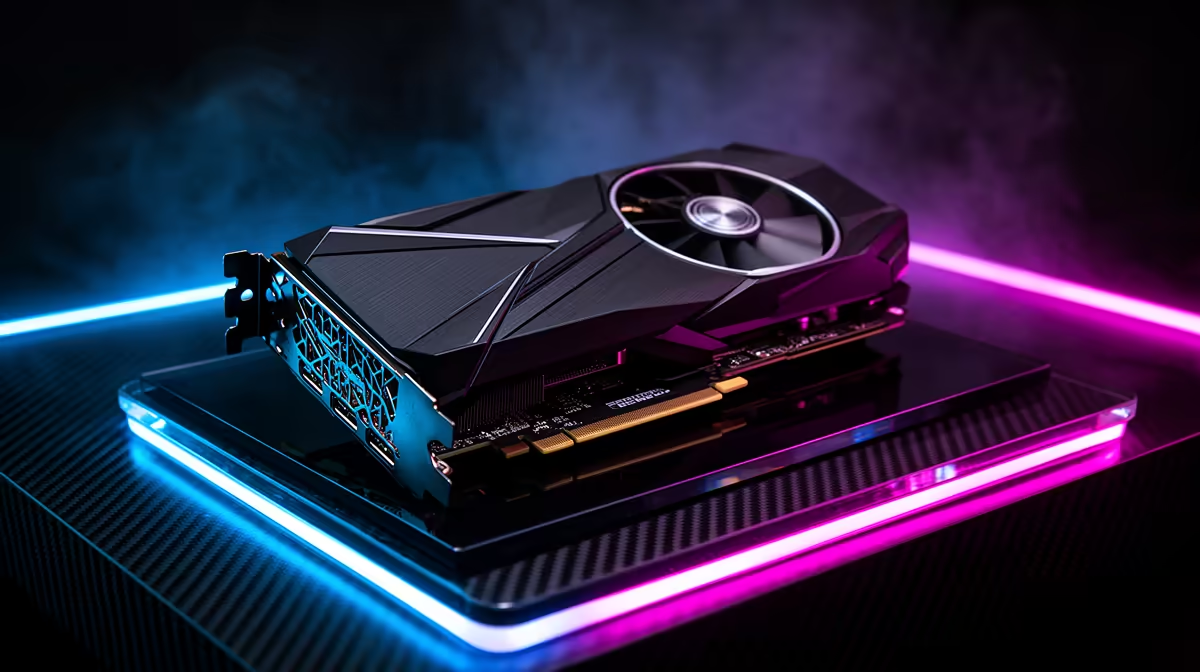
The RTX 3080 Ti to RTX 5070 Ti upgrade is a feature and ownership decision, not an obvious frame-rate win. Raw raster performance can feel lateral. The newer card's 16GB buffer, improved ray tracing, current DLSS tools and lower power demand need to solve problems you can name before the swap makes sense.
Quick Answer
Skip this upgrade if you only want a large rasterised performance jump. Choose the RTX 5070 Ti when the 3080 Ti's 12GB memory, power draw or missing current-generation DLSS features interfere with your work or games. Evetech's graphics-card snapshot carried a R13,299 median as of July 2026, so price the exact 5070 Ti well above that market midpoint against a measured benefit.
📊 A lateral move needs harder evidence
Run the RTX 3080 Ti in your three most demanding games. Record average frame rate, low-frame results, memory use, board power and noise once the system warms. If the card already delivers the experience you want, a model-number change cannot improve the value of keeping it.
Rasterised tests may show the two cards trading places across games. That is a weak basis for spending. Look for a workload where the 5070 Ti changes the setting, smoothness or heat you live with every week.
Evetech's NVIDIA graphics card selection puts the current tier in context. Use the GPU best sellers to check whether a different model offers the larger performance step you expected.
🧠 Sixteen gigabytes is useful, not magical
The move from 12GB to 16GB can help 4K textures, large mod packs and creation workloads that push the old card's buffer. Watch actual memory use. If your games sit comfortably below 12GB, capacity alone will not change frame rate.
Memory pressure can appear as stutter or texture fallback before the average looks bad. Compare the frame-time graph and visual settings you can retain. The 5070 Ti earns more when it removes a repeatable 12GB limit.
For professional tools, check the exact application and project size. Some jobs may value the extra memory and newer architecture; others will respond more to raw compute or CPU performance. Do not transfer a gaming result into a renderer without evidence.
✨ New DLSS support can settle the choice
The RTX 5070 Ti brings current-generation DLSS capabilities. Frame generation can improve display smoothness in supported titles, while newer reconstruction paths may improve heavy ray-traced scenes. The feature needs to exist in games you play.
Start from the base rendered rate. Generated frames do not create matching input response, so a slow base can still feel heavy. For competitive titles, raster performance and low latency remain the more useful comparison.
Ray tracing is a stronger part of the newer card's case. Test the same effect and upscaling mode on both cards. If you rarely enable ray tracing, treat that advantage as small instead of paying for a feature you will leave off.
🌡️ Efficiency can improve the room around the card
The RTX 3080 Ti releases substantial heat into the case. A 5070 Ti can deliver its performance with a more modern efficiency profile, which may reduce fan noise and the load on the PSU. Measure the full system from the wall if you have a suitable meter.
Case and cooler design still matter. A quiet 3080 Ti with excellent airflow may be pleasant, while a poor 5070 Ti cooler can remain noisy. Compare exact partner models under sustained load.
Check PSU connectors before the swap. Use only cables approved for that specific supply and seat the GPU connector fully. A lower-draw card does not excuse a bad cable route or a tired unit.
💰 Set a minimum improvement before shopping
Decide what would justify the change: four extra gigabytes for a project, a measured noise reduction, or a feature that restores a chosen setting. Put a Rand ceiling beside that benefit. If listings exceed it, keep the 3080 Ti and wait for a larger jump.
A 4K owner running memory-heavy games has the clearest case. A 1440p raster player with a healthy card should be sceptical. Selling a dependable 3080 Ti before the replacement is tested can turn a questionable upgrade into an urgent problem, so keep it until the new system passes.
Test the 5070 Ti at stock with several long sessions. Confirm display outputs, temperatures, fan behaviour and sleep recovery. If the improvement remains difficult to describe after a week, the old card was probably still doing its job.
Monitor owners should separate refresh headroom from image quality. At 4K, the larger buffer and stronger ray tracing may let you retain a setting the 3080 Ti drops. At 1440p, both cards can reach high rates and the CPU may narrow the visible change. Test at the screen's native resolution.
There is also value in avoiding disruption. A stable PC with tuned fan curves, known drivers and proven cables has earned that stability. Replacing a central component creates work and a small chance of troubleshooting. The new card needs to repay that effort through an improvement you notice often.
If you proceed, keep screenshots of stock power, temperatures and frame times from the 3080 Ti. Compare them with the 5070 Ti after the case reaches the same warm state. The efficiency claim becomes useful when you can see lower system demand or hear calmer fans.
Use the same fan-control mode during both recordings, since an automatic case profile can otherwise change the noise comparison.
Frequently Asked Questions
Is the RTX 5070 Ti actually faster than the RTX 3080 Ti?
It can be, but raw raster results may feel lateral across some games. Its clearer gains sit in memory, ray tracing, efficiency and newer features.
How much bigger is the VRAM buffer on the RTX 5070 Ti?
It has 16GB compared with 12GB on the RTX 3080 Ti, a 4GB increase.
Does the RTX 5070 Ti support DLSS frame generation?
Yes, it supports current-generation DLSS frame-generation capabilities in compatible games.
Is this upgrade worth it just for efficiency gains?
Only when lower power and heat solve a real noise, cooling or operating concern. Measure the existing system first.
Should I wait for a bigger performance jump before upgrading?
Yes, if raster frame rate is your main goal and the RTX 3080 Ti remains healthy. A later tier may offer a clearer change.
Ready to test whether features beat a lateral raster move?
Compare RTX 5070 Ti cards in Evetech's graphics range, then set a firm benefit and price ceiling before replacing the RTX 3080 Ti.