Lekker, you’ve got a powerful gaming rig, but now comes the big decision: how do you experience your games? Do you go for the razor-sharp clarity of a top-tier gaming monitor or dive headfirst into the digital world with a VR headset? The age-old debate of VR headset vs gaming monitor is heating up as both technologies evolve. Let's break down which one truly offers the best immersion for South African gamers in 2025.
The Case for the Gaming Monitor: Crystal Clear Dominance
For most gamers, the monitor is the undisputed king of the setup, and for good reason. It’s the window to your digital world, offering a blend of performance, versatility, and visual fidelity that's tough to beat.
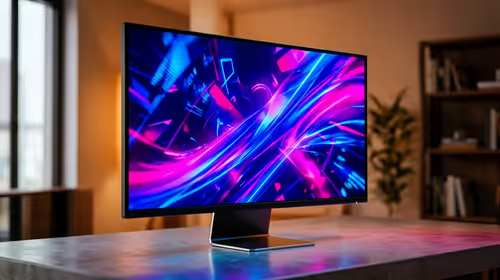
A high-quality display delivers an incredibly sharp image, vibrant colours, and lightning-fast response times. When you’re lining up a crucial shot in Apex Legends or admiring the stunning landscapes in Elden Ring, the pixel-perfect detail from a great screen is pure magic. This is where today's top-tier gaming monitors truly shine. They're not just screens; they're precision instruments built for victory.
Furthermore, a monitor is the ultimate multitasker. When you’re not gaming, it’s your portal for work, streaming, and browsing. This practicality makes it a sensible investment for anyone who uses their PC for more than just play. With options from trusted brands like HP and AOC, there's a perfect fit for every desk and budget.
The Allure of the VR Headset: Stepping Inside the Game
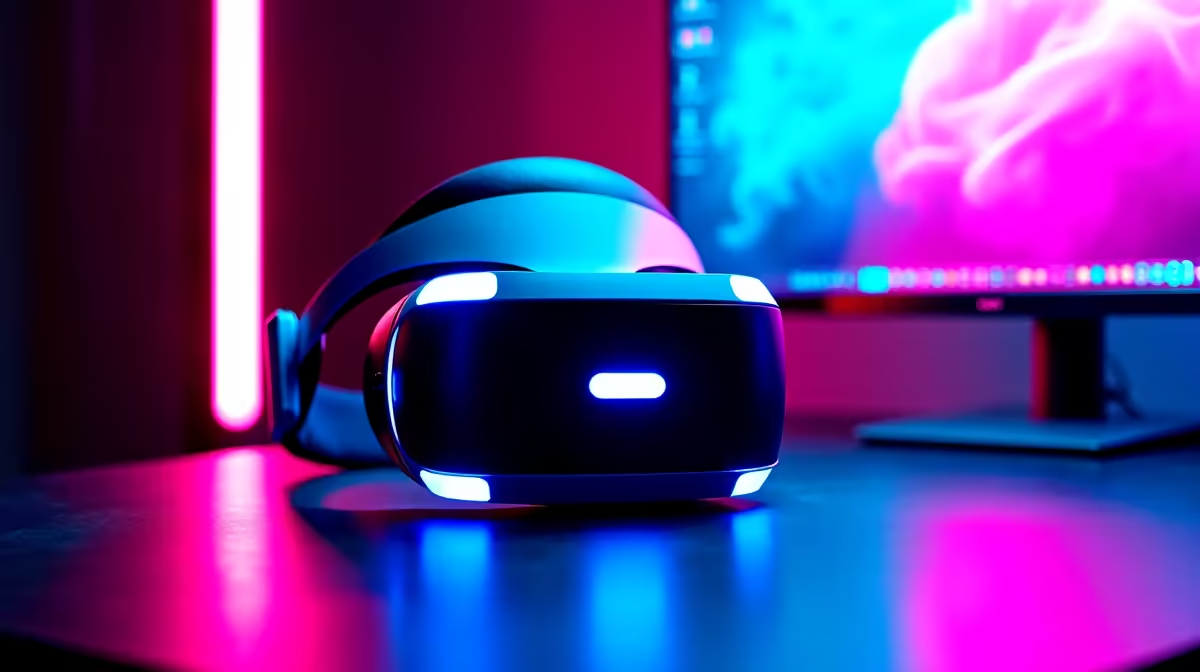
If a gaming monitor is a window, a VR headset is a doorway. 🚪 It doesn't just show you the game; it puts you inside it. The sense of presence and scale is something a flat screen simply cannot replicate. Standing at the helm of a starship in No Man's Sky or physically ducking behind cover in Half-Life: Alyx is a profoundly immersive experience.
The core strength of VR is "presence"—that psychological trick where your brain accepts the virtual world as real. This is where the gaming monitor vs VR headset battle becomes one-sided. You’re not just controlling a character; you are the character. You turn your actual head to look around, use your hands to interact with objects, and feel a genuine sense of space. It’s a powerful, sometimes breathtaking, experience that can make traditional gaming feel… well, flat.
However, this level of immersion comes with caveats. VR can be physically demanding, requires significant setup space, and the "screen door effect" (seeing the gaps between pixels) can still be noticeable on some headsets compared to a crisp 4K monitor.
Optimise Your Monitor for a Competitive Edge 🚀
For buttery-smooth gameplay, make sure your monitor's refresh rate (Hz) is correctly set in both Windows Display Settings and your GPU's control panel. Many gamers forget this and leave their brand new 144Hz+ monitor running at a default 60Hz. It's a simple check that can make a massive difference in fast-paced games!
Head-to-Head: Immersion, Performance, and Practicality
So, when comparing a VR headset vs gaming monitor for pure immersion, which one takes the crown? It depends on what "immersion" means to you.
Visual Fidelity vs. Total Presence
A high-end monitor from a manufacturer like Dahua will almost always offer a sharper, cleaner image with better colour accuracy and higher pixel density. For visual purists, this is paramount.
VR, on the other hand, trades some of that pixel-perfect clarity for an unparalleled sense of being there. The field of view is massive, and stereoscopic 3D makes the world feel solid. It’s a trade-off between seeing a perfect picture and living inside a slightly less-perfect one.
Performance and Comfort
For competitive gaming, monitors are the clear winners. Ultra-high refresh rates and near-instant response times give you the edge. Plus, you can comfortably play for hours. Technologies like NVIDIA G-Sync and AMD FreeSync eliminate screen tearing, ensuring the action is always fluid. Many displays now also offer the flexibility of Adaptive Sync technology to work with a wider range of hardware.
VR sessions are typically shorter due to physical fatigue and potential motion sickness. While the tech is improving, it's not yet suited for an all-day grind.
The Verdict for 2025? 🤔
The best choice depends entirely on your gaming diet.
- Choose a Gaming Monitor if: You are a competitive player, a multitasker, a visual purist, or someone who enjoys long gaming sessions. It's the most practical, versatile, and reliable choice for the vast majority of games and PC uses.
- Choose a VR Headset if: You crave unique, mind-blowing experiences and prioritise the feeling of "presence" above all else. It's an incredible secondary device for specific, jaw-dropping adventures rather than a primary display.
For most South African gamers building a new setup or upgrading, a high-performance gaming monitor remains the smarter primary investment. It delivers exceptional immersion for every title in your library, from strategy games to AAA blockbusters. VR is an amazing piece of tech, but it’s still the specialist, while the monitor is the essential all-rounder.
Ready to Upgrade Your View?
The VR headset vs gaming monitor debate comes down to personal preference, but for crisp visuals, competitive edge, and all-day versatility, a high-performance monitor is unbeatable. Explore our massive range of gaming monitors and find the perfect screen to conquer your world.