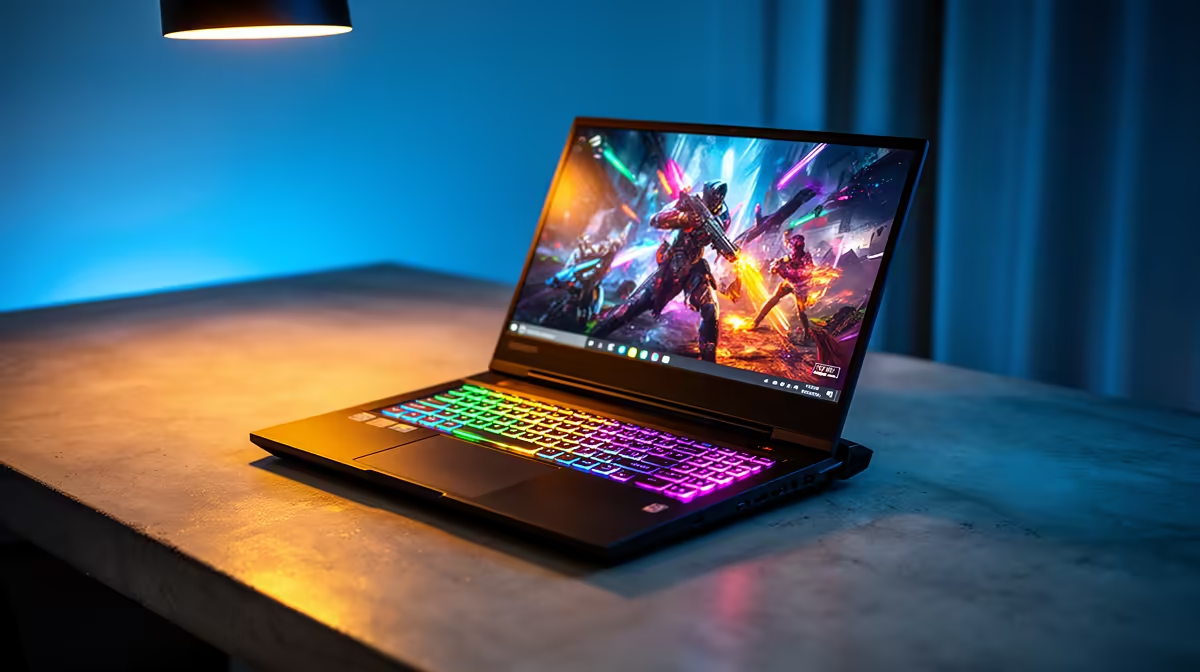
So, you’re tired of your old laptop wheezing its way through Apex Legends at 20 frames per second? You’ve heard the term "gaming laptop," but it sounds expensive and maybe a bit... much. What is a gaming laptop, really? Is it just a standard notebook with flashy RGB lights?
Not at all. A gaming laptop is a purpose-built machine, engineered from the ground up for one thing: performance. Let's break down the key features that set them apart.
More Than Just a Pretty Case: The Core Differences
At its heart, the answer to "what is a gaming laptop?" lies in its components. While a regular laptop prioritises battery life and portability, a gaming laptop makes a deliberate trade-off. It packs desktop-grade power into a portable chassis, focusing on the hardware needed to run demanding games smoothly. This means more powerful processors, dedicated graphics, and advanced cooling systems you won't find in a typical work machine.
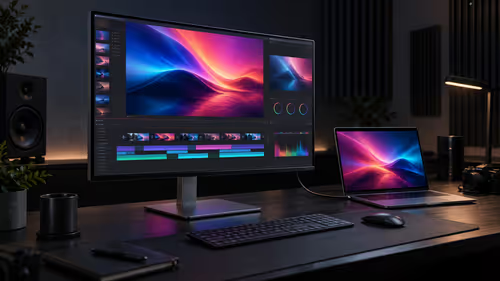
This focus on power is what makes them so versatile. They're not just for gaming; they're incredible for video editing, 3D modelling, and heavy-duty multitasking, too. Exploring our wide range of Lenovo gaming laptops shows just how varied the options can be, from sleek entry-level models to absolute beasts.
The Key Features That Define a Gaming Laptop
Understanding the core components is crucial. When you see a spec sheet, these are the terms that truly matter for your gaming experience.
The Graphics Card (GPU): Your Visual Powerhouse ����
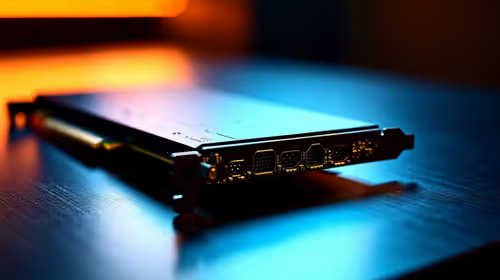
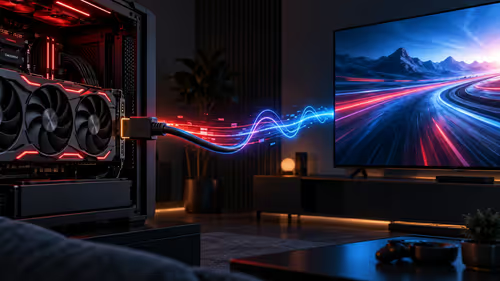
This is the single most important component. A gaming laptop has a dedicated or discrete graphics card (from NVIDIA or AMD), separate from the main processor. This GPU handles all the heavy lifting for rendering beautiful, high-frame-rate visuals. A standard laptop uses integrated graphics, which is fine for browsing and Netflix but will struggle with modern games. For serious gaming, you want the best GPU your budget allows, found in powerhouses like the Lenovo Legion series.
The Processor (CPU): The Brains of the Operation
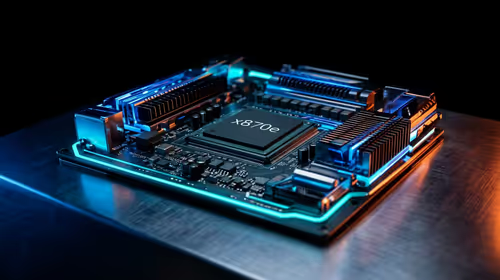
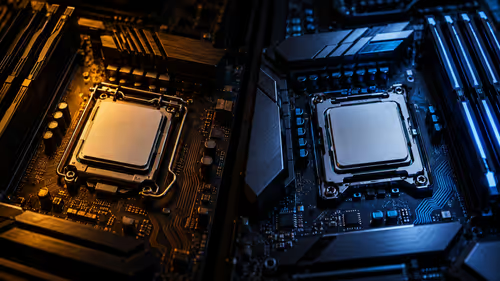
The Central Processing Unit (CPU) is the laptop's brain. It manages the game's logic, physics, and AI. While the GPU renders the visuals, the CPU runs the game itself. For gaming, you'll want a modern processor from Intel (like a Core i5 or i7) or AMD (like a Ryzen 5 or 7). A strong CPU prevents "bottlenecking," where a slow processor holds back a powerful graphics card. Even affordable entry-level options like the Lenovo IdeaPad 3 Gaming now come with CPUs that are more than capable for most titles.
RAM and Storage: Speed and Space
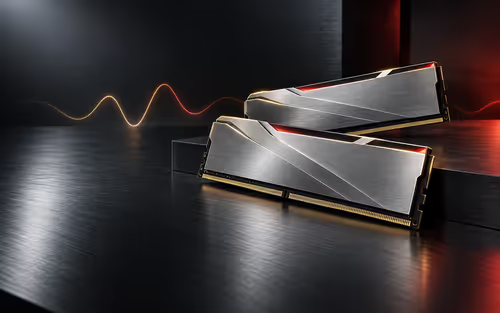
RAM (Random Access Memory) is your laptop's short-term memory. It holds the data your game needs right now. 8GB is the absolute minimum, but 16GB is the sweet spot for smooth multitasking and future-proofing.
Storage is your long-term memory. A Solid-State Drive (SSD) is non-negotiable for a gaming laptop. It loads games, levels, and the operating system itself in seconds, not minutes. Many of Lenovo's new LOQ gaming laptops offer a great balance of speedy SSD storage and high-performance RAM.
Pro Tip: External Monitors ⚡
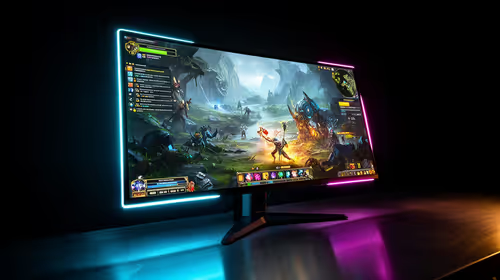
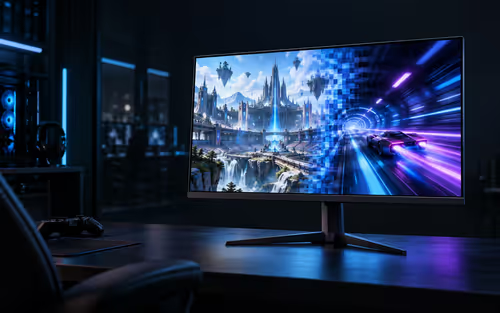
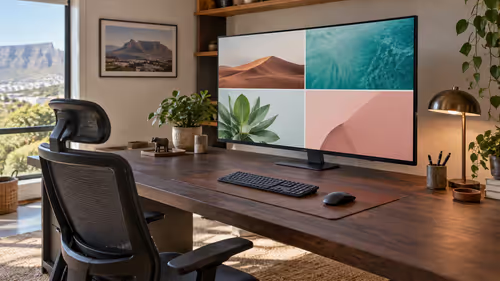
gaming laptop's biggest strength is its portability. But when you're at home, you can get a desktop-like experience by plugging it into a larger, high-refresh-rate gaming monitor. It's the best of both worlds: power on the go and an immersive setup at your desk!
The Display: Refresh Rates and Response Times Explained
A fast car needs good tyres, and a powerful laptop needs a great screen. Two numbers matter here:
- Refresh Rate (Hz): This is how many times the screen updates per second. A standard screen is 60Hz. A gaming laptop display starts at 120Hz or 144Hz, resulting in incredibly smooth motion.
- Response Time (ms): This is how quickly a pixel can change colour. A low response time (under 5ms) reduces motion blur and "ghosting," making fast-paced action look crisp and clear.
Cooling Systems: Keeping Your Machine from Melting ❄️
Packing all this power into a tight space generates a lot of heat. A key feature of any good gaming laptop is its advanced cooling system, featuring multiple fans, heat pipes, and large vents. This prevents the components from overheating and "throttling" (slowing down to protect themselves), ensuring you get consistent performance during long gaming sessions.
So, Is a Gaming Laptop Worth It for You?
If you want the freedom to play the latest titles anywhere, with performance that rivals a desktop, the answer is a resounding yes. A gaming laptop is a powerful, versatile machine that gives you high-end performance without chaining you to a desk. It's an investment in top-tier entertainment and productivity.
Ready to Level Up Your Gameplay?
Understanding what makes a gaming laptop tick is the first step. The next is finding the one that fits your games, style, and budget. Explore our massive range of gaming laptop specials and find the perfect machine to conquer your digital world.